
Conservation teams moved 23 Lesser Antillean iguanas to the uninhabited Prickly Pear East in 2016 to protect them from invasive competitors. In 2021, Dominica sent 10 additional juveniles to boost genetic diversity, and the islet population has grown to more than 300 healthy iguanas. Prickly Pear East is one of five populations shielded from invasive iguanas, and a second release site on Anguilla is planned for 2026.
Desert Islet Becomes 'Love Island' for Endangered Iguanas — Population Soars to 300+

Andrew Snyder/Re:wild (2)Lesser Antillean Iguana and a Carribbean island
Conservationists have turned an uninhabited Caribbean islet into a safe breeding ground for the critically threatened Lesser Antillean iguana. Beginning in 2016, teams relocated a small group of native iguanas from Anguilla’s main island to Prickly Pear East, a deserted islet free of people and invasive competitors. That intervention has helped the species regain a foothold in the wild.

Soanes/Anguilla National TrustConservationists visiting Lesser Antillean iguanas
Translocation and Early Success
In 2016, 23 Lesser Antillean iguanas were moved to Prickly Pear East to escape competition and predation pressures posed by non-native iguanas on Anguilla. The islet’s isolation offered a secure environment where the native iguanas could reproduce without being outcompeted for food, territory, and nesting sites.
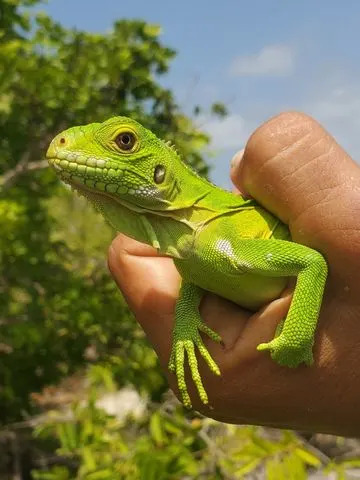
Olivier Raynaud / Fauna & FloraLesser Antillean Iguana
Genetic Boost From Regional Partners
By 2021, conservationists raised concerns about limited genetic diversity in the growing Prickly Pear East population. To strengthen the gene pool, the Anguilla project team reached out to Dominica’s Forestry, Wildlife & Parks Division. Dominica agreed to send 10 juvenile Lesser Antillean iguanas, escorted by conservationists, to join the population on Prickly Pear East.

Andrew Snyder/Re:wildLesser Antillean Iguana
Combined with the original translocated iguanas, these additions helped the islet’s population expand rapidly. Re:wild reports that Prickly Pear East now supports more than 300 healthy Lesser Antillean iguanas and is one of just five populations currently protected from invasive alien iguanas.
Threats From Invasive Iguanas
Non-native species such as the common green iguana and the striped-tailed iguana tend to grow faster and larger than the Lesser Antillean iguana. Their greater size and competitive advantages allow them to monopolize food and habitat, putting native iguanas at risk of local extinction.
"Thanks to the kind assistance from our friends in Dominica, as well as funding from the UK Government through Darwin Plus, the Lesser Antillean iguana is making a comeback in Anguilla. Prickly Pear East has become a beacon of hope for these gorgeous lizards — and proves that when we give native wildlife the chance, they know what to do!" — Jenny Daltry, Caribbean Alliance Director for Fauna & Flora and Re:wild.
Scaling Up Conservation
The success of Prickly Pear East has spurred further action. The Anguilla National Trust, with support from Fauna & Flora and Re:wild and funding through Darwin Plus, has prepared a second reintroduction site on mainland Anguilla. That site is scheduled to receive its first Lesser Antillean iguanas in 2026, expanding the species’ protected range and boosting long-term recovery prospects.
"This is a love story not just of iguanas trying to re-establish their population, but of Anguilla's people working to restore a part of our natural heritage. Beyond being important seed dispersers, Lesser Antillean iguanas are an important part of Anguillan culture," — Farah Mukhida, Executive Director, Anguilla National Trust.
The coordinated effort across islands demonstrates how targeted translocations, regional cooperation, and sustained funding can help restore endangered species. Prickly Pear East now stands as a model for small-island conservation and demonstrates the measurable impact of human-led restoration when invasives are controlled and habitats are secured.


