
Maine Audubon’s annual survey found an estimated 3,174 adult common loons and 568 chicks in southern Maine, more than double counts from 1983 and a 13% rise in adults over the past decade. Bans on lead fishing tackle and boat-speed restrictions are credited with improving nest success. Experts remain cautious and say several more years of data are needed to confirm a lasting recovery. Winter "iced in" events continue to imperil loons and require rehabilitation efforts.
Maine’s Loons Rebound: Numbers Rise but Threats Persist

FILE-A common loon chick hitches a ride on its mother's back on Maranacook Lake, in Winthrop, Maine, in this July 20, 2021, file photo. (AP Photo/Chris O'Meara, File)(ASSOCIATED PRESS)
PORTLAND, Maine — Common loons are returning to more lakes and ponds across southern Maine, and their eerie, distinctive calls are once again a familiar sound on summer mornings. Conservationists say the species has made encouraging gains in recent surveys, but the birds still face significant risks that could limit a full recovery.
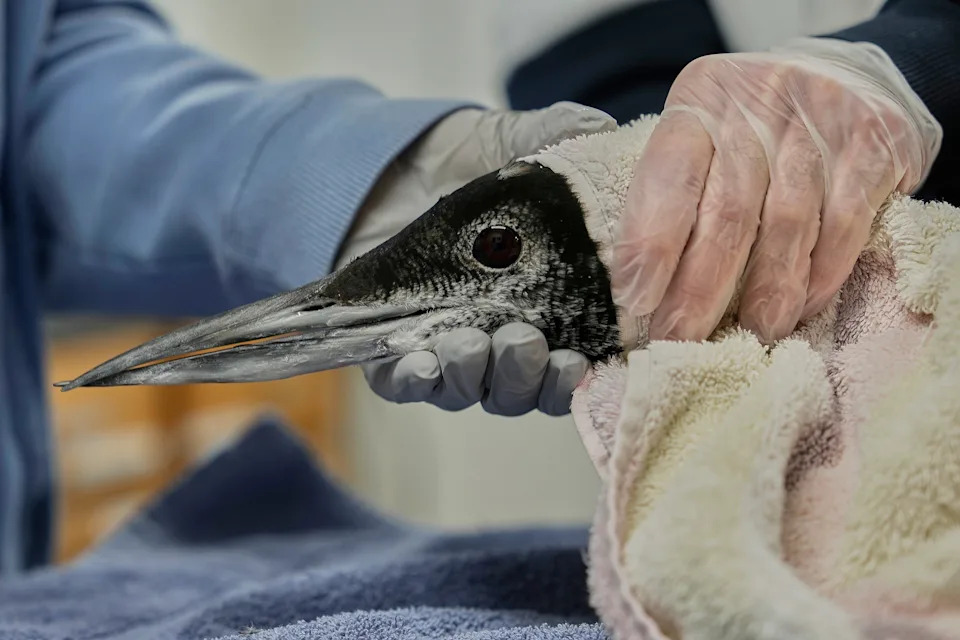
A rescued loon is held by medical staff during an examination at Avian Haven, a bird rehabilitation clinic, Tuesday, Dec. 9, 2025, in Freedom, Maine. (AP Photo/Robert F. Bukaty)(ASSOCIATED PRESS)
Survey Shows Growth, But Experts Urge Caution
Maine Audubon’s annual survey estimated 3,174 adult common loons and 568 chicks in the southern half of the state this year — an adult population more than twice the size recorded when systematic counts began in 1983, and up about 13% compared with ten years ago. The organization focuses on southern Maine because volunteer coverage there produces the most reliable numbers.
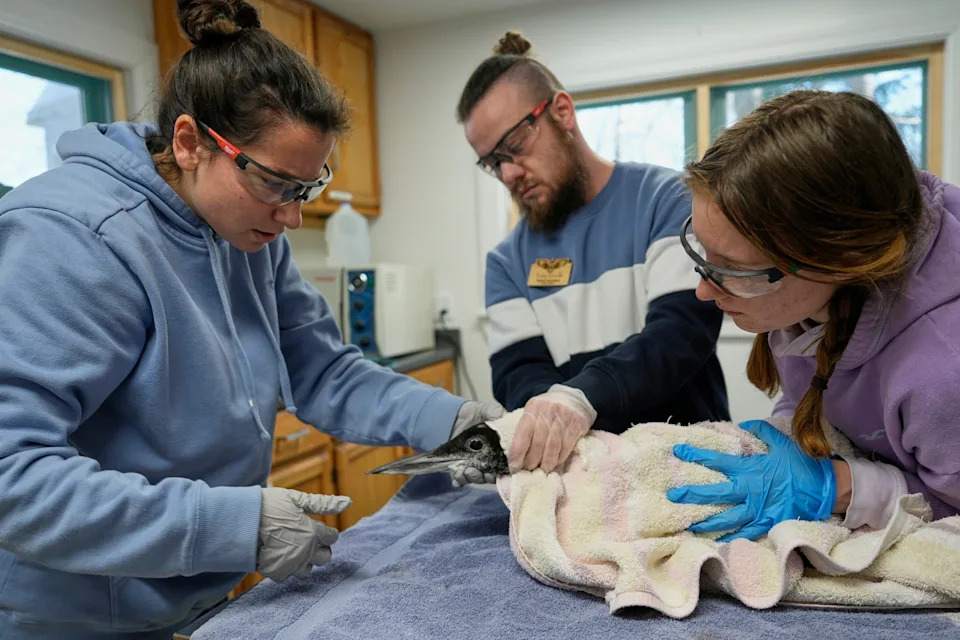
Athena Furr, left, a rehabilitation technician, examines a rescued loon with assistance from Toby Verville, center, and Katie Daggett at Avian Haven, a bird rehabilitation clinic, Tuesday, Dec. 9, 2025, in Freedom, Maine. (AP Photo/Robert F. Bukaty)(ASSOCIATED PRESS)
“We’re cautiously optimistic after seeing two years of growing chick numbers,” said Tracy Hart, a wildlife ecologist with Maine Audubon. “But it will take several more years before we know if that is a real upward trend, or just two really good years.”
Conservation Steps That Helped
Advocates and lawmakers point to several measures that likely contributed to the gains: statewide bans on lead fishing tackle (which loons sometimes ingest accidentally), restrictions on boat speeds to reduce wake-induced nest washouts, and broader habitat-protection efforts. These actions aim to improve nesting success and reduce adult and chick mortality.
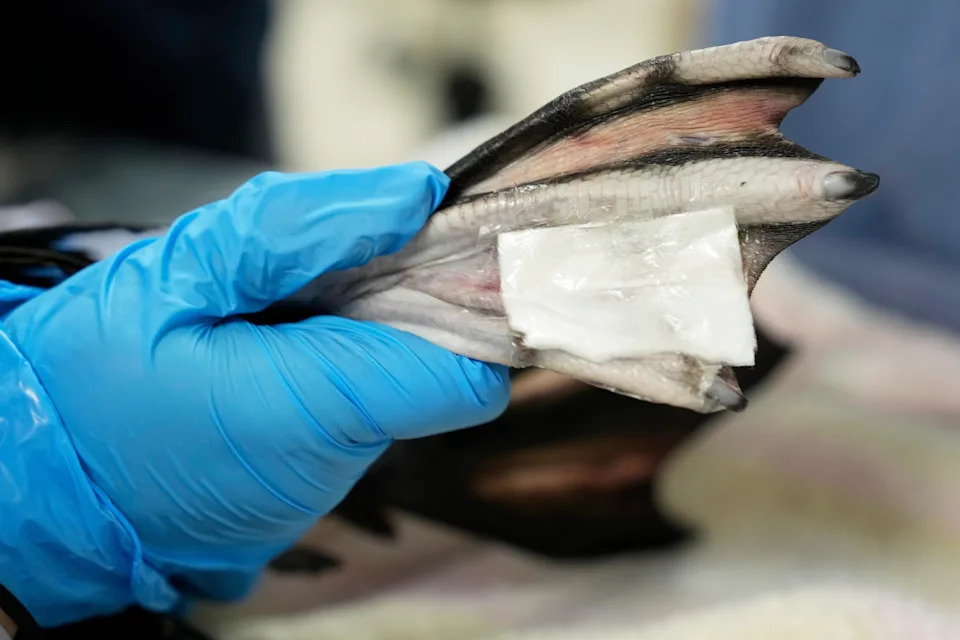
A rescued loon's frostbitten foot is bandaged at Avian Haven, a bird rehabilitation clinic, Tuesday, Dec. 9, 2025, in Freedom, Maine. (AP Photo/Robert F. Bukaty)(ASSOCIATED PRESS)
Still Vulnerable
Despite the positive signs, scientists warn that Maine’s breeding success remains critical to the species’ outlook. The state supports one of the largest loon populations in the U.S., with the other five New England states combined totaling roughly 1,000 adults. Nationally, the common loon’s breeding population is about 27,000 adults; Minnesota hosts the largest lower-48 population at roughly 12,000 adults, though some regions show declines.
Winter poses additional hazards: loons migrate to the ocean in late fall and need long stretches of open water to take off. When breeding lakes freeze, birds can become trapped or “iced in,” requiring rescue or rehabilitation. “We’re getting a lot of calls about loons that are iced in,” said Barb Haney, executive director of Avian Haven in Freedom, Maine, which has cared for such patients this season.
Conservationists emphasize that continued monitoring, enforcement of protective measures, and public awareness—especially among anglers and boaters—will be essential to determine whether the recent increases represent a sustained recovery.


