UGA and LSU researchers collected DNA from more than 700 egg membranes across four sites in Georgia, South Carolina and Louisiana and discovered that hens in spring-hunted areas hatched significantly more females than males. The probability of producing a male at hunted sites was 47% lower than at the non-hunted Savannah River Site. Researchers propose two leading explanations: stress-related maternal hormones affecting sex determination and selective harvest of males before breeding. A remaining paradox—fewer juvenile females in winter traps despite female-biased hatchings—will require more non-hunted comparison sites and further study.
Study Finds More Female Wild Turkeys Hatched In Spring-Hunted Areas — Possible Link To Hunting Pressure
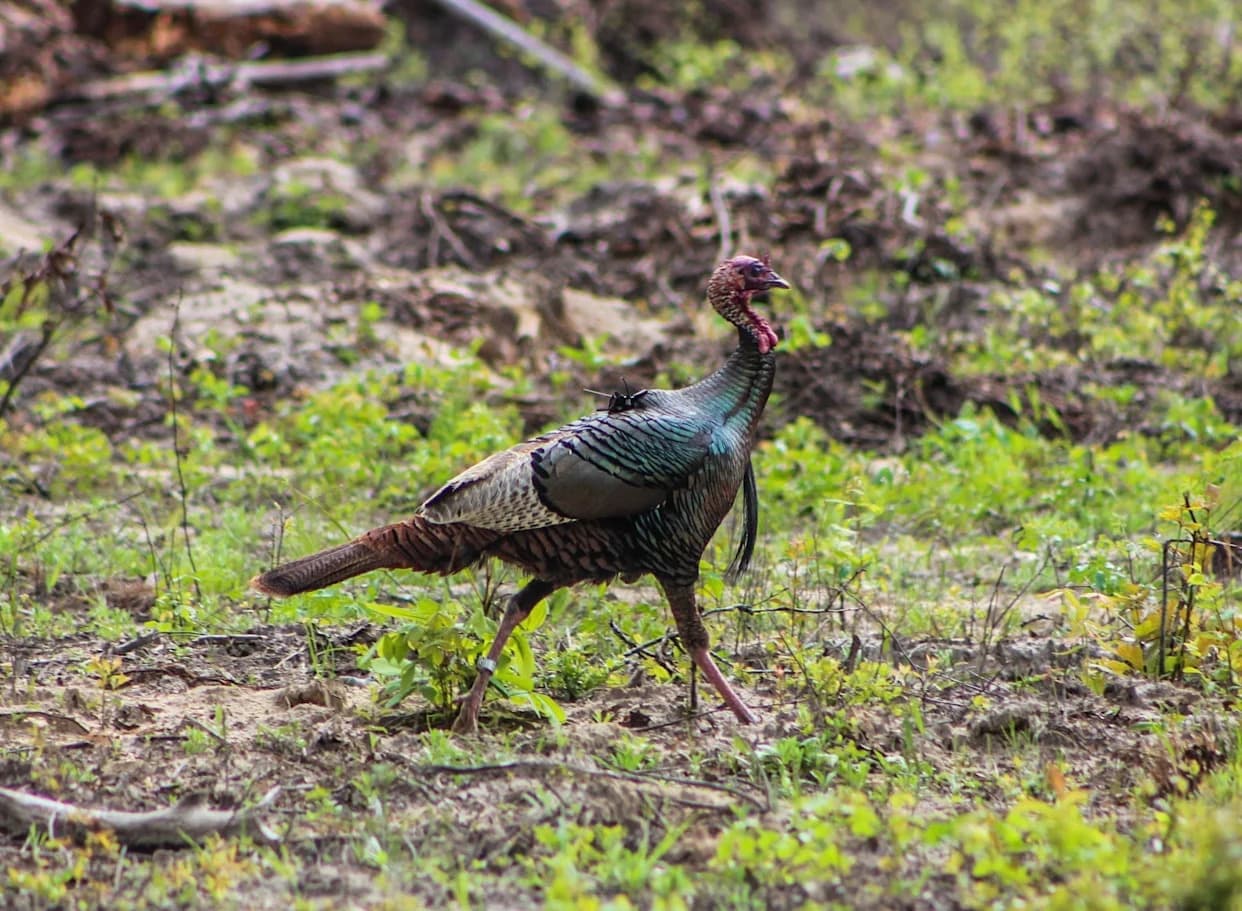
Eastern wild turkey outfitted with a GPS tracker backpack
University of Georgia Ph.D. candidate Erin Ulrey and colleagues have uncovered an unexpected pattern in wild turkey reproduction: hens in spring-hunted areas appear to be hatching more females than males. The team collected genetic material from egg membranes and tracked turkeys across four sites in Georgia, South Carolina and Louisiana to compare hunted and non-hunted populations.
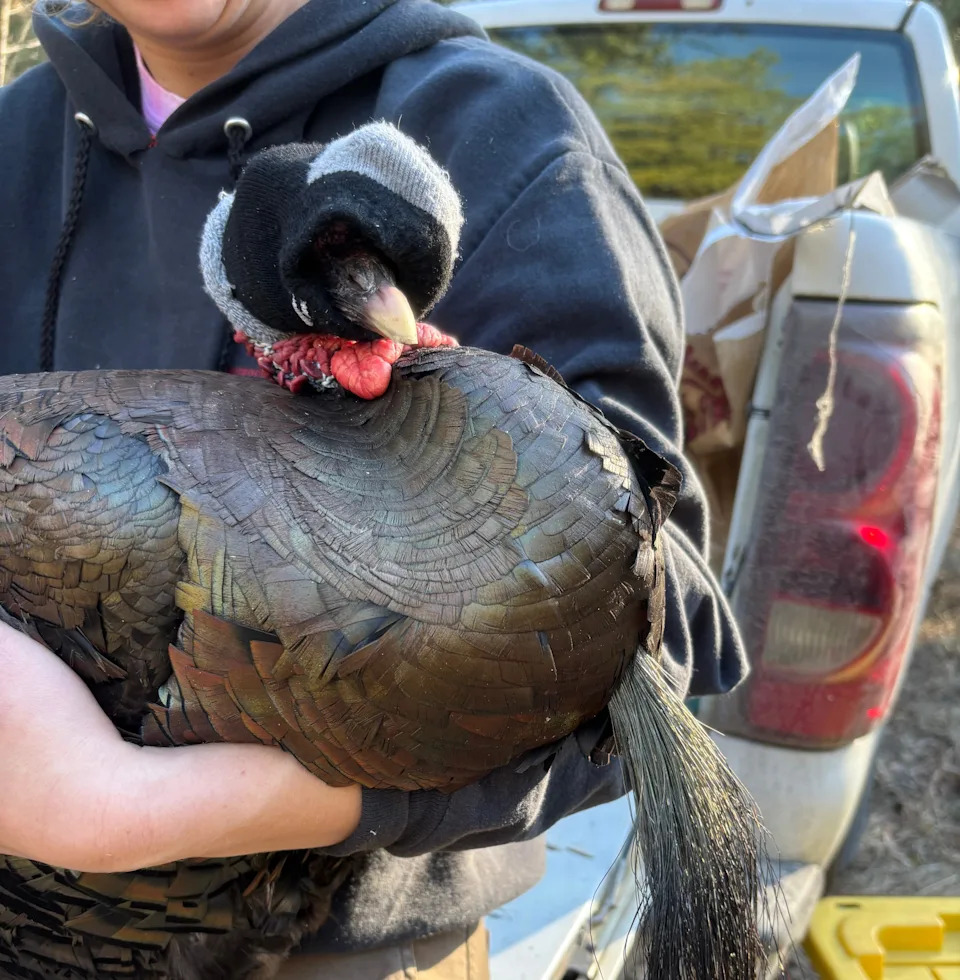
Eastern wild turkey with a sock covering its head, a hole cut out for its beak
How The Study Was Done
Researchers lured flocks into traps by scattering cracked corn on open fields and deployed weighted nets to capture birds. Each turkey was banded and fitted with a wing-mounted GPS “backpack” to monitor movements. During spring and early summer, Ulrey and her team followed trapped hens to upland pine and hardwood nests and retrieved egg membranes—the papery film between shell and embryo—within about 24 hours of hatching to preserve DNA integrity in high summer temperatures.
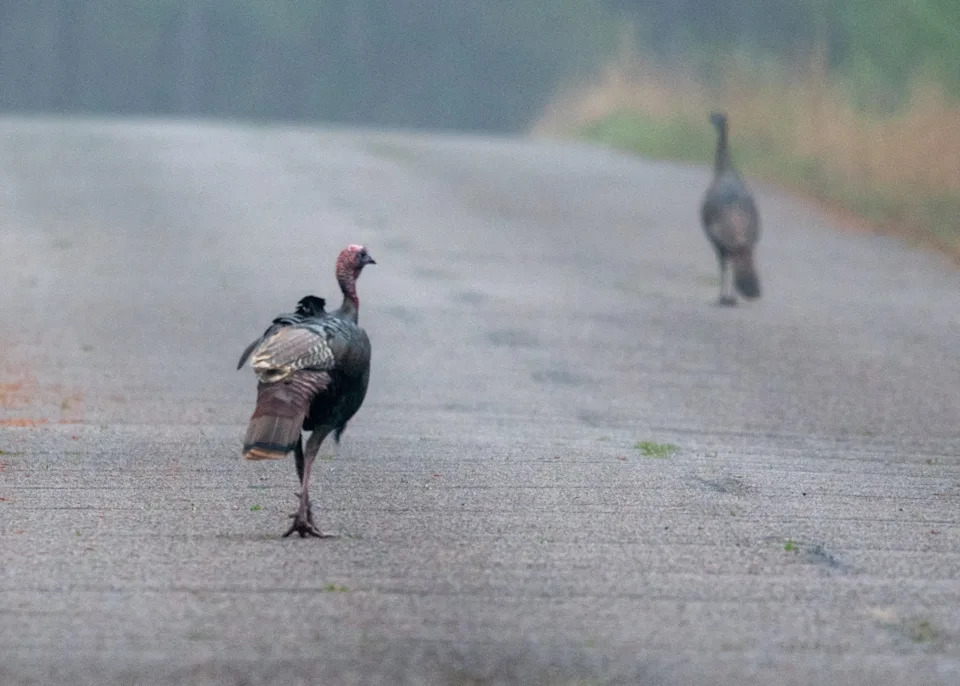
An eastern wild turkey strapped with a GPS tracker walks on the road
Key Findings
After analyzing more than 700 egg membrane samples collected over three years, the researchers found that the probability of producing a male offspring at spring-hunted sites was 47% lower than at the Savannah River Site, a non-hunted location where hunting is prohibited. That female bias at hunted sites was not observed at the non-hunted site.
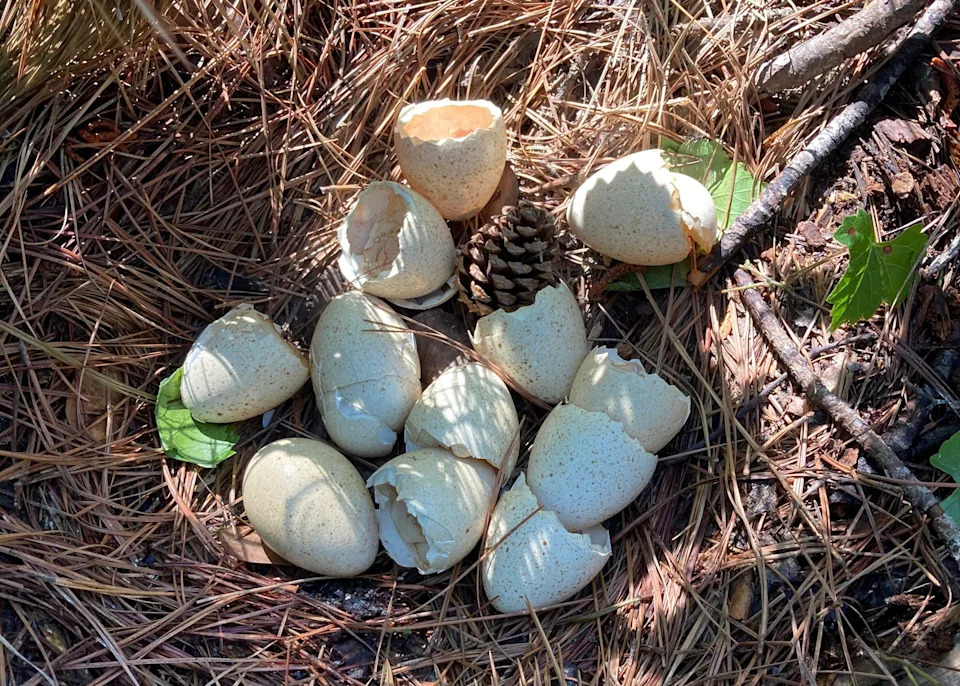
A clutch of hatched wild turkey eggs, to be sampled in the study
"We were simply trying to study sex ratios, and in doing so, we found this really interesting result," said Michael Chamberlain, UGA’s National Wild Turkey Federation Distinguished Professor.
Possible Explanations
The team suggests two main, non-exclusive explanations:
- Maternal Stress and Hormones: Hens living in hunted areas may experience chronic stress that elevates maternal glucocorticoid hormones deposited in egg yolks, which can influence embryo development and potentially skew sex ratios.
- Selective Harvest Of Males: Spring hunters disproportionately harvest toms because males are larger, more showy and more likely to respond to calls and decoys. If many males are removed before breeding, the evolutionary advantage of producing sons may disappear, and hens may produce more daughters with higher survival prospects.
An Unresolved Paradox
Although egg DNA indicates more female hatchlings at hunted sites, winter trapping surveys still show fewer juvenile females in those same areas. "We're losing these young females," Chamberlain said, noting that this discrepancy is not yet explained and will require further study to resolve.
Implications And Next Steps
The findings raise important questions about how hunting pressure and maternal condition interact to shape population sex ratios and long-term population dynamics. Researchers plan to expand sampling to additional non-hunted sites and continue multi-season trapping, nest monitoring and genetic analysis to determine whether hunting is the primary driver and how these shifts affect population resilience.
Study Context: The project involved researchers from UGA and LSU, sampled over 700 egg membranes across four locations in three states (Georgia, South Carolina and Louisiana), and was supported by partnerships including the Green South Foundation, Prentice Foundation and Journalism Funding Partners. The reporting was produced by Jillian Magtoto and originally appeared in the Savannah Morning News.
Help us improve.