The U.S. House will hold a committee hearing on January 13 to review bills designed to speed up deployment of autonomous vehicles that operate without human controls. Key measures include raising the annual exemption cap to 90,000 vehicles and updating safety standards that assumed a human driver. The session follows expanding robotaxi testing across the United States and will bring industry and safety voices before lawmakers.
U.S. House Panel To Weigh Bills That Could Fast-Track Driverless Cars — Hearing Jan. 13
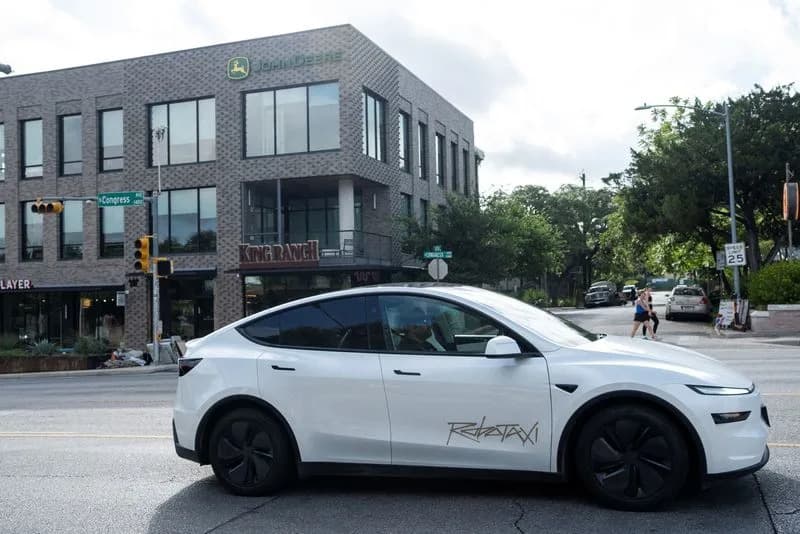
A robotaxi drives on the street along South Congress Avenue in Austin, Texas, U.S., June 22, 2025. REUTERS/Joel Angel Juarez
A U.S. House committee in Washington will hold a hearing on January 13 to consider legislation intended to accelerate the deployment of autonomous vehicles that operate without human controls as robotaxi testing expands across the country.
Lawmakers will review several proposals, including one to raise the annual cap on exempt vehicles to 90,000 and others aimed at modernizing safety rules originally written decades ago when a human driver was assumed to be behind the wheel. Proponents argue the changes would remove regulatory barriers and allow companies to scale testing and commercial operations of driverless vehicles more quickly.
What The Bills Would Do
Raise Exemptions: One proposal would lift the current cap to permit up to 90,000 exempt autonomous vehicles per year.
Update Safety Standards: Other proposals seek to amend safety regulations that presuppose human drivers, bringing rules in line with new vehicle architectures and automated driving systems.
The hearing comes amid growing pilot programs and commercial testing of robotaxis in multiple U.S. cities, which have heightened both interest in faster regulatory approval and concern among safety advocates and some lawmakers. The committee session will provide lawmakers, industry representatives, and safety experts an opportunity to debate the balance between innovation and public safety.
Reporting by David Shepardson in Washington; Editing by Chris Reese.
Help us improve.