Researchers in northern Canada observed a rare adoption when a female polar bear in Manitoba was seen caring for an additional cub after emerging from her maternity den. Polar Bears International confirmed the behavior as an adoption — the 13th documented case among roughly 4,600 Manitoba bears monitored for about 45 years. The adopted cub’s biological mother is unknown, but researchers say having a maternal caregiver improves its likelihood of surviving to adulthood. Both cubs are estimated at 10–11 months old and will likely remain with the female until about 2.5 years of age.
Rare Wild Sighting: Manitoba Mother Polar Bear Adopts Second Cub

Researchers monitoring wild polar bears in northern Canada documented a rare act of maternal care this spring when a female emerged from her maternity den in Manitoba with one cub and later was seen caring for an additional cub that does not appear to be hers.
Polar Bears International, a nonprofit conservation organization, first observed the female and her cub and returned weeks later to find the pair accompanied by an extra cub. Field researchers confirmed the behavior as an adoption — a seldom-recorded occurrence in this population.
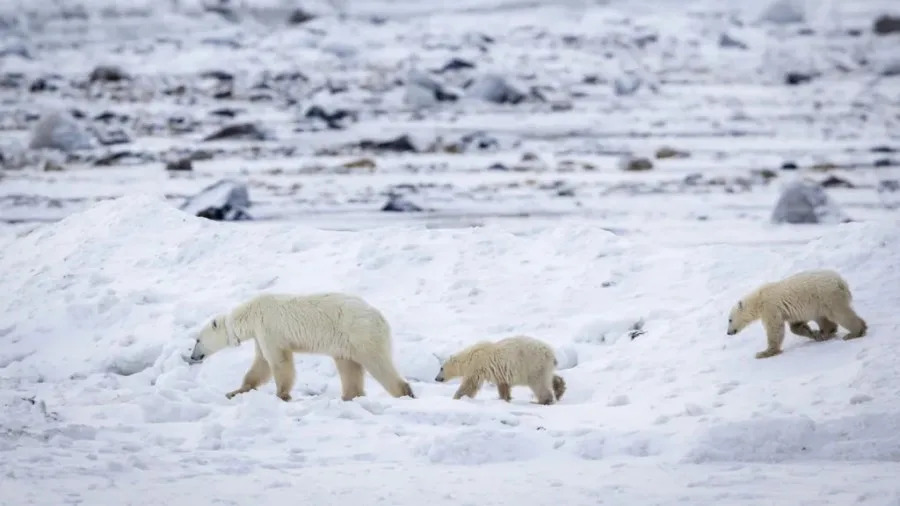
A mother polar bear with her two cubs, one of which she adopted. (Dave Sandford / Discover Churchill)
“When we got confirmation that this was an adoption, I had a lot of mixed feelings, but mostly good,” Alysa McCall of Polar Bears International told CBC. “It’s just another reason why this species is so incredible, why they’re so fascinating and interesting, and it gives you a lot of hope when you realize that polar bears may be looking out for each other out there.”
Researchers say this is only the 13th documented adoption among roughly 4,600 polar bears in Manitoba, a population that has been monitored for about 45 years. At present, scientists do not know what happened to the adopted cub’s biological mother.
According to researcher Evan Richardson, the presence of a maternal caregiver increases the adopted cub’s chances of surviving to adulthood. Both cubs are estimated at about 10 to 11 months old and will likely stay with the female until they reach roughly 2.5 years of age; the mother is believed to be approximately 5 years old.
While adoption is rare, observations like this provide valuable insight into polar bear behavior and social dynamics. Continued monitoring by field teams helps researchers track survival, reproductive success and broader conservation concerns for Arctic wildlife.
Help us improve.