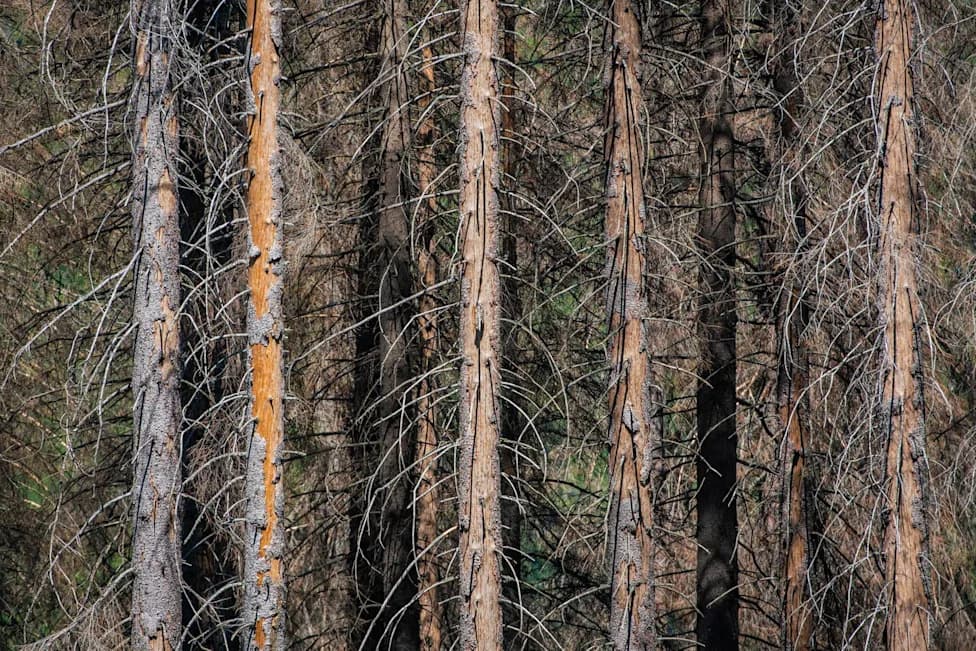
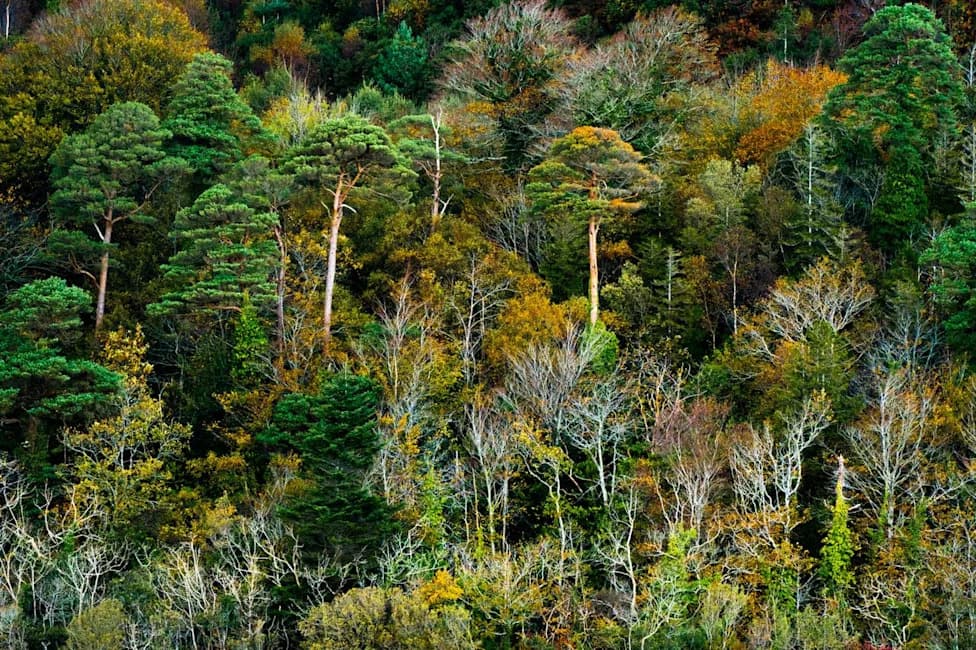
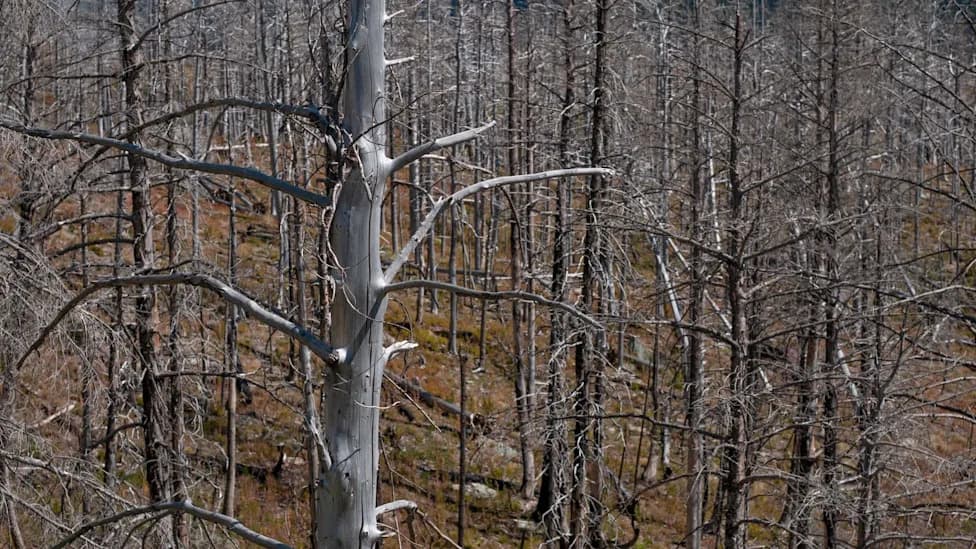
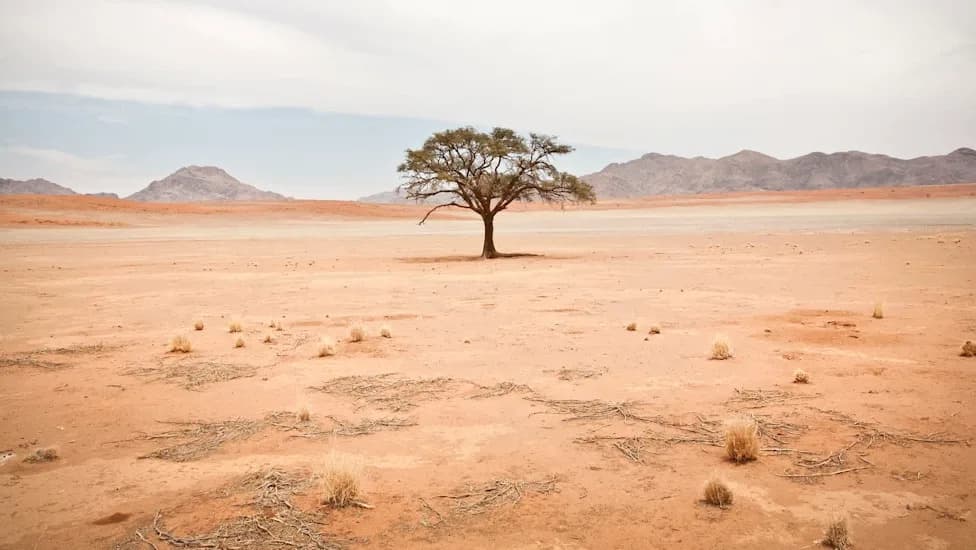
A Nature Plants study of 2,700 plots across Australia finds background tree mortality has risen consistently across four biomes, even after excluding logged, cleared or burned areas and correcting for stand basal area. Tropical savannas saw the steepest increase (≈3.2% per year from 1996–2017). Increased deaths are not being offset by growth, implying declining forest carbon storage linked to warming and drying. The trend raises concerns about forests' ability to continue buffering CO2 emissions.
Study: Climate-Driven Tree Deaths Accelerating Across Australian Forests

New research show tree mortality is rising across Australia's forest as the climate warms (DAVID GRAY)(DAVID GRAY/AFP/AFP)
Australian forests are losing trees faster as the climate warms, according to a new analysis of long-term monitoring data. The study, published in Nature Plants, examines changes in "background" tree mortality across multiple ecosystems and warns the trend may be widespread.
Method and scope
Researchers used forest inventory records from 2,700 permanent plots across Australia, spanning cool, moist forests to dry savannas. To isolate long-term mortality trends, the analysis excluded plots affected by logging, clearing or recent fire and controlled for stand basal area (the combined cross-sectional area of trees in a plot).
Key findings
Mortality rates increased consistently over time in all four biomes studied: tropical savanna, cool temperate forest, warm temperate forest and tropical rainforest. The largest rise occurred in tropical savannas, where average tree deaths climbed by about 3.2% per year — from roughly 15 deaths per 1,000 trees in 1996 to nearly double that rate by 2017.
Importantly, the rise in deaths persisted even after correcting for stand basal area, indicating the trend is not solely a result of stand aging or increased competition. The increases were strongest in hotter, drier regions and closely track warming and drying trends linked to climate change.
Implications for carbon storage
The study found that increased mortality is not being matched by equivalent growth, meaning total forest stock is declining. Lead author Belinda Medlyn of Western Sydney University said this makes it "very likely that the overall carbon storage capacity in the forests is declining over time." Globally, forests currently sequester about one-third of human-caused CO2 emissions, so a reduced buffering capacity would have significant climate implications.
Context
Global mean temperatures have risen by nearly 1.2°C since the pre-industrial era, with most warming occurring in the past 50 years. This study complements other recent research showing some Australian rainforests are shifting from carbon sinks toward net carbon sources.
"What we found is that the mortality rate has consistently increased over time, in all of the different forest types," said Medlyn. "And this increase is very likely caused by the increase in temperature."
Conclusion
The results suggest a worrying decline in forest resilience and carbon sequestration potential as climate change progresses. Continued monitoring, targeted conservation, and emissions reductions will be essential to protect forest carbon stocks and ecosystem services.
Help us improve.