
The Bloomfield River Cod (Guyu wujalwujalensis) is a tiny, ancient fish found only in a nine-mile stretch of the Bloomfield River in Australia’s Daintree Rainforest. Discovered in 1993, the species now faces growing threats from invasive fishes—especially the Tully Grunter—and catastrophic flooding from Cyclone Jasper. Researchers are using drones, eDNA and local Indigenous ranger partnerships to survey damage and collect evidence to obtain stronger legal protections; captive breeding and translocation are possible but challenging options.
Tiny Ancient Bloomfield River Cod Faces Extinction After Cyclone and Invasive Fish

The Bloomfield River Cod grows no longer than 10 centimeters from snout to tail. - Griffith University
Along a nine-mile stretch of the Bloomfield River in Australia’s Daintree Rainforest survives a remarkable relic: the Bloomfield River Cod (Guyu wujalwujalensis). This tiny, nocturnal fish—about 10 cm long—has persisted in this single isolated reach for millions of years, thought to have diverged from its nearest relatives some 25–30 million years ago.
Discovery and Name
The species was unknown to modern science until 1993, when researchers Mark Kennard and Brad Pusey found it while surveying Queensland’s Wet Tropics. They named it Guyu wujalwujalensis, using the Aboriginal word for fish and honoring the Wujal Wujal community, the land’s traditional owners. Locally it is sometimes called the tropical nightfish.
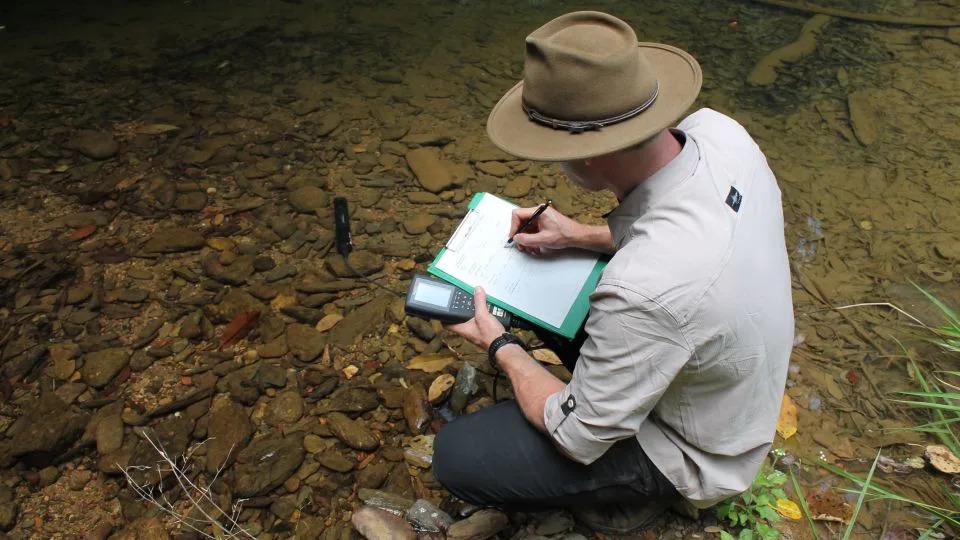
Researchers examine the water for clues about what the fish eats. - Griffith University
Current Threats
Although the river stretch is remote and bounded by waterfalls, isolation has not prevented serious threats. Introduced and translocated species—most notably the larger Tully Grunter, believed to have been introduced by recreational fishers—now compete with the cod for food and may prey on its eggs and juveniles. Scientists have also documented eel-tailed catfish and invasive guppies, likely from released aquarium pets.
In December 2023 Cyclone Jasper brought unprecedented rainfall—reports indicate up to 975 mm in 24 hours in some locations—and turned the Bloomfield into a destructive torrent. The flood stripped large amounts of fallen wood and habitat from the river, scoured banks and likely washed some cod downstream into predator-rich zones or saline estuaries where survival is doubtful.
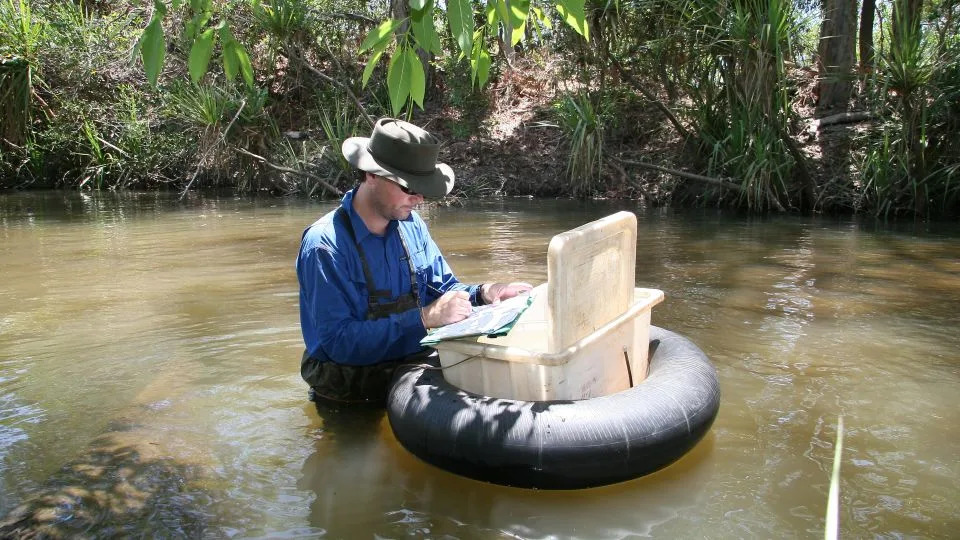
Back in 1993, research techniques were more rudimentary. - Griffith University
Fieldwork, Technology, and Local Partnerships
Methods for monitoring the cod have advanced since the 1990s. Teams now use drones to map stream corridors and vegetation and collect environmental DNA (eDNA) to detect species presence without netting. Research collaboration has expanded to include James Cook University, Terrain NRM and funding from the National Environmental Science Program. Crucially, scientists are working alongside Jabalbina Yalanji Indigenous Rangers and training local Aboriginal rangers to support ongoing monitoring.
"If we lost this, we’d lose a representative of a really complex and long period of evolution," said Brad Pusey. "It would be a tragedy… certainly a personal tragedy."
Conservation Options And Challenges
Researchers are compiling data to nominate the Bloomfield Cod for stronger legal protection under Australia’s biodiversity laws. Potential conservation responses include establishing a captive-breeding program as an insurance policy and attempting translocations to predator-free catchments. Both options carry major challenges: breeding has so far failed in captivity, suitable translocation sites are hard to find in densely forested, invaded landscapes, and moving populations risks unintended ecological consequences.

Some parts of the Bloomfield River are inaccessible by car. - Griffith University
Large-scale removal of non-native fishes from a connected river system is effectively impractical, according to Kennard. With increasing cyclone intensity linked to climate change and continued spread of invasive species, scientists warn the Bloomfield Cod could be at real risk of extinction within 10–20 years without stronger, coordinated protections.
What Comes Next
The immediate priority is gathering robust data—population surveys, habitat assessments and eDNA records—to support legal listing and targeted conservation action. Continued collaboration with Traditional Owners and investment in community-based monitoring will be essential to any long-term recovery plan.
Why it matters: The Bloomfield Cod is not just a local oddity; it represents a unique evolutionary lineage and the continued survival of ancient biodiversity in one of Earth’s oldest rainforests. Protecting it preserves ecological history as well as a living species found nowhere else on the planet.


