The missing upper half of a monumental statue of Ramesses II — first known only by a lower fragment discovered in 1930 — was recovered in March 2024. The newly found head and torso measure about 12.5 feet and depict the pharaoh with a cobra-topped headdress. Conservators report traces of original blue-and-yellow pigment, and a proposal has been submitted to reunite the two fragments at El Ashmunein for display.
Missing Top of Ramesses II Monument Found After 96 Years — Traces of Original Pigment Intact
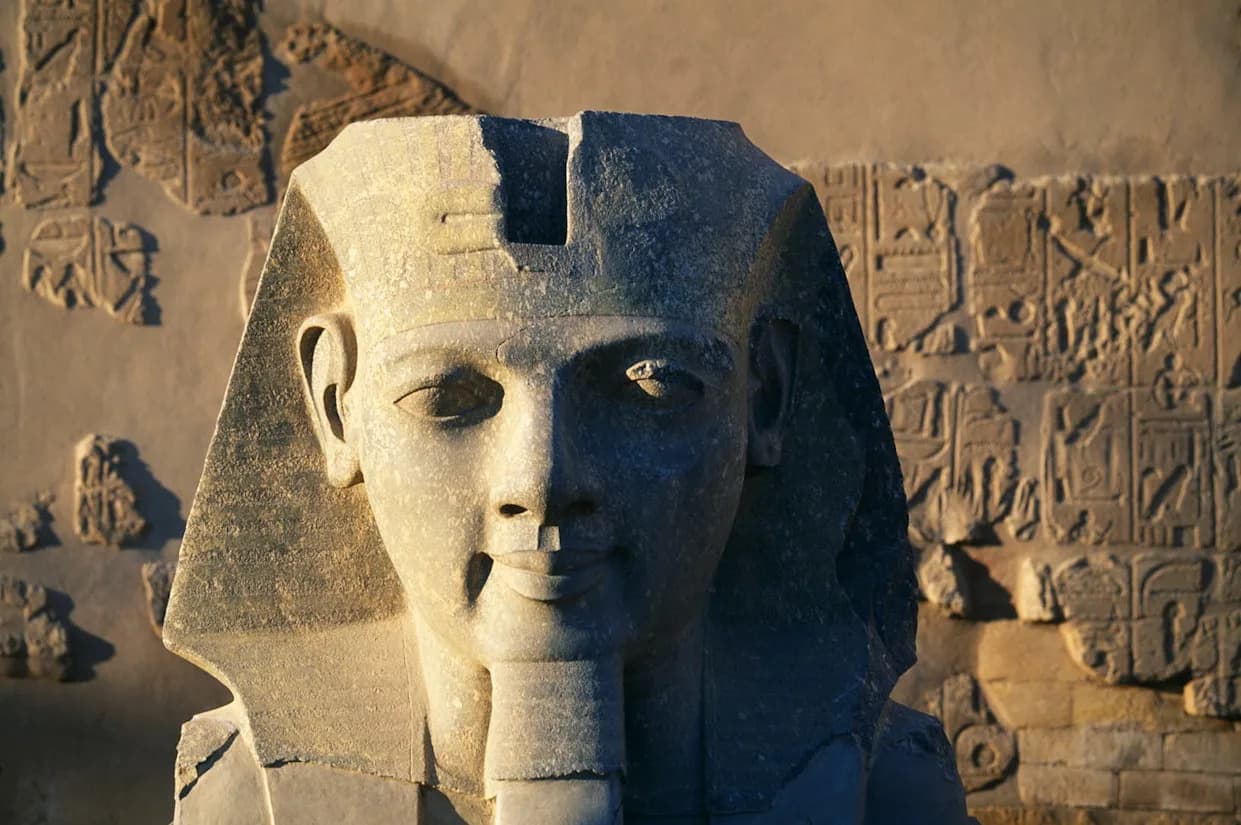
Experts Find Missing Piece of Ramesses II StatueAtlantide Phototravel - Getty Images
Archaeologists have recovered the long-lost upper half of a monumental statue of Ramesses II nearly a century after its lower portion was unearthed.
In 1930 German archaeologist Günther Roeder discovered the statue’s lower half about 150 miles (roughly 240 km) south of Cairo in Egypt’s Minya Governorate, near the modern city of El Ashmunein. In antiquity the site was known as Khemnu and later became the Roman-era Hermopolis Magna. Roeder estimated the complete statue would have stood around 23 feet (7 metres) tall.
In March 2024, a joint Egyptian and U.S. archaeological team announced they had located the missing upper fragment. Officials from the Egyptian Ministry of Tourism and Antiquities told Reuters the head and upper torso measure approximately 12.5 feet (3.8 metres) and portray Ramesses II wearing the royal headdress topped by a cobra (uraeus).
When the fragment was first exposed in January 2024 it lay face down and its survival was uncertain. Rising groundwater in the Hermopolis area since construction of the Aswan Low Dam has put many exposed antiquities at risk by raising the water table and accelerating stone decay.
"One problem with Hermopolis is that it’s close to the Nile. After [the building of] the Aswan Low Dam, the water table became a huge issue. There was no guarantee that the stone would be OK," said Yvona Trnka-Amrhein, assistant professor of classics at the University of Colorado Boulder and co-leader of the excavation team.
Further excavation revealed the upper half to be remarkably well preserved rather than degraded rock. Conservators detected remnants of blue-and-yellow pigment on the surface; future pigment analysis should help researchers reconstruct the statue’s original colors and the techniques used by ancient sculptors.
The find was not the result of a targeted search for Roeder’s missing piece, which made its recovery a welcome surprise. Egyptian co-leader Basem Gehad has already submitted a proposal to reunite the newly recovered upper fragment with Roeder’s lower portion, which remains in place at El Ashmunein. Team leaders expressed confidence the reunification plan will be approved, allowing the two sections to be displayed together for the first time in 96 years.
Significance: The discovery not only restores a near-complete portrait of one of Egypt’s most famous pharaohs, Ramesses II, but also preserves rare traces of original painted decoration that can shed light on ancient artistic practice and monument presentation.
Help us improve.