
NASA has lost contact with the MAVEN Mars orbiter after it re-emerged around December 6 and emitted no signal. Tracking data indicate MAVEN was rotating unexpectedly and that its orbital trajectory may have shifted, though investigators have not confirmed a cause. Possible explanations range from an impact with an anomalous object to an internal systems failure. NASA is working to restore communications and to limit any impact on surface missions that rely on MAVEN for data relay.
NASA Loses Contact With MAVEN Orbiter — What We Know About the Anomaly

Rendering of NASA's MAVEN spacecraft orbiting Mars - Stanislaw Tokarski/Shutterstock
NASA has lost contact with the MAVEN orbiter, a spacecraft launched in 2013 that began circling Mars roughly 10 months later and has operated at the planet for more than a decade. Agency engineers say MAVEN was functioning normally before a routine reappearance, but when the spacecraft re-emerged around December 6 no signal was received by NASA's Deep Space Network.
Details of the Anomaly
Investigators are actively working the issue, but as of now teams have not re-established communications or regained control. Analysis of tracking data after reappearance showed MAVEN was "rotating in an unexpected manner," and the frequency of its tracking signal suggests the vehicle's orbital trajectory may have changed. NASA has not confirmed a cause.
Possible Causes
Officials have said possible explanations include a collision with an unknown object or an internal malfunction or systems failure that altered MAVEN's attitude or orbit. No single scenario has been confirmed and engineers continue to evaluate telemetry, tracking data and other diagnostics.
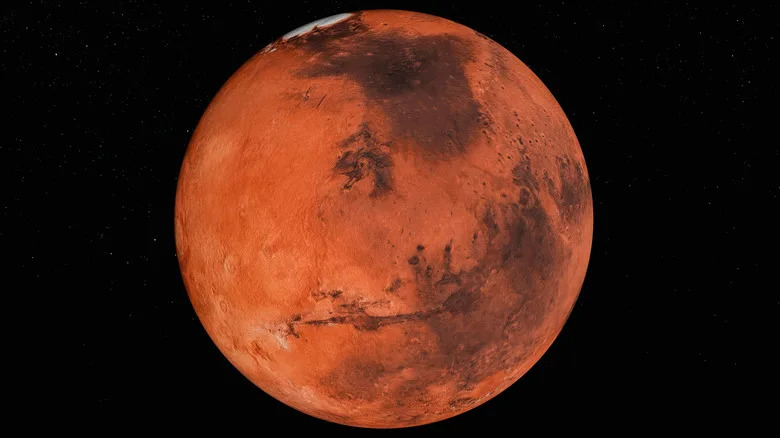
An image of Mars taken from an Earth-based telescope. - Eyeem Mobile Gmbh/Getty Images
Mission Role and Impact
MAVEN (Mars Atmosphere and Volatile EvolutioN) was designed to study Mars' upper atmosphere and ionosphere, and to measure how the solar wind interacts with those layers. Its observations played a major role in confirming that solar-driven processes contributed significantly to atmospheric loss on Mars, helping explain why the planet became colder and less hospitable.
Beyond science, MAVEN also serves as a communications relay for surface missions, including the Curiosity and Perseverance rovers. NASA says it is taking steps to "mitigate the effect" of the outage on relay operations; both rovers remain operational, and Perseverance recently returned a very clear panoramic surface image.
Other Assets at Mars
Other orbiters remain active: NASA's Mars Reconnaissance Orbiter (which marked 15 years of service in 2020), Mars Odyssey, and the European Space Agency's ExoMars Trace Gas Orbiter are all still operating. Separately, NASA continues planning a multi-mission Mars Sample Return campaign that would involve additional orbiters and surface hardware.
Next Steps
NASA's engineering and mission teams continue efforts to re-establish contact, regain control of the spacecraft, and determine precisely why the signal was lost and whether MAVEN's trajectory changed. Until investigations conclude, teams will prioritize both restoring communications and minimizing impacts to ongoing surface science operations.
Bottom line: MAVEN, a decade-long Mars orbiter with both scientific and relay roles, went silent after a routine reappearance. Engineers are probing an unexpected rotation and a possible change in orbit while protecting surface missions' communications.


