The Hjortspring boat — a nearly 20 m plank-built warcraft excavated from a Danish bog and packed with weapons — has yielded fresh clues about its origins. Chemical analysis shows its caulking contains pine pitch mixed with animal fat, suggesting links to pine-rich Baltic coasts rather than local Danish forests. Radiocarbon dating of preserved cordage places the vessel in the 4th–3rd century BC, and a rare partial fingerprint on tar may trace to an individual seafarer. Researchers plan further tree‑ring X-rays and DNA tests to refine the boat’s provenance.
Century-Old Mystery Revisited: Pine Pitch, a Fingerprint and New Dates Illuminate the Hjortspring Boat

Excavated in the 1920s, the 2,400-year-old Hjortspring boat is on display at the National Museum of Denmark. - Sahel Ganji/Lund University
The Hjortspring boat — a nearly 20-meter plank-built vessel recovered from a Danish bog more than a century ago and found packed with swords, spears and shields — is yielding fresh evidence about who built and crewed it. A new study published in PLOS ONE combines radiocarbon dates with chemical and material analysis of archived caulking and cordage to suggest the craft traveled farther than previously thought.
New Material Evidence
Chemical analysis shows the boat’s caulking is a mixture of animal fat and pine pitch (the dried resin of pine trees), rather than only local materials such as linseed oil or tallow. Because Denmark had relatively few pine forests at the time, the presence of pine pitch points toward coastal regions around the Baltic Sea where pine was more abundant, suggesting the vessel may have been constructed or provisioned outside what is now Denmark.
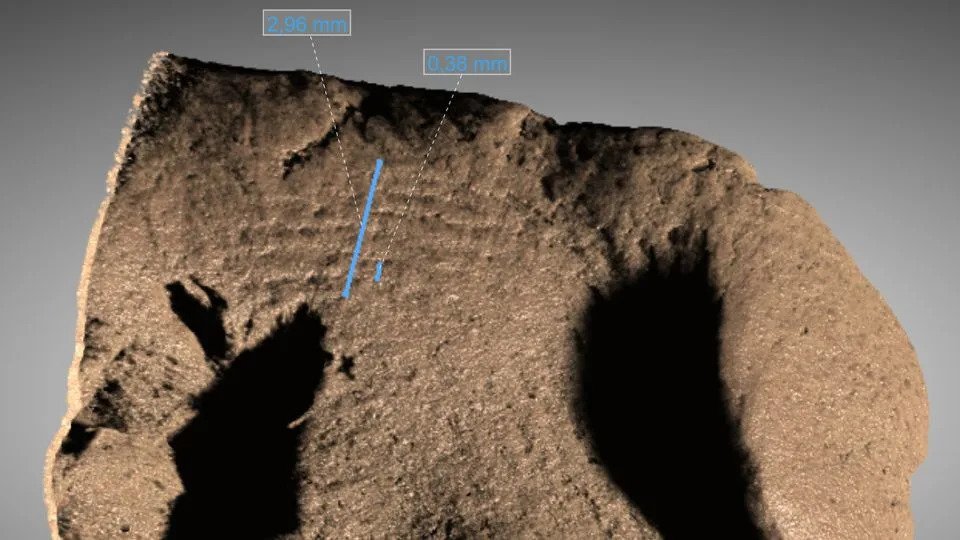
A partial human fingerprint was found on tar fragments. A high-resolution X-ray tomography scan of the fingerprint region is shown here. - Sahel Ganji/Lund University
Dating, Fingerprint and Other Finds
Intact lengths of cordage retrieved from museum archives enabled radiocarbon dating that places the vessel in the 4th–3rd century BC, consistent with previous estimates. The ship’s wooden planks cannot be reliably dated because they were treated with modern preservatives after excavation; cordage therefore provided the best material for modern dating techniques.
Researchers also identified a partial human fingerprint preserved in tar on caulking fragments — an exceptionally rare find for this region and era that may provide a direct connection to an individual involved with the boat.
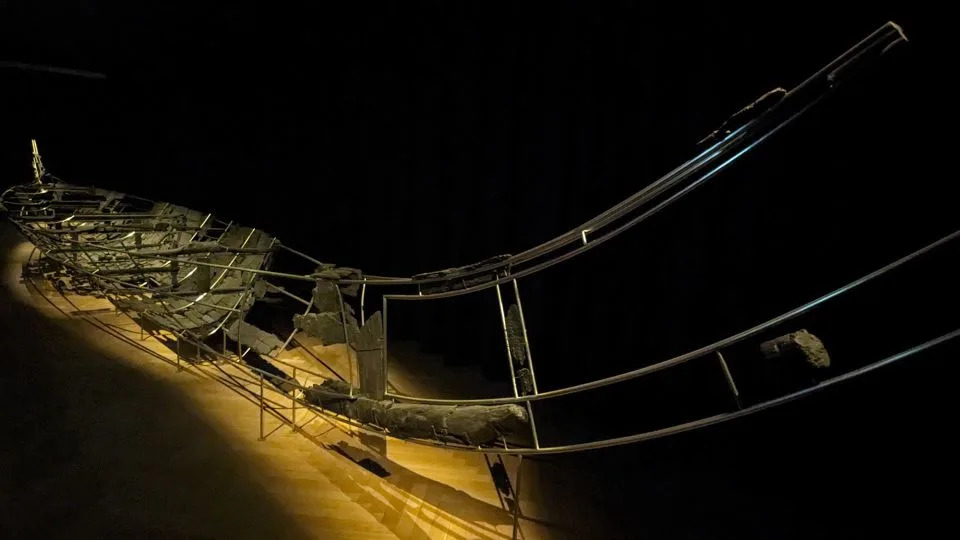
The ship is thought to be the oldest preserved plank-built boat of Northern Europe. - Sahel Ganji/Lund University
Context and Significance
Archaeologists interpret the weapons-strewn vessel as a defeated raiding party bound for the Danish island of Als; local defenders are believed to have sunk the ship in a bog. Study lead Mikael Fauvelle (Lund University) said the new evidence strengthens the picture of an already sophisticated seafaring tradition in Bronze and Early Iron Age Scandinavia, one with long-distance contacts for trade and raiding.
“The new clue shows that the Scandinavian seafaring tradition of raiding and trading — most famously associated with the Viking Age — has very deep roots that go back thousands of years,” Fauvelle said.
Independent expert Ole Kastholm (Roskilde Museum) called the pine-pitch result exciting and emphasized how new scientific methods applied to old museum collections can reveal previously hidden details.
Next Steps
Researchers plan further analyses, including X-ray scans of the wood to look for tree-ring patterns that might narrow timber provenance, and attempts to extract ancient DNA from tar residues to help pinpoint origin. If confirmed, a Baltic connection would imply a long, organized maritime voyage and underscore how interconnected ancient Northern Europe was by sea.
The Hjortspring boat remains on display at the National Museum of Denmark in Copenhagen and continues to be a key artifact for understanding early naval technology, trade routes and conflict in Northern Europe.
Help us improve.