Prime Minister Anthony Albanese announced a major nationwide gun buyback to remove surplus, newly banned and illegal firearms after a deadly mass shooting at a Bondi Beach Hanukkah event that killed 15 people. Authorities have charged Naveed Akram with murder and terrorism counts after his father, Sajid Akram, was fatally shot in a police exchange. The proposed buyback—funded jointly by the federal and state governments—would be the largest since the 1996 post-Port Arthur reforms, and leaders also plan to pursue a national firearms register and tighter licensing rules.
Australia Announces Major Nationwide Gun Buyback After Deadly Bondi Beach Attack

Australia announces gun buyback plan just days after Bondi Beach attack
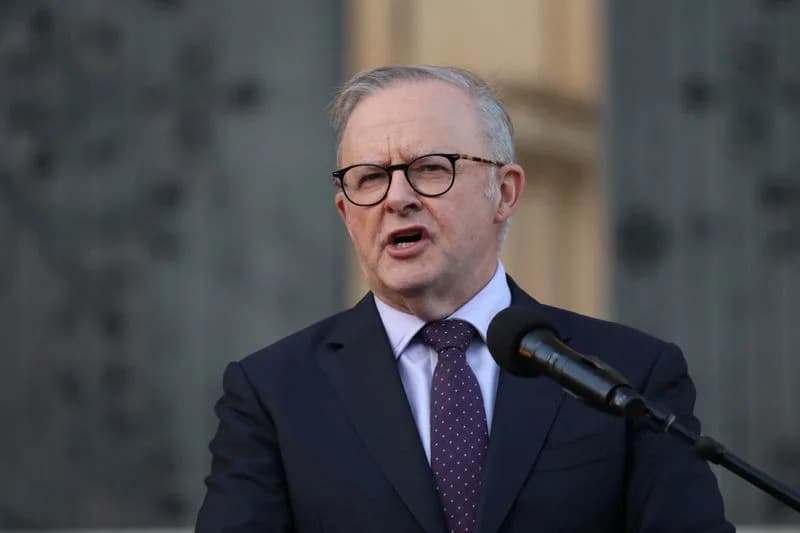
Australia's federal government has moved swiftly to announce a large-scale gun buyback program after a mass shooting at a Hanukkah event on Bondi Beach left 15 people dead, Prime Minister Anthony Albanese said.
What the government announced
The proposed buyback would pay owners to surrender surplus, newly banned and illegal firearms. The federal government plans to split the cost evenly with state and territorial governments, with detailed legislation to be finalised when parliament reconvenes. Albanese said his government is "prepared to take whatever action is necessary," and suggested measures could include limits on the number of firearms a licensed owner may hold and mandatory reviews of existing licences.

Australian Prime Minister Anthony Albanese and Australian Federal Police Commissioner Krissy Barrett are seen on Dec. 19, 2025, in Canberra, Australia, during a news conference in the wake of the Bondi Beach terrorist attack. / Credit: Hilary Wardhaugh/Getty
The attack and investigation
Authorities have accused 50-year-old Sajid Akram and his 24-year-old son, Naveed, of opening fire at a Bondi Beach festival that marked the first day of Hanukkah. Sajid Akram was killed in a shootout with police; Naveed Akram survived and has been charged with 15 counts of murder, an act of terrorism and other serious offences after regaining consciousness in a Sydney hospital.
Prime Minister Albanese said investigators believe the attack was inspired by ISIS ideology. Police are probing whether the men had contact with Islamist extremists during a recent trip to the southern Philippines, where they stayed in Davao City for much of November. Hotel staff told reporters the pair extended their stay week by week, paid in cash and did not attract obvious suspicion during their monthlong visit.

A view of the GV Hotel, where Sajid and Naveed Akram, suspects in the Bondi Beach terror attack, stayed in November, as seen on Dec. 18, 2025, in Davao City, in the southern Philippines. / Credit: Ezra Acayan/Getty
Separately, police briefly detained seven men on a tip they may have been planning a violent act near Bondi; the men were released after authorities said there was no established link to the alleged Bondi shooters and no immediate risk to the public.
How this compares to 1996 reforms
If approved, the buyback would be the largest centrally funded program since the 1996 reforms that followed the Port Arthur massacre. In 1996 the government banned many automatic and semi-automatic rifles and shotguns, introduced a 28-day waiting period and a legitimate-reason requirement for purchases, and ran a mandatory buyback that resulted in nearly 700,000 firearms being surrendered and destroyed.

A Sept. 8, 1996 file photo shows Norm Legg, a project supervisor with a local security firm, holding an ArmaLite rifle similar to the one used in the Port Arthur mass shooting, which was handed in for scrap in Melbourne as part of a mandatory government gun buyback program after the attack. / Credit: WILLIAM WEST/AFP/Getty
Former prime minister John Howard has pointed to sharp declines in mass shootings and gun homicides in the decades after the 1996 reforms. However, recent analysis has found gaps remain in Australia’s firearms framework.
Gaps and calls for further reform
A 2024 report by the Australia Institute argued that elements of the National Firearms Agreement have not been fully implemented: some jurisdictions still allow minors to hold firearm licences, there is no complete national firearms register, and enforcement is inconsistent across states and territories. The report also noted that registered privately owned guns have risen to more than four million—around 800,000 more than before the 1996 buyback.

Surfers and swimmers paddle out into the ocean to hold a tribute for the victims of the terror attack at Bondi Beach, in Sydney, Australia, Dec. 19, 2025. / Credit: Steve Markham/AP
In response, Albanese and state and territory leaders agreed to explore measures including accelerating a national firearms register, restricting licences to citizens in some cases, tighter limits on weapon types and quantities, and more rigorous licence review processes.
Community response and memorials
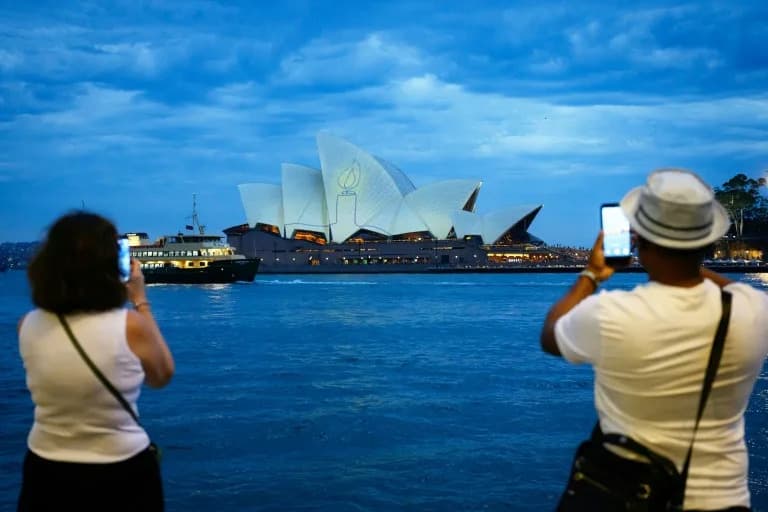
Hundreds of people gathered at Bondi Beach for a water memorial on surfboards and paddleboards, forming a ring to honour the 15 victims. Albanese announced a national day of reflection to be observed on Sunday and asked Australians to light candles at 6:47 p.m., exactly one week after the attack.
"There is no reason someone living in the suburbs of Sydney needed this many guns," Albanese said, referring to the fact that Sajid Akram had legally owned multiple high-powered rifles under current regulations.
The investigation continues as authorities work to identify any wider networks and to shape the legislative response. Lawmakers are expected to debate and refine the buyback and related reforms when parliament returns.
Help us improve.