
The Halawa family returned to a partially standing apartment in Gaza City, choosing the ruins over temporary shelters as a fragile ceasefire holds. The Oct. 7, 2023, Hamas attack and Israel’s retaliatory offensive left tens of thousands dead, displaced most of Gaza’s roughly 2 million residents and produced widespread destruction. A ceasefire brokered in October by international mediators has eased fighting, but reconstruction has not begun and will likely take years. Families are repairing what they can and trying to restore familiar touches amid unstable, collapsing buildings.
Photo Essay: Gaza Families Rebuild Lives Amid Rubble As Fragile Truce Holds

The half-collapsed home of the Halawa family stands in Jabaliya, Gaza City, Tuesday, Nov. 25, 2025. Amani and Mohammed Halawa and their children returned after the ceasefire to find rubble and a damaged roof that they repaired with debris. (AP Photo/Jehad Alshrafi)(ASSOCIATED PRESS)
GAZA CITY, Gaza Strip (AP) — The Halawa family’s apartment block still rises two stories above surrounding rubble in Gaza City, a fragile survival after two years of heavy Israeli airstrikes that damaged homes across the territory.
Part of the structure has collapsed, with bent rebar jutting where a roof once stood. The family has fashioned a narrow, creaking wooden staircase to reach what remains of their home — a stairway that threatens to give way with every step. Even amid the debris, they insist it is still home.
The conflict began with Hamas’ Oct. 7, 2023, attack, in which about 1,200 people in Israel were killed and more than 250 were taken hostage. Israel’s subsequent offensive in Gaza has killed tens of thousands, produced wide-scale destruction and displaced most of the territory’s roughly 2 million residents.
The end of the year brought a measure of respite: a ceasefire brokered in October by international mediators. But reconstruction has not begun and is expected to take years. As the truce moves into 2026, families such as the Halawas are trying to piece their lives back together as best they can.
The Halawas left their home three months after the war began and returned during the fragile calm of the truce. Like many, the seven-member family said living among the ruins felt preferable to tents, especially as winter rains arrived.
In a damaged room, Amani Halawa warmed a small tin of coffee over an open flame while thin shafts of light slipped between concrete fragments. Amani, her husband Mohammed and their children patched what they could with leftover concrete, hung backpacks from exposed metal rods and spread pots and pans across the kitchen floor. The walls are decorated with a painted tree and messages to relatives from whom they were separated during the fighting.
Across Gaza City, daily routines continue inside damaged apartments even as residents lie awake worrying that unstable walls may collapse. Health officials reported that at least 11 people were killed in building collapses during a single week in December.
In another home, Sahar Taroush swept dust from carpets laid over rubble while her daughter, Bisan, watched a movie with her face lit by a computer screen beside a gaping hole in the wall. On a cracked plaster wall nearby, a family hung a torn photograph of a grandfather on horseback from his days in the Palestinian Authority security services in the 1990s. A man rested on a bed teetering on the edge of a damaged balcony, scrolling his phone above the shattered Al-Karama neighborhood.
With so much uncertainty ahead, families are restoring small comforts and familiar touches wherever they can — repairing walls with scraps of concrete, salvaging furniture and preserving memories amid ruins that no longer fully resemble homes.
Note: This is a documentary photo story curated by AP photo editors. Follow AP’s ongoing coverage of the conflict at https://apnews.com/hub/israel-hamas-war.
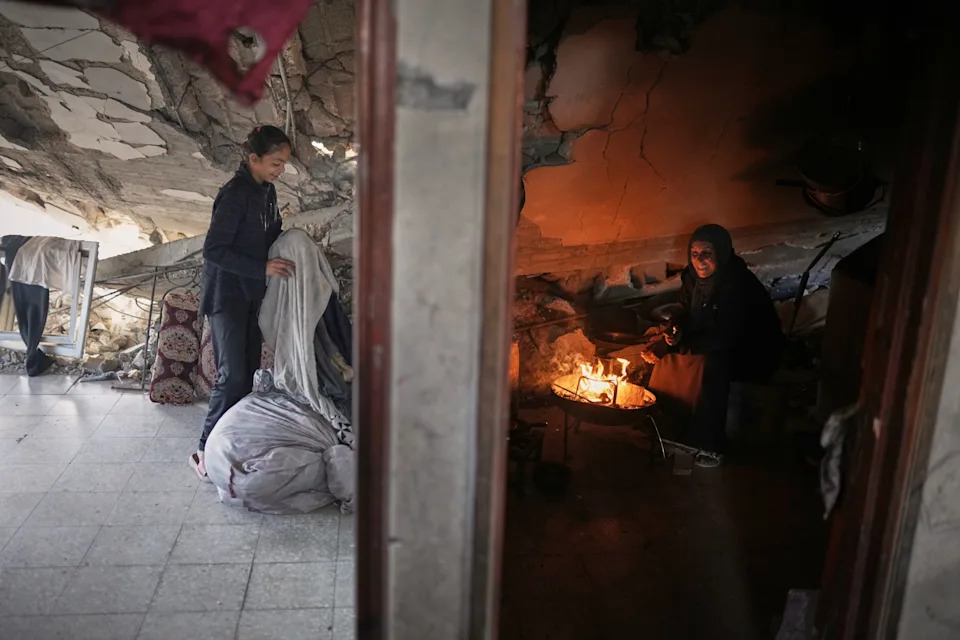
Amani Halawa lights a fire as her daughter Aya arranges laundry in their damaged home in Jabaliya, Gaza City, Tuesday, Nov. 25, 2025.(AP Photo/Jehad Alshrafi)(ASSOCIATED PRESS)

Food and pottery sit amid the rubble in the kitchen of the Abu Shaqfa family, a small sign of daily life beneath the roof of their partially collapsed home in Jabaliya, Gaza City, Friday, Nov. 21, 2025. (AP Photo/Jehad Alshrafi)(ASSOCIATED PRESS)
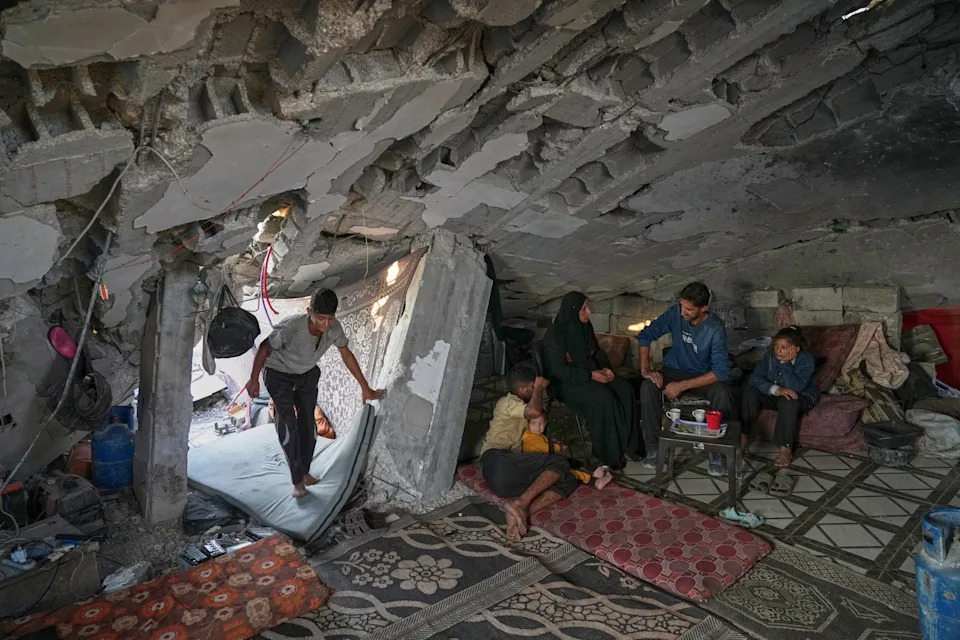
Sahar Taroush talks with her brother in her partially collapsed home after returning following the latest ceasefire, Jabaliya, Gaza City, Tuesday, Nov. 11, 2025. Also pictured are her children, Ammar far left; Hassan with his 2-year-old sister, Ahlam; and Bisan, right. (AP Photo/ Jehad Alshrafi)(ASSOCIATED PRESS)

Khadija Abu Shaqfa and her daughter Rita move through the kitchen of their damaged home, where food and pottery lies amid the rubble, in Jabaliya, Gaza City, Friday, Nov. 21, 2025. (AP Photo/Jehad Alshrafi)(ASSOCIATED PRESS)

Sahar Taroush cleans her home beneath a partially collapsed roof while her children, Ammar, left, Hassan, right, and their 2-year-old sister, Ahlam, sit nearby, in Jabaliya, Gaza City, Tuesday, Nov. 11, 2025. (AP Photo/Jehad Alshrafi)(ASSOCIATED PRESS)
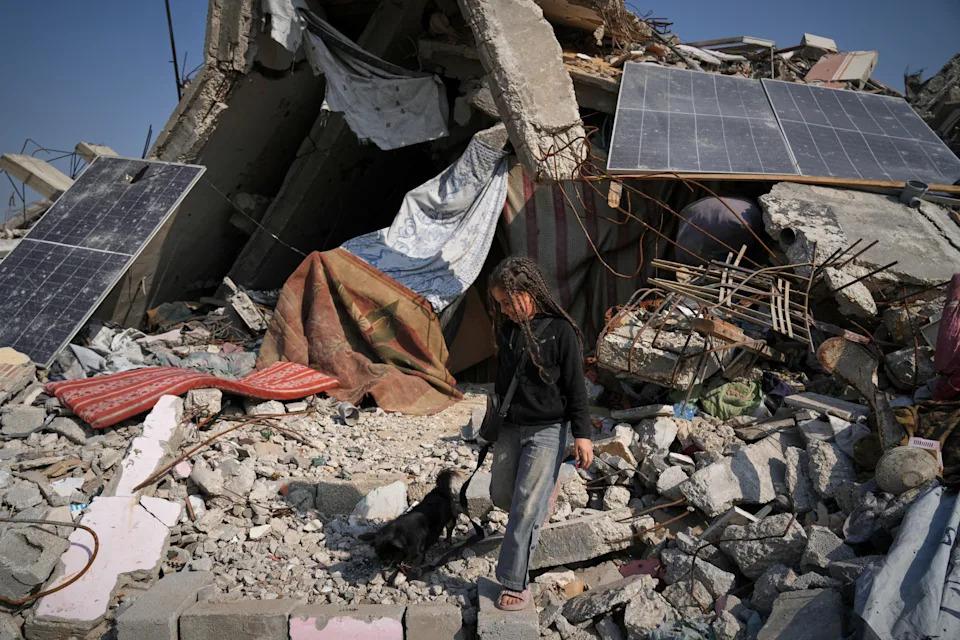
Rita Abu Shaqfa plays with her dog in front of their collapsed home, where the family struggles to live using damaged solar panels, in Jabaliya, Gaza City, Friday, Nov. 21, 2025. (AP Photo/Jehad Alshrafi)(ASSOCIATED PRESS)
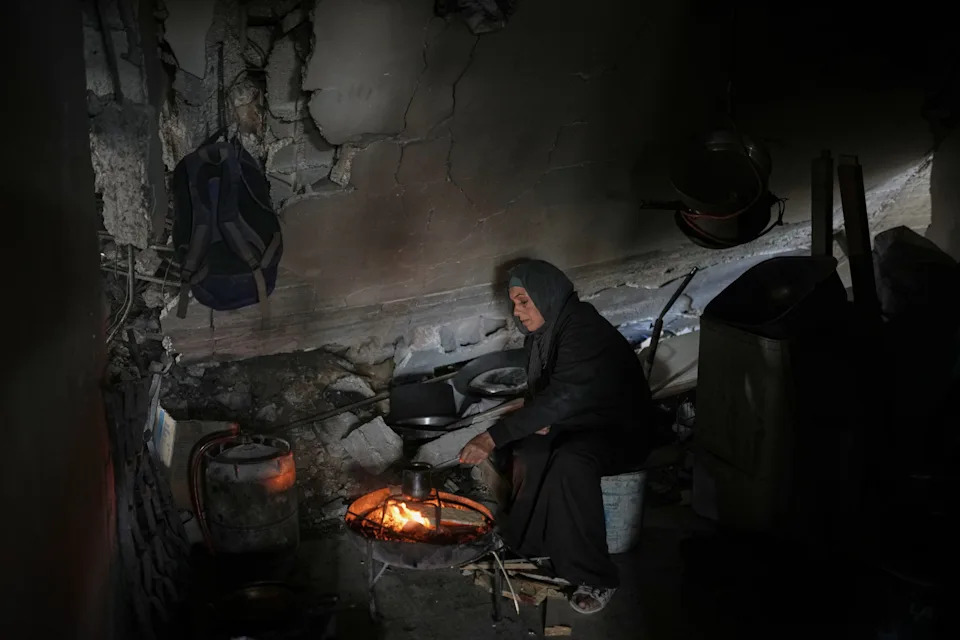
Amani Halawa warms a beverage over a fire in a dilapidated room, making do amid the rubble of her damaged home in Jabaliya, Gaza City, Tuesday, Nov. 25, 2025.(AP Photo/Jehad Alshrafi)(ASSOCIATED PRESS)
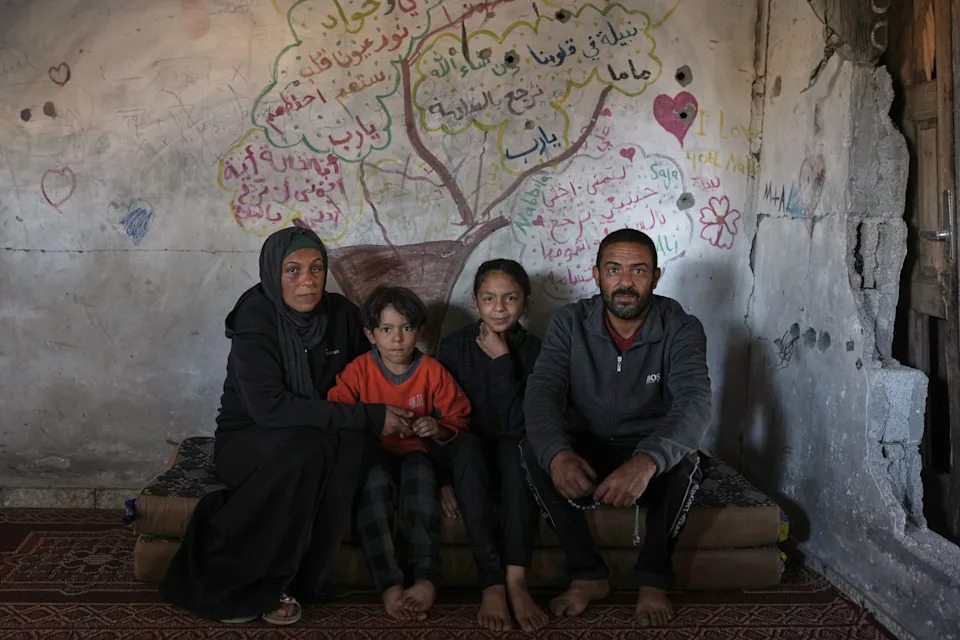
Amani and Mohammed Halawa pose for a picture with their children, Aya, 13, and Bashir, 10, inside their partially collapsed home, with a tree and messages of longing and hope painted on the wall behind them, Jabaliya, Gaza City, Tuesday, Nov. 25, 2025.(AP Photo/Jehad Alshrafi)(ASSOCIATED PRESS)

Bisan Taroush watches a movie on a laptop beneath the partially collapsed roof of her home, carrying on with daily life amid the ruins, in Jabaliya, Gaza City, Tuesday, Nov. 11, 2025. (AP Photo/Jehad Alshrafi)(ASSOCIATED PRESS)
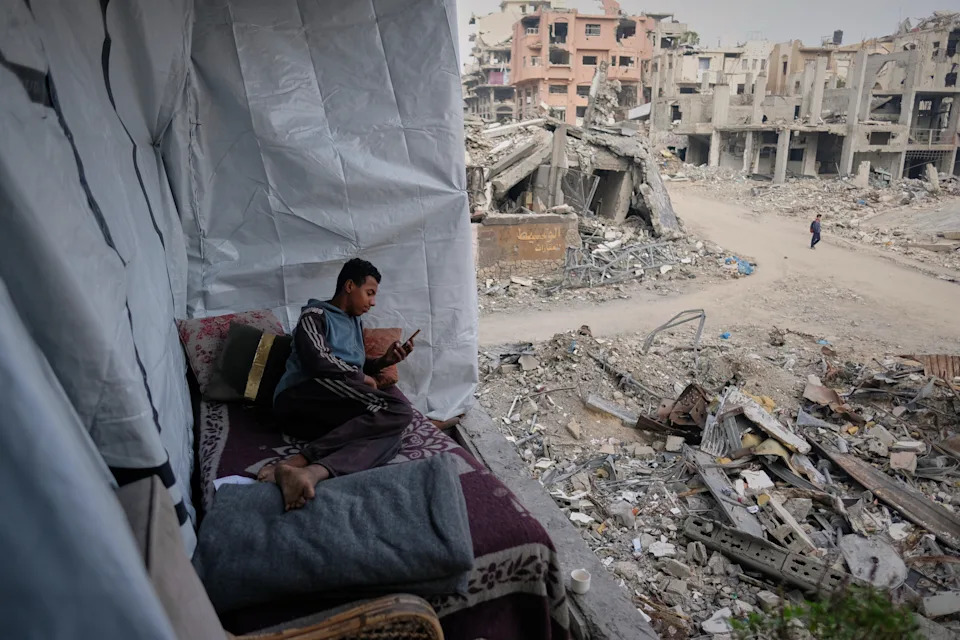
Omar Qutay sits on a bed placed on the balcony of his partially destroyed home in the Al-Karama neighborhood of Gaza City, Wednesday, Nov. 24, 2025. (AP Photo/Jehad Alshrafi)(ASSOCIATED PRESS)
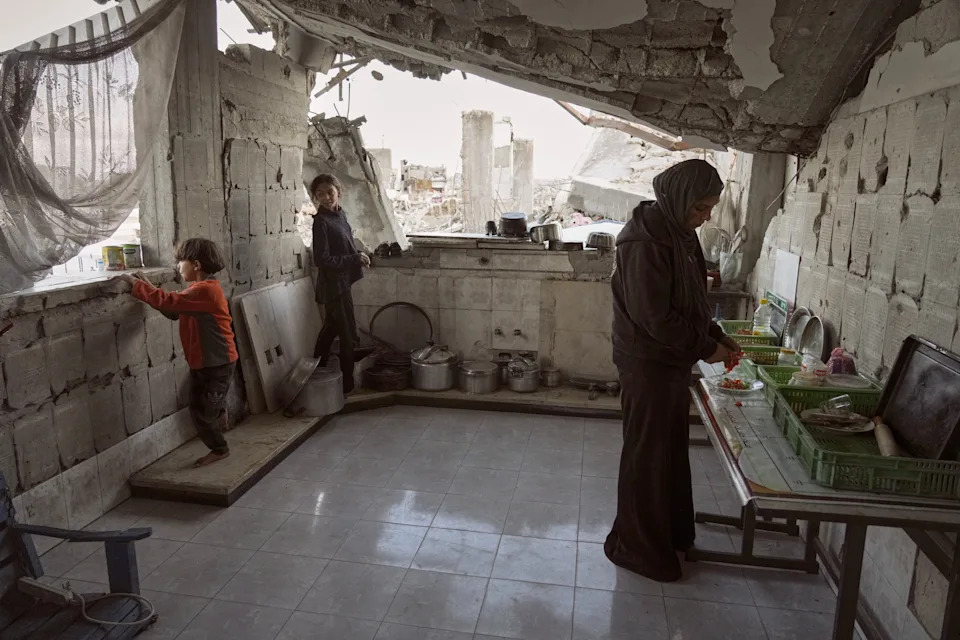
Amani Halawa prepares food beneath the half-collapsed roof of her home, with her children Aya, 13, and Bashir, 10, by her side as they try to carry on daily life amid the rubble, in Jabaliya, Gaza City, Tuesday, Nov. 25, 2025. (AP Photo/Jehad Alshrafi)(ASSOCIATED PRESS)
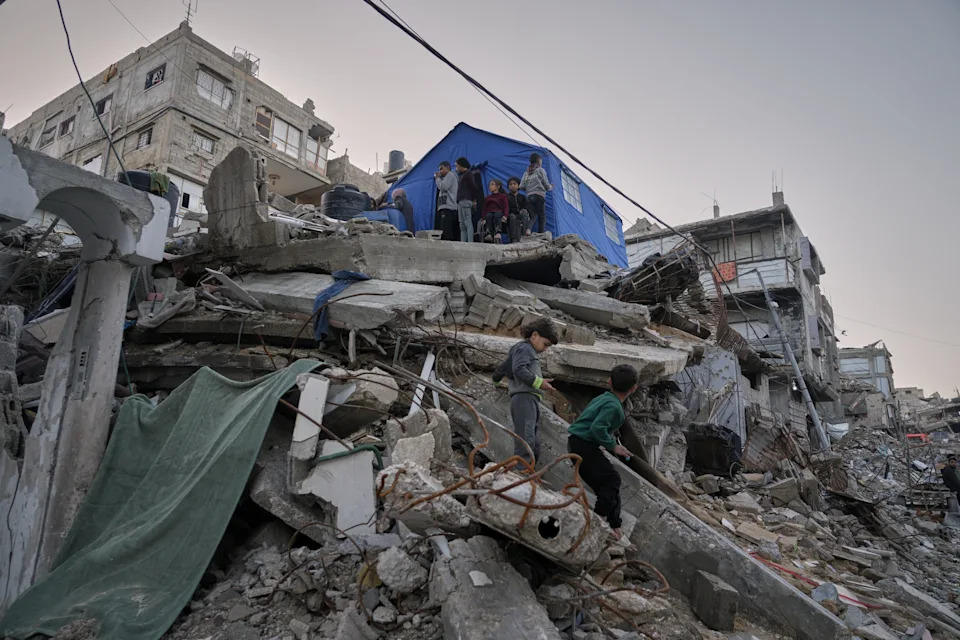
Children from the Abu Duheir family step down from their temporary tent, erected over the rubble of their collapsed home in the Sheikh Radwan neighborhood of Gaza City, Wednesday, Nov. 26, 2025. (AP Photo/Jehad Alshrafi)(ASSOCIATED PRESS)
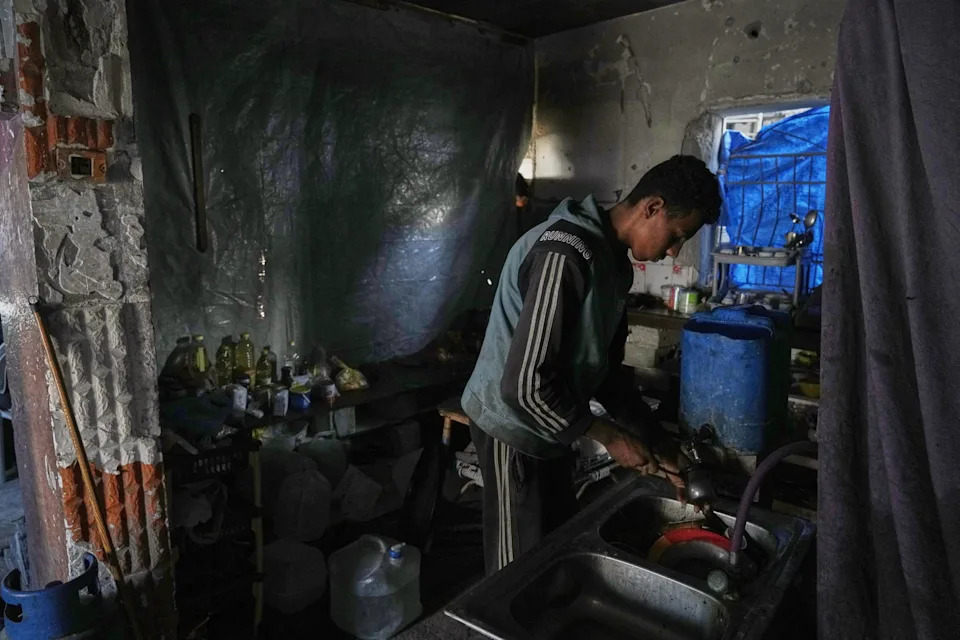
Omar Qutay washes dishes in the kitchen of his partially destroyed home in the Al-Karama neighborhood of Gaza City, Wednesday, Nov. 24, 2025. (AP Photo/Jehad Alshrafi)(ASSOCIATED PRESS)
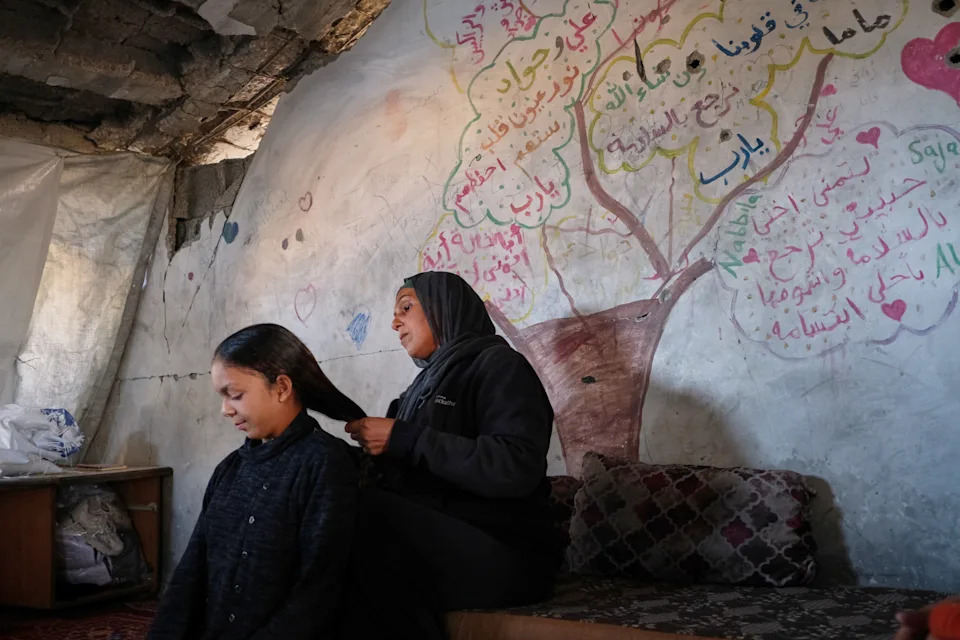
Amani Halawa combs her daughter Aya's hair under the roof of their damaged home, with a tree and messages of longing and hope painted behind them, in Jabaliya, Gaza City, Tuesday, Nov. 25, 2025. (AP Photo/Jehad Alshrafi)(ASSOCIATED PRESS)
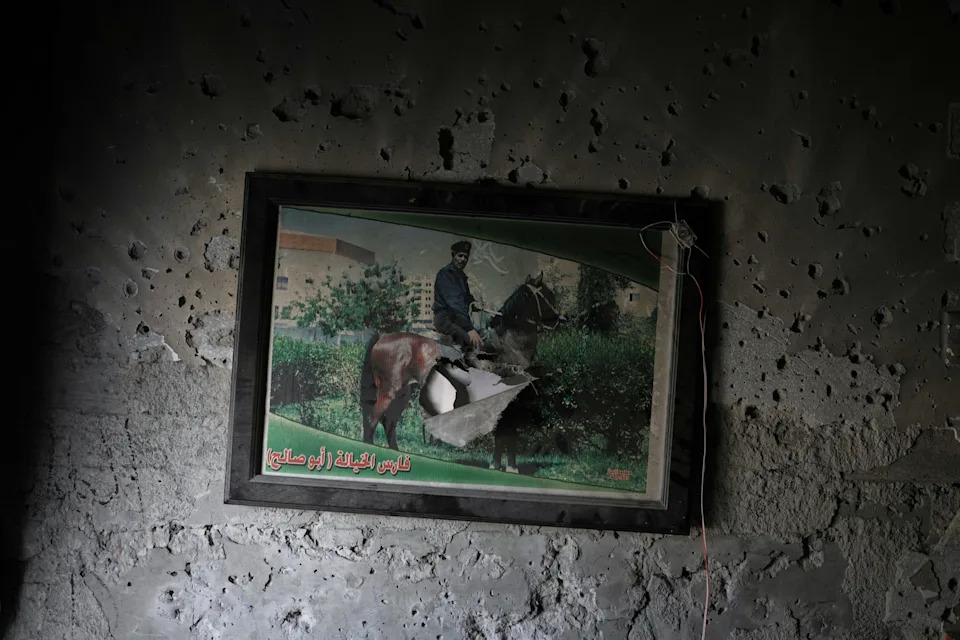
A framed photo of Muhammad Qutay, who served in the Palestinian Authority's cavalry, hangs on a damaged wall in the family home in the Al-Karama neighborhood of Gaza City, Wednesday, Nov. 24, 2025. (AP Photo/Jehad Alshrafi)(ASSOCIATED PRESS)
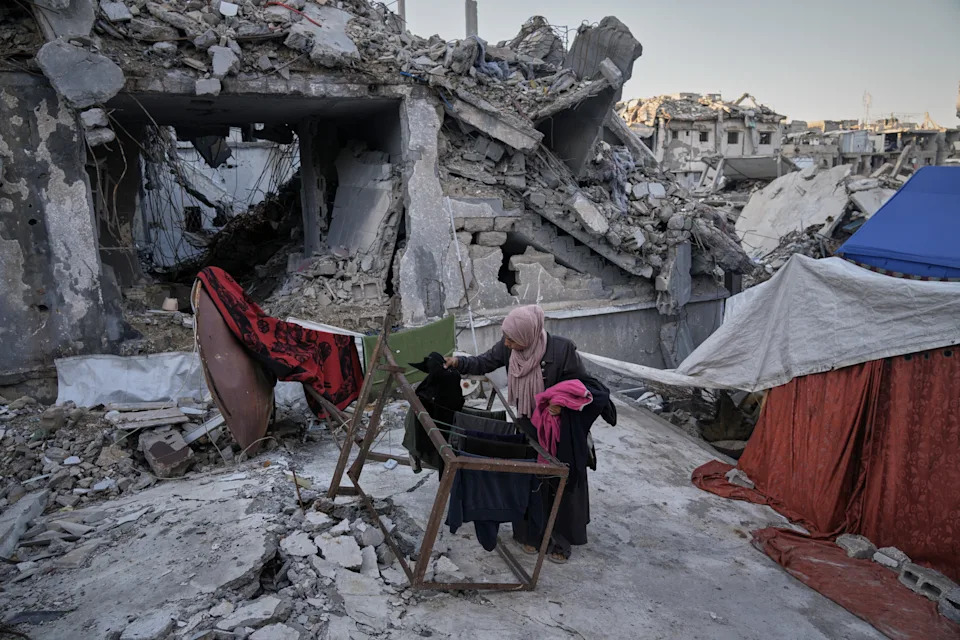
Saadia Abu Duheir, a mother of six, hangs laundry beside a tent set up over the rubble of her family's collapsed home in the Sheikh Radwan neighborhood of Gaza City, Wednesday, Nov. 26, 2025. (AP Photo/Jehad Alshrafi)(ASSOCIATED PRESS)
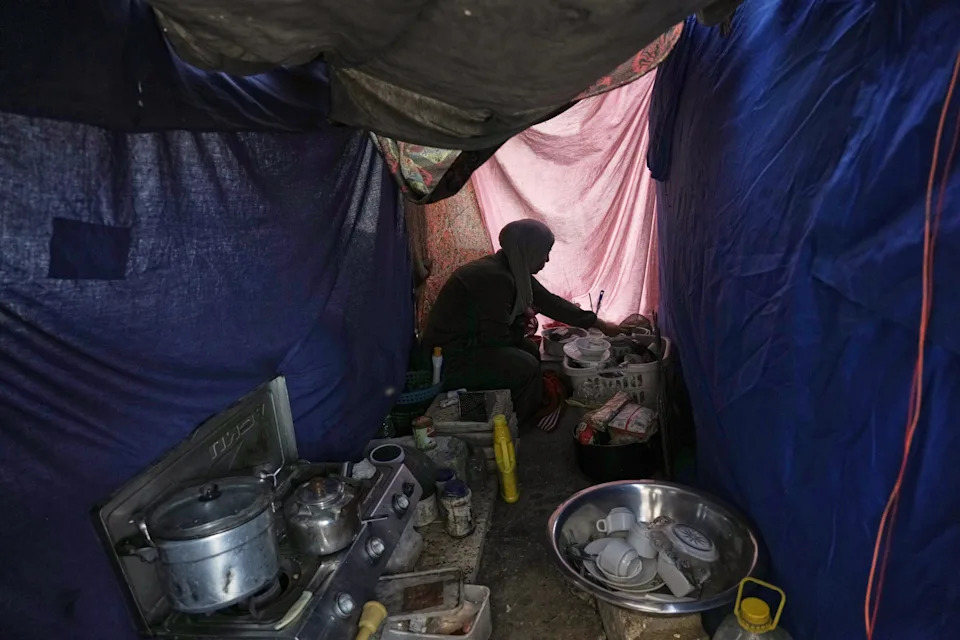
Saadia Abu Duheir, a mother of six, organizes her kitchen inside a temporary tent set up over the rubble of her family's collapsed home in the Sheikh Radwan neighborhood of Gaza City, Wednesday, Nov. 26, 2025. (AP Photo/Jehad Alshrafi)(ASSOCIATED PRESS)

A tent belonging to the Magdi Arafat family stands among the ruins of homes in the Al-Zaytoun neighborhood of Gaza City, Friday, Nov. 27, 2025. (AP Photo/Jehad Alshrafi)(ASSOCIATED PRESS)


