
HHS announced a set of proposed rules aimed at ending certain gender-transition procedures for minors, following a January executive order from President Trump. CMS proposals would restrict hospitals participating in Medicare and Medicaid from providing puberty blockers, cross-sex hormones and some surgeries to under-18s and would bar Medicaid and CHIP funding for similar procedures. HHS cited a November report alleging long-term risks, issued a declaration on professional standards, and the FDA sent letters about marketing binders to children. The package is likely to face political and medical pushback.
HHS Proposes Broad Ban on Gender-Transition Procedures for Minors, Threatens Hospital and Federal Funding

HHS unleashes sweeping crackdown on child ‘sex-rejecting procedures,’ threatens hospital, Medicaid funding
The U.S. Department of Health and Human Services (HHS) on Thursday unveiled a package of proposed regulatory actions aimed at halting what the department calls "sex-rejecting procedures" for minors. Officials said the measures implement a January executive order from President Donald Trump directing HHS to protect children from what the administration describes as "chemical and surgical mutilation."
At a news conference, HHS Secretary Robert F. Kennedy Jr. said the department is taking "six decisive actions guided by gold-standard science and the week-one executive order from President Trump to protect children from chemical and surgical mutilation." HHS officials said the proposals would effectively cut federal support for some gender-transition treatments for people under 18.

The Department of Health and Human Services announced sweeping regulatory proposals to end government-funding of transgender procedures for minors.
Key Regulatory Actions
The Centers for Medicare & Medicaid Services (CMS) published proposals that would make performing puberty blockers, cross-sex hormones and certain gender-related surgeries on patients under 18 a potential violation of a hospital's conditions of participation in Medicare and Medicaid. Because the majority of U.S. hospitals participate in those programs, HHS says the change would limit where such procedures can be performed with federal support.
Separately, CMS proposed a rule to prohibit federal Medicaid funding for procedures intended to change a child's biological sex for patients under 18. HHS said the same restriction would apply to the Children’s Health Insurance Program (CHIP) for individuals under 19.

In another Thursday crackdown, HHS Secretary Robert F. Kennedy Jr. signed a declaration that such procedures on children do not meet professional medical standards.
Medical Findings, Declarations and FDA Action
HHS pointed to a November peer-reviewed report from the Office of the Assistant Secretary for Health that, according to the department, found medical interventions intended to change a child’s biological sex may carry significant long-term risks and are often inadequately tracked. HHS described the November paper as an update to a May review of evidence and best practices for children with gender dysphoria.
On Thursday, Secretary Kennedy also signed a declaration stating that such procedures on minors do not meet professional medical standards and warning that "practitioners who perform sex-rejecting procedures on minors would be deemed out of compliance with those standards." Kennedy said the administration would prioritize transparency, informed consent and the protection of children.
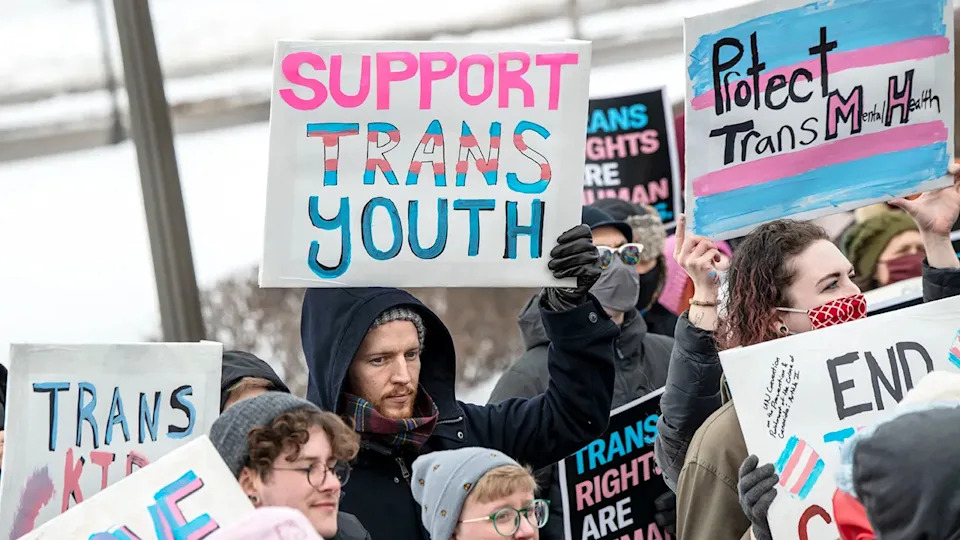
Minnesotans hold a rally at the capitol to support trans kids in Minnesota, Texas and around the country.
The Food and Drug Administration announced it had issued warning letters to 12 manufacturers and retailers for what the FDA characterized as the illegal marketing of breast binders to children.
Civil-Rights Rulemaking
HHS also proposed revising Section 504 of the Rehabilitation Act of 1973 to clarify that the definitions of "disability" and "individual with a disability" exclude gender dysphoria that does not stem from a physical impairment. The department said the change would reverse a Biden-era interpretation that treated gender dysphoria as a disability for the purposes of that statute.
Reaction and Context
The package is expected to draw strong opposition from Democrats, medical groups and advocates for transgender youth, who generally support access to gender-affirming care and say restrictions can worsen mental-health outcomes. Several medical organizations previously criticized HHS' May report for not naming its authors and for allegedly misrepresenting medical consensus.
Supporters of the proposed changes say they protect children from irreversible treatments with long-term effects. Opponents warn the rules could limit access to medically recommended care and increase risks of depression and suicide among transgender youth. The proposals will undergo a public rulemaking process before any final regulations are adopted.


