Time named NASA’s Curiosity rover and the James Webb Space Telescope among its 25 “most iconic inventions” since 2000. Curiosity, launched from Cape Canaveral in November 2011, continues exploring Gale Crater and has collected 42 powdered rock samples. Webb, launched on Dec. 25, 2021, began science operations in July 2022 and may operate for more than 20 years thanks to extra propellant. Both projects were praised by NASA leaders for expanding our understanding of Mars and the distant universe.
Time Names Curiosity Rover and James Webb Telescope Among 25 Most Iconic Inventions of the Past 25 Years

The James Webb Space Telescope Mirror is seen during a media unveiling at NASA’s Goddard Space Flight Center at Greenbelt, Maryland November 2, 2016.REUTERS/Kevin Lamarque/File Photo
Time magazine has placed two of NASA’s most consequential spacecraft — the Mars rover Curiosity and the James Webb Space Telescope (Webb) — on its list of the 25 “most iconic inventions” it has covered since 2000. Both machines have reshaped scientific understanding of the universe and captured public imagination.
Why Time Included Them
To mark a quarter-century of its annual invention lists, Time compiled a "Hall of Fame" of standout innovations. The Webb observatory and Curiosity rover were chosen for their sustained scientific impact and engineering achievement: Curiosity exceeded its planned two-year mission and continues to explore Mars more than a decade later, while Webb is delivering unprecedented views of the distant cosmos.
Curiosity: A Decade of Discovery on Mars
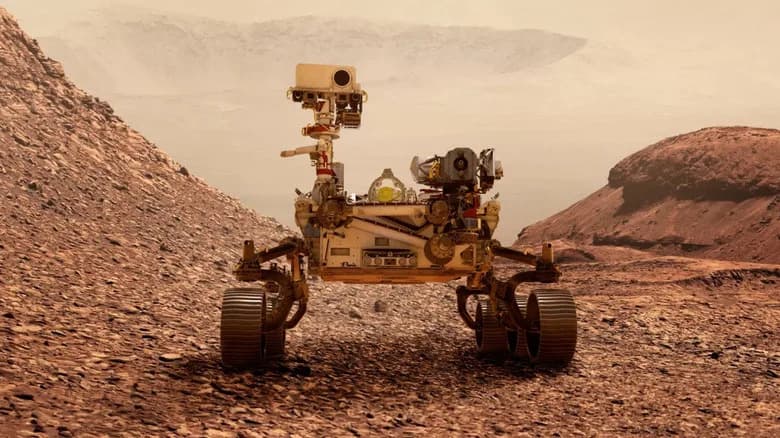
Curiosity launched from Cape Canaveral, Florida, in November 2011 and landed on Mars in 2012, targeting Gale Crater and the slopes of Mount Sharp. What began as a mission planned for a couple of years has extended into an ongoing multi-year investigation: Curiosity has drilled and delivered 42 powdered rock samples and logged thousands of days of surface operations while mapping the planet’s ancient environments.

NASA's Curiosity Mars rover is seen at the site from which it reached down to drill into a rock target called 'Buckskin' on lower Mount Sharp in this low-angle self-portrait taken August 5, 2015 and released August 19, 2015. The selfie combines several component images taken by Curiosity's Mars Hand Lens Imager (MAHLI).
“Landing with a plan for a couple years of investigation, over 13 years later the rover is still on Mars making discoveries,” wrote Merrill Fabry for Time.
Webb: A New Window to the Early Universe
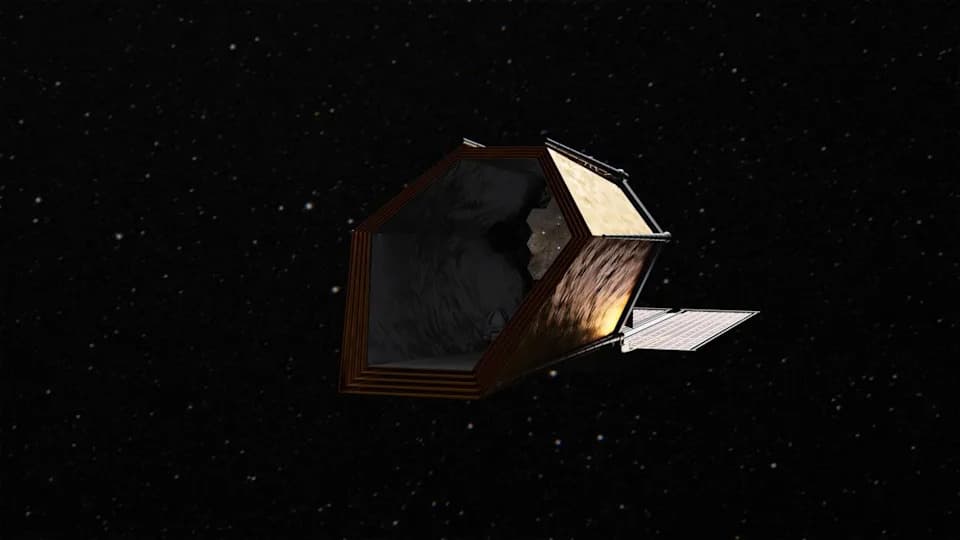
The James Webb Space Telescope launched on Dec. 25, 2021, aboard an Ariane 5 rocket from French Guiana and began scientific operations in July 2022. Built with a gold-coated primary mirror more than 21 feet (6.5 meters) across and powerful infrared instruments, Webb observes the universe farther and in greater detail than previous space telescopes. Although designed with a nominal 10-year lifetime, engineers determined Webb carries enough propellant to potentially operate for more than 20 years.
Other Ongoing Mars Work
NASA’s Perseverance rover — launched in July 2020 and landed in Jezero Crater in February 2021 — is also actively exploring Mars and has returned intriguing samples. NASA scientists have reported a potential biosignature among Perseverance’s findings, underscoring the scientific value of sustained robotic exploration.
Recognition and Impact
Nicola Fox, associate administrator of NASA’s Science Mission Directorate, praised the teams behind both missions, saying their work has made distant galaxies feel closer and Mars’ red sands more familiar. Time published its Hall of Fame list in October, and NASA highlighted the recognition in a December post.
Why It Matters
These two selections emphasize both the engineering feats and the scientific returns of ambitious space projects: Curiosity advances our knowledge of Mars’ habitability, and Webb provides a deeper look into the early universe. Together they illustrate how sustained investment in science and technology yields discoveries that expand humanity’s view of its place in the cosmos.
Help us improve.