Some, But Not All, Turtles Can Fully Retract Their Heads. Tortoises and several terrestrial species typically have the anatomy to draw their heads into their shells, while sea turtles cannot because their streamlined, lightweight shells leave no internal room. Fossils show shell components evolved over hundreds of millions of years—likely first for burrowing or buoyancy—before becoming a primary defensive structure.
Can Turtles Fully Retract Their Heads Into Their Shells? The Anatomy and Fossil Story

The broad-shelled river turtle (Chelodina expansa) falls into a group known as side-neck turtles. It can fold its long neck and head inside its shell, over one of its arms. | Credit: Auscape/Universal Images Group via Getty Images
Some turtles can hide their heads completely; others can’t. The reasons lie in anatomy, lifestyle and a deep fossil history that predates dinosaurs.
Who Can Pull Their Head Inside—and Who Can’t
Many people picture a turtle disappearing into its shell when threatened. That image is accurate for some groups but not all. Tortoises and several terrestrial or semi-terrestrial turtles typically have the anatomy to withdraw their heads, while sea turtles do not.

The words 'Life Little Mysteries' over a blue background
“Turtles have two ways of tucking the head in,”
Jason Head, Professor of Vertebrate Evolution and Ecology at the University of Cambridge, told Live Science.
Side-neck turtles fold the head and neck sideways under the shell over one shoulder. Snake-neck (or S-neck) turtles bend the neck into an S-shaped loop and withdraw it into the shoulder girdle. Many tortoises, which are slow-moving land dwellers, have domed carapaces with enough internal space to pull the head fully inside. The eastern box turtle (Terrapene carolina carolina) is a notable example: its plastron (lower shell) has a hinge that lets the animal close up tightly.
Why Sea Turtles Can’t Retract Their Heads
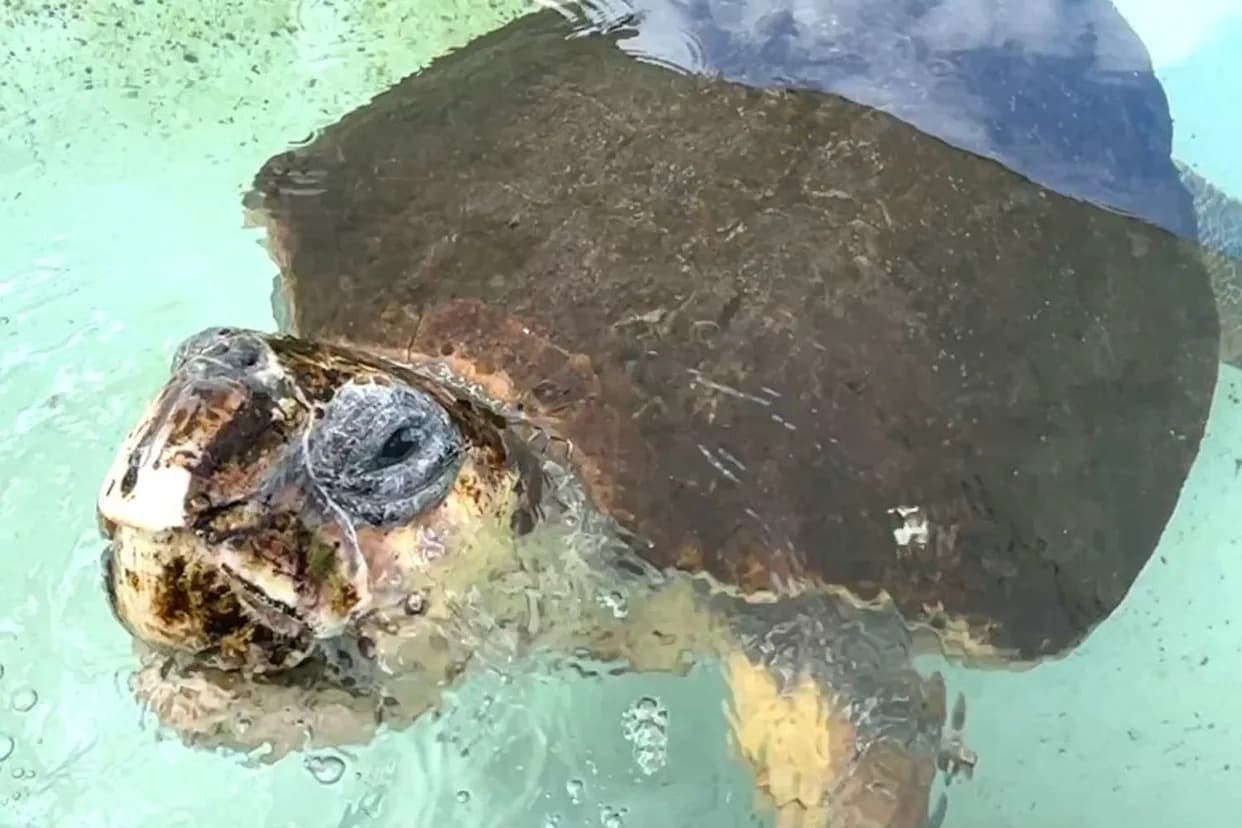
Sea turtles evolved streamlined, lightweight shells that lack the internal volume needed to tuck in the neck. That lighter shell reduces drag and weight, allowing faster swimming and enabling escape by flight rather than by withdrawal. As Jason Head summarized, the shell design reflects a trade-off between protection and efficient swimming.
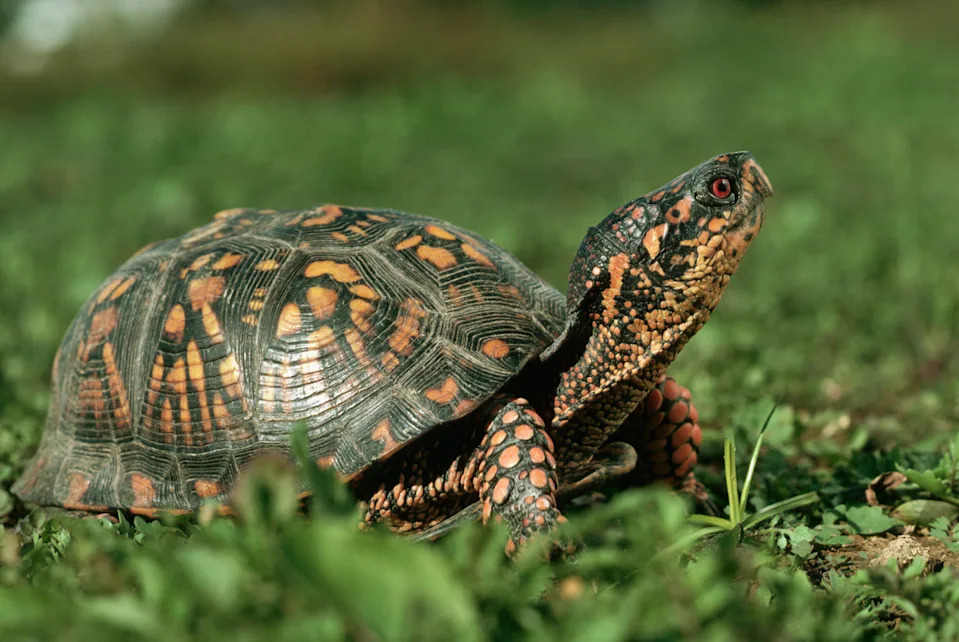
The eastern box turtle (Terrapene carolina carolina) has a hinge that allows it to completely close up its shell. | Credit: McDonald Wildlife Photography Inc./Getty Images
How Turtle Shells Evolved—A Deep-Time Perspective
The turtle shell is a complex structure made from more than 50 bones and is an integral part of the skeleton. Fossils show that the modern shell—composed of a carapace (upper shell) and a plastron (lower shell)—did not appear all at once but evolved in stages over hundreds of millions of years.
Key fossil milestones include:

Sea turtles, like these green sea turtles, cannot retract their heads into their shells. | Credit: Douglas Klug/Getty Images
- Eunotosaurus africanus (~260 million years ago): shows broadened ribs, an early step toward the carapace; this adaptation may have supported burrowing-related muscles.
- Pappochelys (~240 million years ago): an intermediate form with broadened upper ribs and thicker belly ribs (gastralia) but no full shell.
- Odontochelys (~220 million years ago): possessed a developed plastron (ventral plate) but not a complete carapace, suggesting a stepwise assembly of shell parts.
- Proganochelys (~210 million years ago): shows a fully formed carapace fused with dermal bone and a connected plastron—the earliest clear example of a complete turtle shell.
Researchers infer that different evolutionary pressures—burrowing, ballast for diving, or protection from below—helped shape shell components. Tyler Lyson, Senior Curator of Vertebrate Paleontology at the Denver Museum of Nature & Science, notes that the plastron may have functioned as ballast for deeper swimming or as protection from predators attacking from underneath. Only after the two shell elements became fully fused did the shell serve primarily as a defensive shield.
Why the Shell Matters Today
The modern shell is primarily a protective adaptation, even though that wasn’t necessarily its original function. Its durability likely contributed to turtles surviving multiple mass extinctions: they appear in the fossil record consistently across periods when many other groups disappeared.
Bottom line: Whether a turtle can withdraw its head depends on species-specific anatomy and lifestyle. The ability evolved alongside a long, stepwise history of shell development that began for reasons beyond simple defense.
Help us improve.