The Gaza Strip is facing a critical shortage of prosthetic limbs and long delays in medical evacuations, leaving thousands of amputees without adequate care. The WHO estimates about 5,000–6,000 amputees (roughly 25% children) among some 42,000 people with life‑changing injuries. Local clinics have produced only around 250 prosthetics during the war, Gaza has just eight trained prosthetists, and recent shipments of materials appear to be the first substantial deliveries in nearly two years. Patients also face slow medevacs because of limited host-country capacity and crossing arrangements.
“My Future Is Paralyzed”: Gaza Amputees Struggle as Prosthetics Shortage and Slow Medevac Stall Lives

Yassin Marouf, 23, who lost his left foot and suffered a severe injury to his right leg after being hit by Israeli shelling in May, lies in a tent surrounded by his family in Zawaida, central Gaza, Thursday, Nov. 6, 2025. (AP Photo/Abdel Kareem Hana)(ASSOCIATED PRESS)
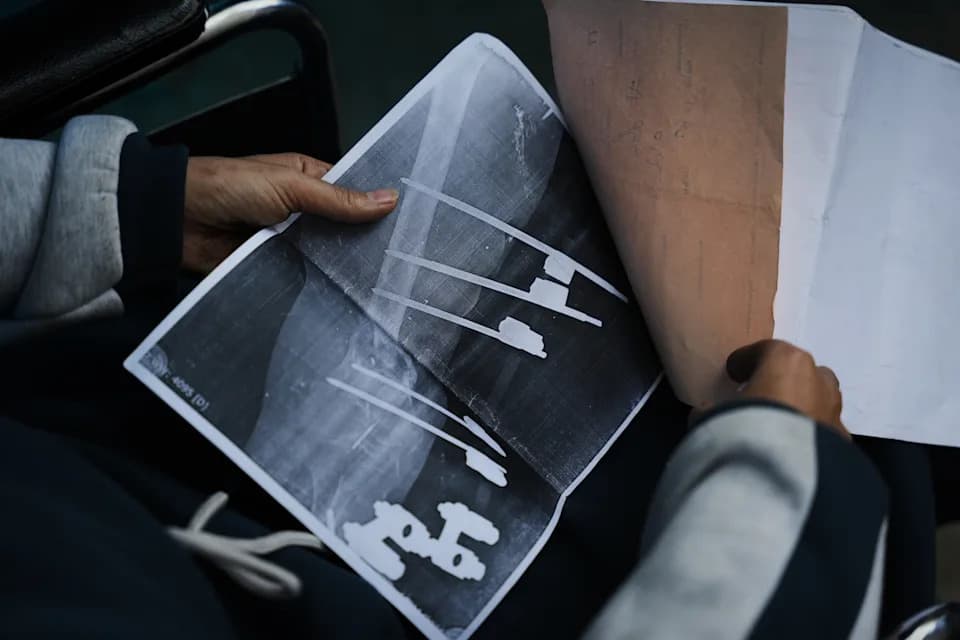
Sitting in a wheelchair in Nuseirat, 27-year-old Haneen al‑Mabhouh clings to a simple hope: to hold a new baby and to walk again. Her right leg was amputated above the knee after an airstrike in July 2024 collapsed her home. All four of her daughters were killed in the attack, and her husband was severely burned. She has undergone multiple surgeries, has limited movement in one hand, and needs procedures only available outside Gaza.
Shortage of Supplies and Skilled Staff
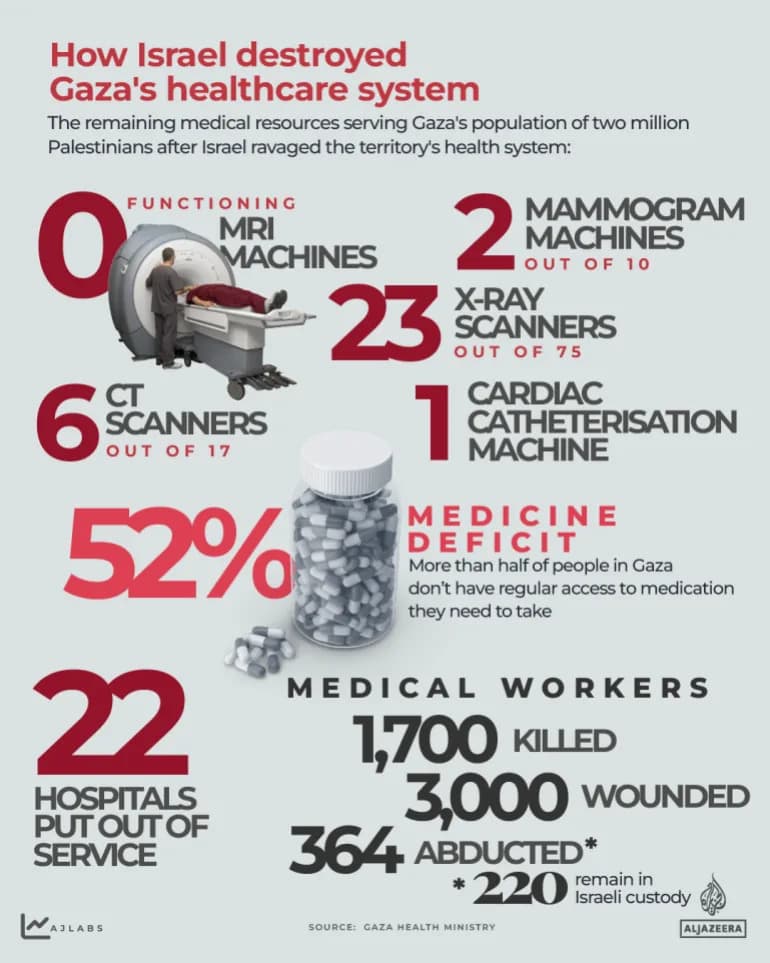
The World Health Organization estimates roughly 5,000–6,000 amputees from the war in Gaza, about 25% of them children, and roughly 42,000 people with life‑changing injuries including brain trauma, spinal cord damage and major burns. Local prosthetics capacity is severely constrained: Gaza has only eight trained prosthetists able to manufacture and fit artificial limbs, and clinics report dwindling raw materials.
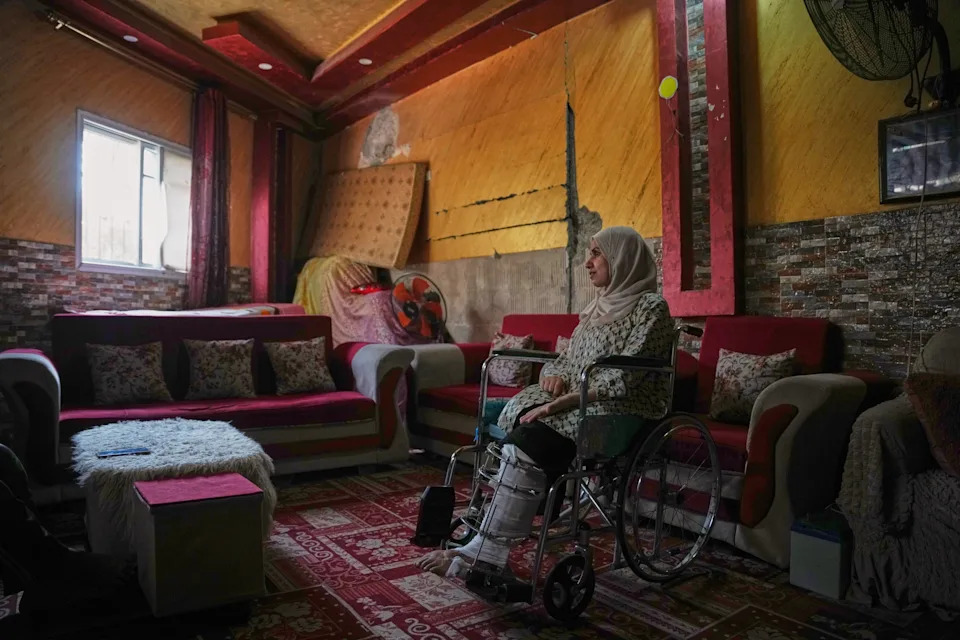
Haneen al-Mabhouh, 34, who lost her leg in an Israeli strike on her home that also killed all four of her daughters, including her 5-month-old baby, sits in a wheelchair in her family home in Nuseirat, central Gaza Strip, Thursday, Nov. 6, 2025. (AP Photo/Abdel Kareem Hana)(ASSOCIATED PRESS)
One of Gaza’s main prosthetics workshops, the Artificial Limbs and Polio Center in Gaza City, has produced about 250 artificial limbs during the war but says supplies are nearly exhausted. Aid groups and local specialists say that almost no ready-made prosthetic limbs or manufacturing materials were allowed into Gaza for much of the conflict, and that the recent shipment of essential materials appears to be the first significant delivery in nearly two years.
Why Supplies Haven't Arrived
Medical Aid for Palestinians (MAP) and local prosthetics directors say import procedures and restrictions have effectively blocked most shipments. The Israeli military coordination unit COGAT did not respond to requests for details on its policies or the number of prosthetic items allowed in during the conflict.
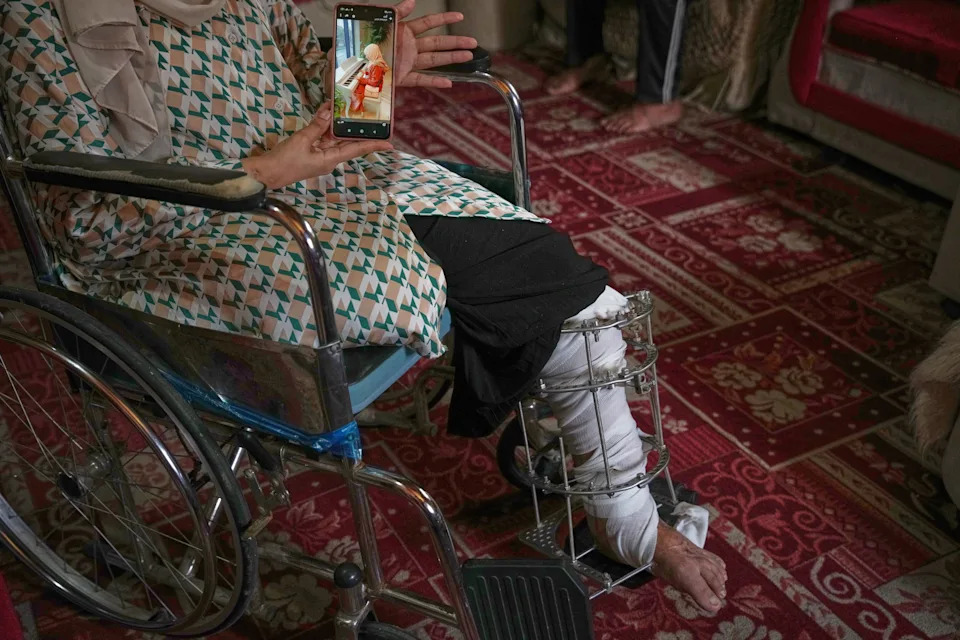
Haneen al-Mabhouh, 34, who lost her leg in an Israeli strike on her home that also killed all four of her daughters, including her 5-month-old baby, shows a photo of one of her daughters on a cellphone while sitting in a wheelchair in her family home in Nuseirat, central Gaza Strip, Thursday, Nov. 6, 2025. (AP Photo/Abdel Kareem Hana)(ASSOCIATED PRESS)
Slow Medical Evacuations
Thousands of patients needing advanced surgical care remain on evacuation lists. The U.N. says about 16,500 Palestinians are waiting for medical evacuation abroad for a range of urgent conditions. As of Dec. 1, 235 patients had been evacuated since the October ceasefire began — an average of just under five people per day, up slightly from the pre-ceasefire average of roughly three per day.
Dr. Richard Peeperkorn, the World Health Organization's representative in the occupied Palestinian territory, told the Associated Press that a key bottleneck is the shortage of countries willing to host evacuated patients. He urged that additional medevac routes be opened, including into hospitals in the West Bank and east Jerusalem, where facilities stand ready to receive patients.
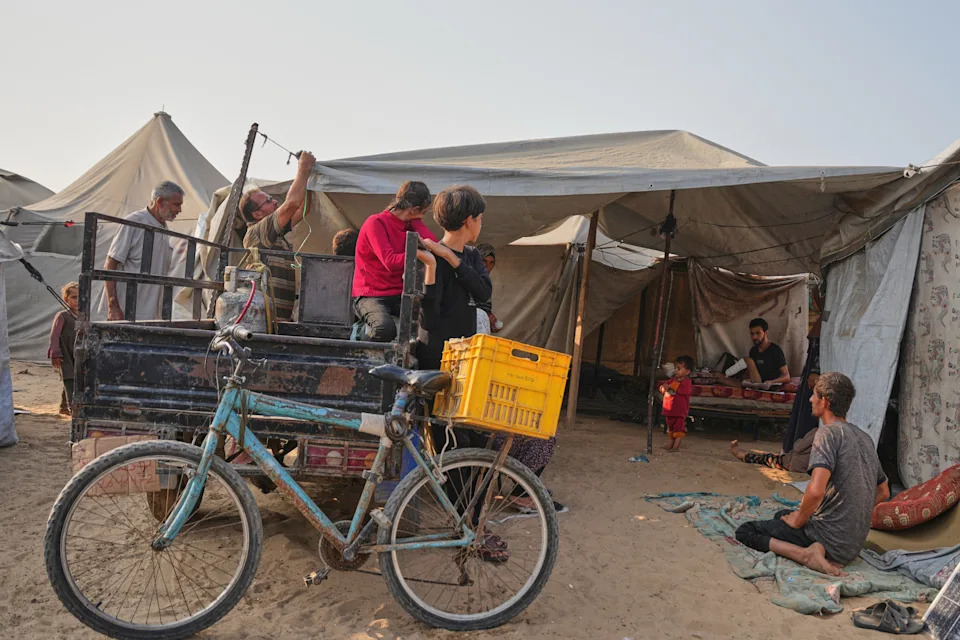
Yassin Marouf, 23, second from right, who lost his left foot and suffered a severe injury to his right leg after Israeli shelling in May, sits on a mattress in a tent surrounded by family and neighbors in Zawaida, central Gaza, Thursday, Nov. 6, 2025. (AP Photo/Abdel Kareem Hana)(ASSOCIATED PRESS)
Voices From Gaza
"For the past year and a half, I have been unable to move around, to live like others... It’s my right to live, to have another child, to regain what I lost, to walk, just to walk again. Now my future is paralyzed," said Haneen al‑Mabhouh.
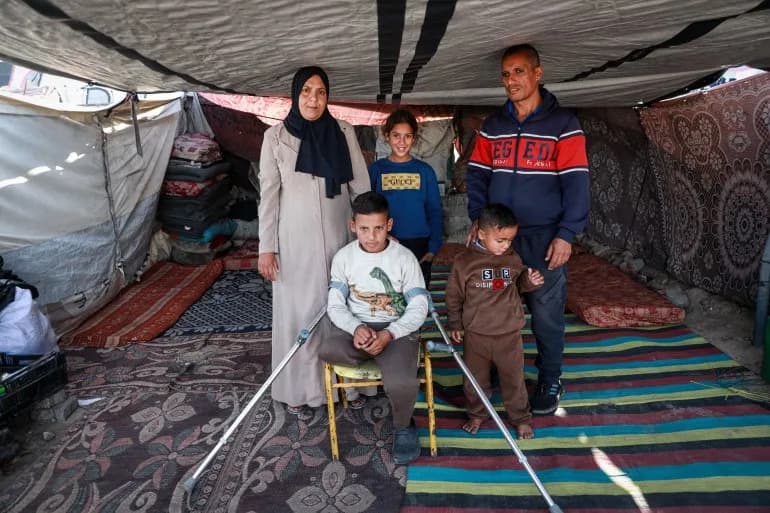
Yassin Marouf, 23, lies in a tent after losing his left foot and suffering severe damage to his right leg when shelling struck while he and his brother were returning from a displaced family home. His brother was killed, and Yassin says he cannot afford painkillers or regular dressing changes. "If I want to go to the bathroom, I need two or three people to carry me," he said.
Mohamed al‑Naggar, 21, a former university IT student, had his left leg amputated above the knee after shrapnel hit the home where his family sheltered. Despite multiple surgeries and physical therapy, he remains unable to mobilize and hopes to travel abroad for a prosthetic device so he can finish his studies.
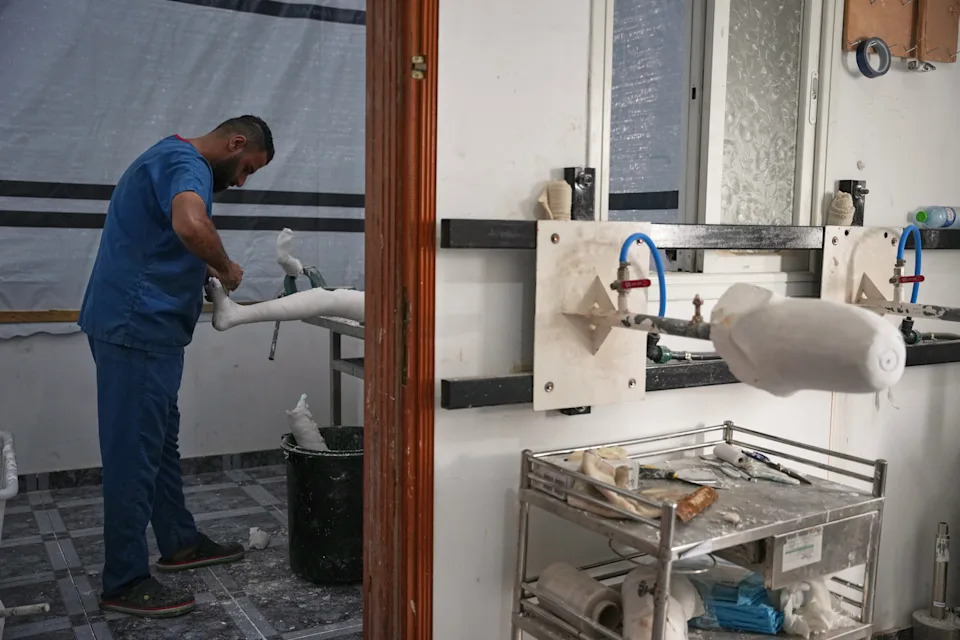
Prosthetic limb technician Ahmed Al-Ashqar, 34, prepares a leg amputation splint in the first stage of building an artificial leg at Hamad Hospital in Zawaida, central Gaza Strip, Thursday, Nov. 27, 2025. (AP Photo/Abdel Kareem Hana)(ASSOCIATED PRESS)
Ibrahim Khalif lost his right leg in an airstrike while collecting food in Gaza City and said he hopes a prosthetic will allow him to return to physical work to support his pregnant wife and children.
What Needs To Happen
Humanitarian and medical groups call for faster, clearer procedures to allow both raw materials and ready-made prosthetic devices into Gaza, additional training and equipment for local clinics, and expanded evacuation routes and host-country commitments for patients needing specialized care abroad. Without these steps, many amputees will remain dependent on scarce local services and prolonged, uncertain waits for treatment.
Note: All figures and dates are taken from statements by the World Health Organization, United Nations tallies and reporting from local health providers and aid organizations as of early December 2024.
Help us improve.