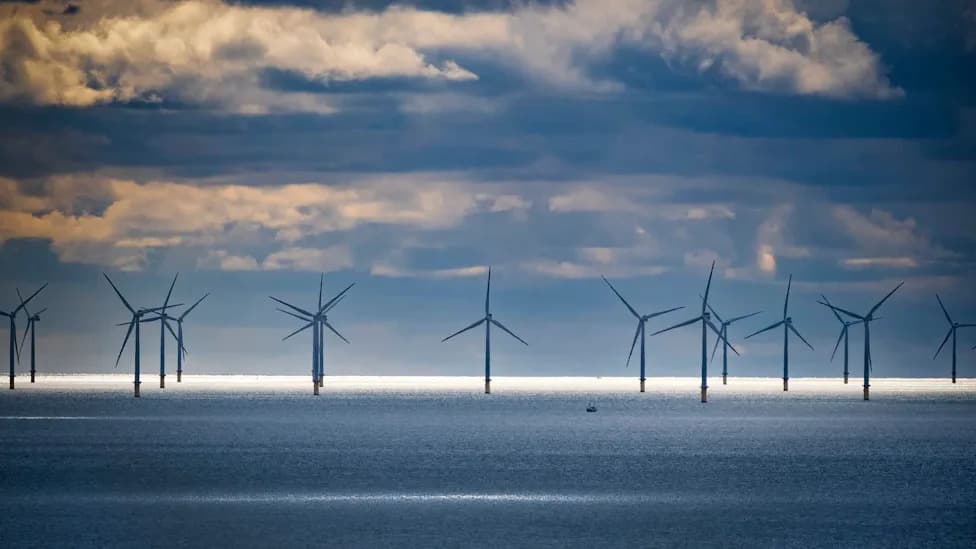
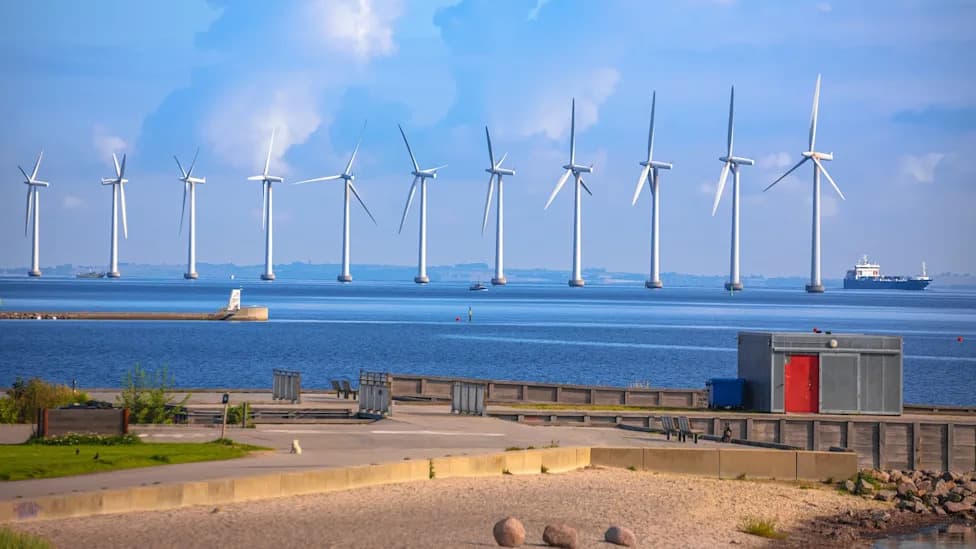
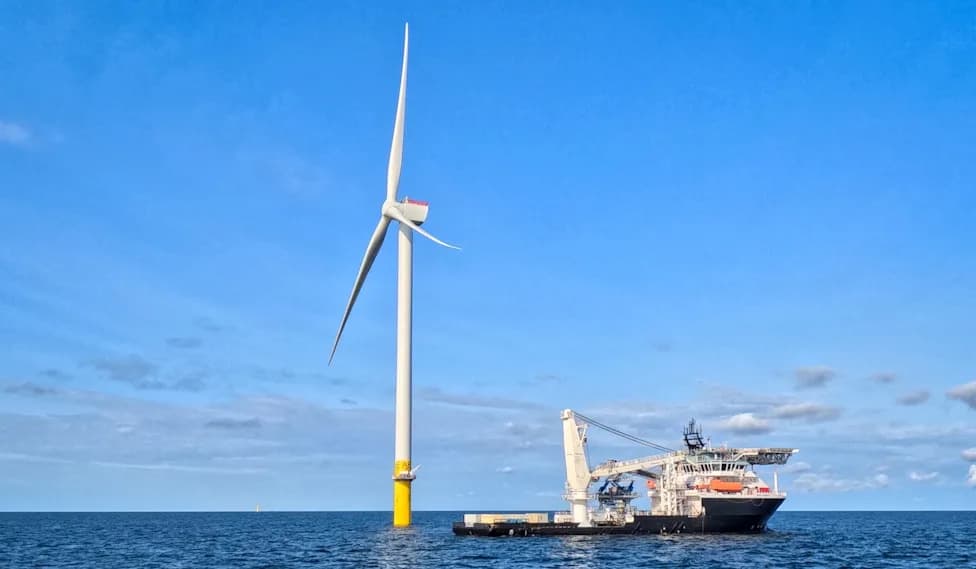
As U.S. policy curtails offshore wind development at home, Southeast Asia is emerging as a key alternative for investment. The Philippines and Vietnam have launched auctions, set firm targets (including Vietnam’s goal of up to 17 GW by 2035) and attracted partnerships such as ACEN with Copenhagen Infrastructure Partners. Chinese manufacturers and state firms are supplying turbines and expertise while investors weigh weather and regulatory risks as the region scales up.
As U.S. Policy Stalls Domestic Projects, Southeast Asia Emerges as an Offshore Wind Power Hub

FILE -Participants wear wind turbine headgear to raise peoples awareness on renewable energy, fix their costumes during the Global Day of Action Against Climate Change ,Dec. 8, 2007 in suburban Quezon City, north of Manila, Philippines. (AP Photo/Pat Roque, File)(ASSOCIATED PRESS)
Southeast Asia is rapidly positioning itself as a major growth market for offshore wind power as U.S. policy shifts have created fresh uncertainty for projects in American waters. Developers and financiers are increasingly looking to the region’s long coastlines, strong offshore winds and growing power demand as attractive alternatives for investment.
U.S. Policy Shift and Global Ripple Effects
The White House’s change in approach has disrupted billions of dollars in U.S. offshore wind development—halting construction on major farms, revoking or pausing permits, rescinding plans to open large areas of federal waters to wind energy and cutting roughly $679 million in federal support for a range of projects. That reversal of prior policy has dented investor confidence in the U.S. market and prompted an industry-wide search for more supportive destinations.
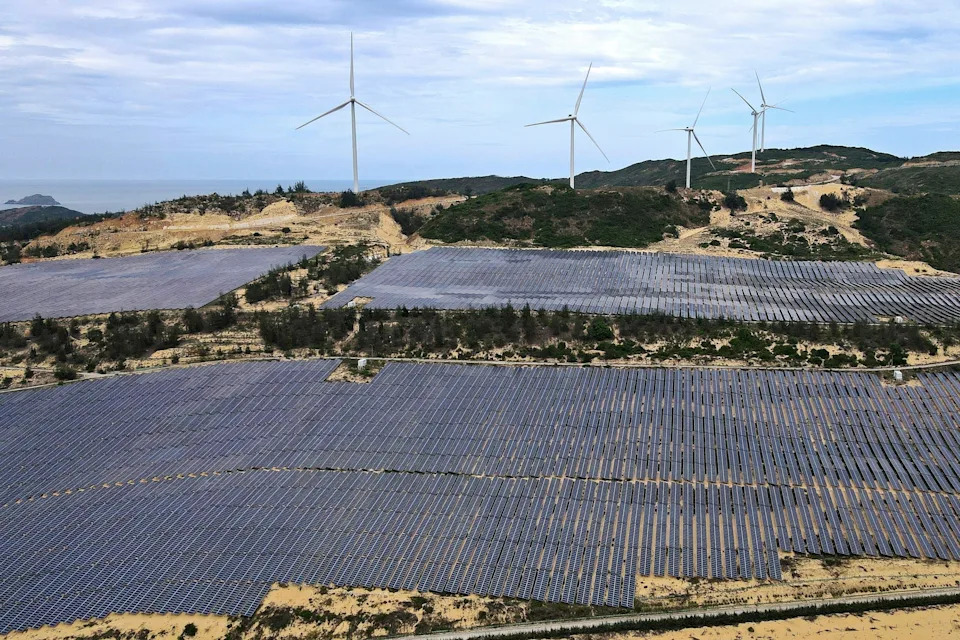
FILE - Solar panels work near wind turbines in Quy Non, Vietnam on June 11, 2023. (AP Photo/Minh Hoang, File)(ASSOCIATED PRESS)
Why Southeast Asia?
Offshore wind—turbines sited at sea to capture stronger, steadier winds—can generate large amounts of low-carbon electricity. Southeast Asia’s archipelagos, extensive coastlines and consistently windy seas give the region significant technical potential. While wind supplies only a small share of electricity in the Asia-Pacific today (the International Energy Agency estimates wind accounts for roughly 7% of regional generation), momentum is building as several governments adopt clearer rules and targets to attract developers and capital.
Leaders: The Philippines and Vietnam
The Philippines and Vietnam have taken early, concrete steps to convert potential into projects. The Philippines held its first offshore wind auction offering 3.3 gigawatts of seabed sites and has set clear rules for grid connection, port use and logistics. Filipino firm ACEN partnered with Denmark’s Copenhagen Infrastructure Partners to co-develop the country’s first large-scale offshore project—targeting up to 1 GW in Camarines Sur.
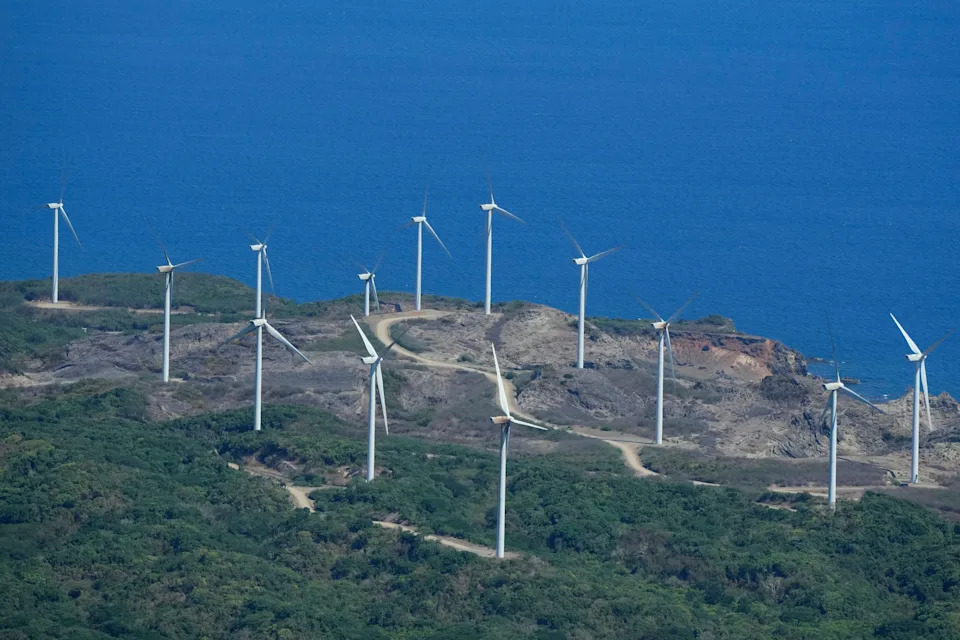
FILE -Windmills are seen at Ilocos Norte province, northern Philippines on May 6, 2024. (AP Photo/Aaron Favila, File)(ASSOCIATED PRESS)
Vietnam has revived stalled plans, revised its national power strategy to target up to 17 GW of offshore wind by 2035, and is speeding marine zoning and permitting reforms. Although regulatory delays prompted Norway’s Equinor to withdraw in 2024, investor interest is steadily returning: Copenhagen Infrastructure Partners is working with PetroVietnam on projects, and Germany’s PNE AG plans a $4.6 billion, 2-GW farm in Binh Dinh province. Vietnam is also exploring regional transmission links to export power to Singapore and Malaysia.
China’s Role and Regional Supply Chains
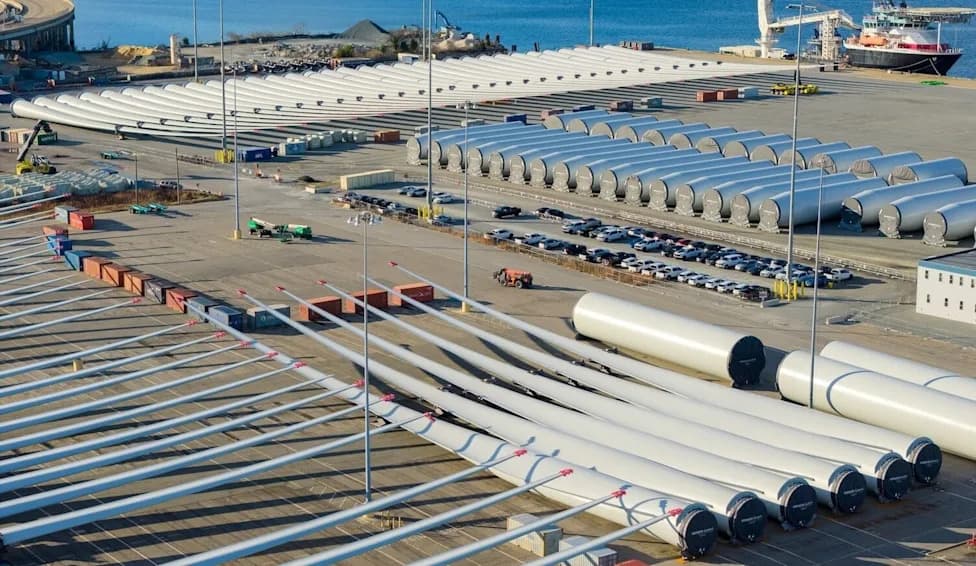
Global wind growth is being driven by China, which leads installations and manufactures more than half of the world’s wind turbines. Chinese state and private firms are active in Southeast Asia—Power China completed Vietnam’s Binh Dai offshore project, and Mingyang Smart Energy is pursuing a 2-GW development in northern Luzon—providing turbines, engineering and construction capacity as the region scales up.
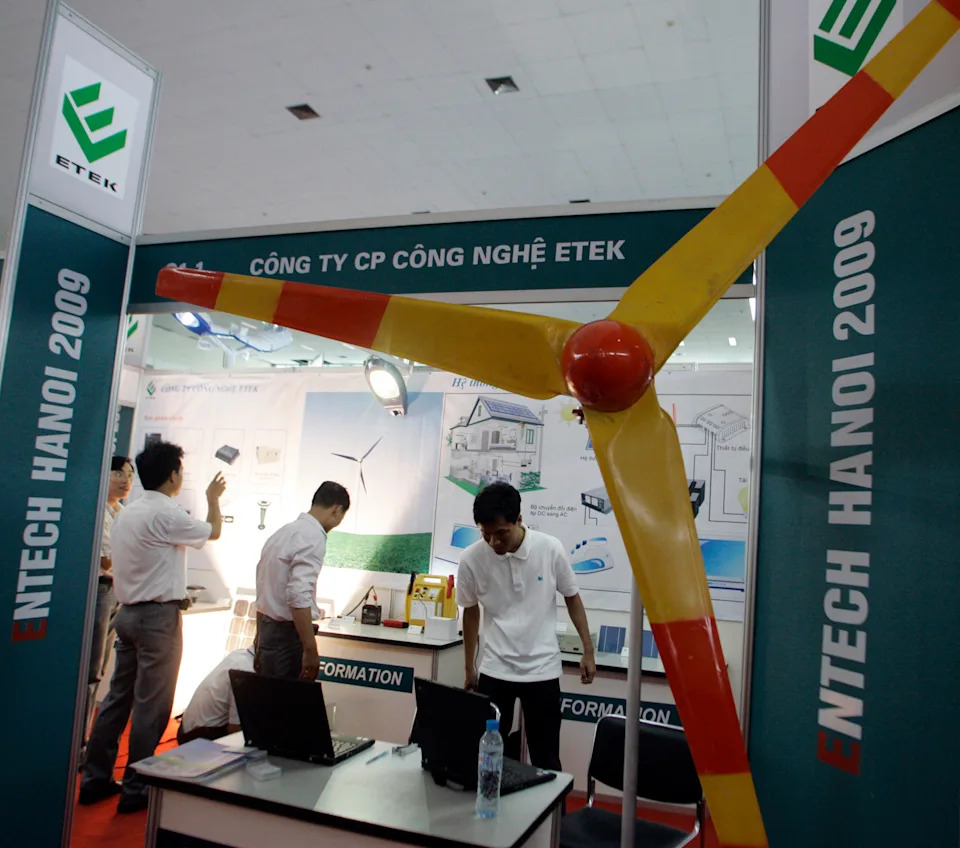
FILE -A wind turbine is seen at the booth of ETEK Technology Joint Stock company during Entech Hanoi 2009, an international trade fair on energy efficiency and the environment, at the Giang Vo Exhibition Center in Hanoi, Vietnam, June 18, 2009. (AP Photo/Chitose Suzuki, File)(ASSOCIATED PRESS)
Finance, Hubs and Industry Momentum
Singapore has announced a three-year slate of wind-energy conferences aimed at drawing investment and positioning the city-state as a regional industry hub. Industry groups and investors say these policy signals and platforms are attracting global capital repositioning after disruptions in the U.S.
Risks and Resilience
Extreme weather is a key challenge: the Philippines and Vietnam face frequent typhoons and severe storms. However, developers point out that resilient turbine designs and site-specific engineering can mitigate risk. As Michael Hannibal of Copenhagen Infrastructure Partners noted, projects must be designed and sited with local environmental conditions in mind to ensure durability.
Outlook
With clearer rules, new auctions and growing regional supply chains, Southeast Asia is emerging as a promising alternative market for offshore wind developers and investors. The region’s progress could serve as a model for other developing economies seeking cleaner energy pathways as global capital reallocates amid changing policy landscapes.
Sources: International Energy Agency; Global Wind Energy Council; Global Offshore Wind Alliance; company announcements and regional news reporting.
Help us improve.