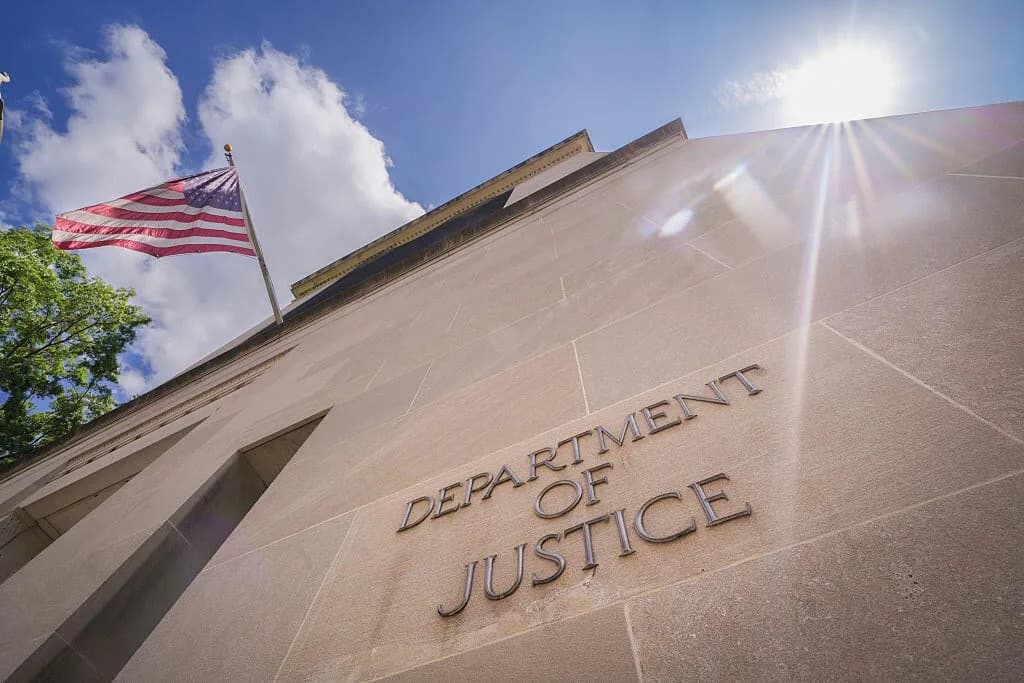
President Trump is pushing for federal preemption to replace a growing patchwork of state AI rules with a single national standard. A leaked draft order would have empowered the Justice Department to challenge state laws and tied federal broadband funding to compliance, but the White House withheld the order after GOP pushback. Opponents across the Republican spectrum — from federalist conservatives to senators favoring strict AI rules — make passage of a standalone preemption unlikely in the current Congress. Supporters warn that fragmented state rules could raise costs and stifle startups, while proponents of clarity argue a national framework would better support investment and innovation.
Federal Preemption Fight: Could State AI Rules Strangle U.S. Innovation?

Federal Preemption Fight: Could State AI Rules Strangle U.S. Innovation?
Artificial intelligence is advancing rapidly across the United States, but a growing mosaic of state-level rules risks fragmenting the regulatory landscape and slowing national progress. In July 2025 the National Conference of State Legislatures (NCSL) recorded that roughly 38 states enacted about 100 AI-related measures, creating a patchwork of divergent requirements that industry leaders say could hinder competitiveness and raise compliance costs.
President Donald Trump has urged Congress to adopt a federal preemption that would supersede state and local AI regulations and create a single national standard. Before Thanksgiving he posted on Truth Social calling for one uniform framework rather than dozens of local regimes, framing the move as necessary to keep the United States ahead of China in the global AI race.
Shortly after that appeal, a draft executive order titled "Eliminating State Law Obstruction of National AI Policy" was leaked. Public Citizen reported that the draft would have directed the Justice Department to assemble a task force to challenge state measures that allegedly conflict with the Constitution or asserted federal preemption. The draft also resembled earlier proposals tying federal funding to compliance by directing the Commerce Department to withhold federal broadband funds from states whose laws conflicted with the president's AI Action Plan.
"A patchwork of state AI regulations threatens to impose substantial costs while failing to achieve the consumer protection goals that motivate such regulation," said Kristian Stout, director of innovation policy at the International Center for Law and Economics.
After pushback from some Republican lawmakers who warned the order would trample states' rights, the White House held the draft back from being issued. President Trump has continued pressing congressional Republicans to include preemption language in the National Defense Authorization Act (NDAA) or to pass a standalone statute.
But the proposal faces resistance across the GOP. Representatives Marjorie Taylor Greene (R–Ga.), Thomas Massie (R–Ky.) and Chip Roy (R–Texas) have criticized federal preemption as federal overreach that undermines federalism. Politico reported House Majority Leader Steve Scalise as saying the NDAA "wasn't the best place for [preemption language] to fit," suggesting party leaders are reluctant to attach the measure to must-pass defense legislation.
In the Senate, opposition from Senators Marsha Blackburn (R–Tenn.), who helped derail an earlier AI moratorium in the One Big Beautiful Bill Act (OBBBA), and Josh Hawley (R–Mo.), who has pursued strict AI regulation, indicates a standalone federal-preemption bill would likely struggle to overcome a 60-vote filibuster threshold.
Supporters of a national framework argue that inconsistent state rules favor large incumbents with deep legal teams while imposing disproportionate burdens on startups and capital-poor innovators. Companies such as Anthropic and other industry players have publicly called for clearer, consistent rules so that compliance does not stifle innovation. Proponents warn that a fragmented regulatory environment could raise costs, reduce competition, and harm economic growth and national security.
President Trump has also proposed a "Genesis Mission," described as a Manhattan Project–style initiative to coordinate funding and incentivize private-sector participation in AI-driven scientific research. Advocates say the country needs a predictable national regulatory framework that encourages investment and development rather than an ad hoc mix of state mandates.
Given sharp disagreements inside Congress and among Republicans about federalism and legislative strategy, passage of a federal preemption statute appears unlikely in the current Congress. The debate underscores a key policy choice: prioritize a single national standard to ease compliance and spur investment, or preserve state authority and allow diverse experiments in AI governance.
Originally published on Reason.com.
Help us improve.