Daraya, once emptied after a brutal siege and massacre, is seeing residents return to rebuild homes, workshops and civic life. Artists like Bilal Shorba restore murals that survived the war while volunteers, doctors and teachers work amid damaged infrastructure. With 65% of buildings destroyed and hospitals out of service, locals are pursuing self-driven reconstruction, recovering graves and documenting the missing as they try to reclaim dignity and community.
Daraya Reborn: Residents and Artists Return to Rebuild a City Ravaged by War

Bilal Shorba, the street artist often called Syria's "Banksy," slips quietly through Daraya's ruins at night to repaint murals he first made during the uprising. One of his bullet-pocked panels, "The Symphony of the Revolution," still hangs on a shattered house — a woman plays a violin as armed figures take aim. For Shorba, 31, the mural's survival is a small triumph: an emblem that, despite mass killings and enforced exile, Daraya's memory and creativity endure.
Return and reconstruction
Daraya holds a singular place in the Syrian uprising. Located seven kilometres from Damascus and visible from the presidential complex, residents once handed roses to soldiers sent to suppress peaceful protests in March 2011. That defiance provoked brutal retaliation: in August 2012, government forces carried out house-to-house executions that killed at least 700 people over several days.
After the massacre, the city endured a four-year siege — starved, shelled and struck by barrel bombs — until pro-government forces crushed the resistance in 2016 and cleared the area of civilians. Not a single one of the roughly 250,000 pre-war inhabitants was permitted to remain; many fled abroad.
Shorba joined the uprising in 2013, arriving from nearby Damascus with "clothes for two or three days, pencils, a sketchbook" and an Arabic copy of Victor Hugo's Les Misérables. He survived the siege, was evacuated with fellow residents to the rebel-held northwest in August 2016, and later spent years in Turkey developing his art. He has since returned to Daraya to help repaint walls and to paint over giant portraits and slogans that once celebrated the ruling family.
Self-reliance and civic spirit
People have been trickling back since 2019 — first women, children and men who could demonstrate they had not been involved with the opposition, with most men returning after December 8, 2024, when control of the city changed hands. Many returnees are professionals and craftsmen — doctors, engineers, teachers, farmers and furniture-makers — bringing skills learned abroad or money sent by the diaspora. Others bring the experience of life in democracies and new ideas about civic participation.
"We are the only ones capable of rebuilding our homes," says Hussam Lahham, 35, a civil society leader who organised food relief during the siege and later served as a commander. Now a volunteer in the city's civil administration, Lahham lost more than 30 friends and relatives and sees reconstruction as repayment for Daraya's sacrifices. He added that waiting for external aid could have prevented many families from ever returning.
Damage, services and livelihoods
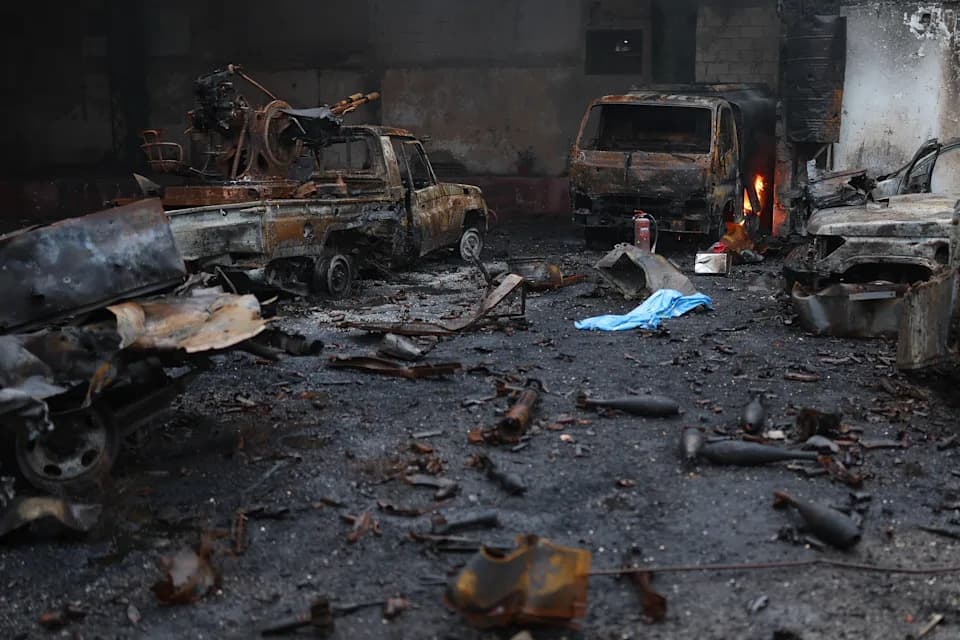
The scale of destruction is vast. A study by the Syrian American Engineers Association estimates that 65 percent of buildings in Daraya are destroyed and another 14 percent are heavily damaged. Only about a quarter of the city's wells function; power and water supplies are intermittent, and in places sewage runs in the streets.
Some neighbourhoods are busy with men repairing roofs, restoring façades and reopening the furniture workshops for which Daraya was long known. Yet whole districts remain silent, littered with rubble and the gutted skeletons of apartment blocks.
Health and education
None of Daraya's four hospitals are operational. The main hospital, which once served a wide population, was reduced to a concrete shell in 2016, and looting stripped copper pipes and wiring. Many healthcare professionals dispersed to Egypt, Jordan, Turkey and Europe, and only a small team from Doctors Without Borders is currently running the lone functioning clinic for a limited period.
Dr Hussam Jamus, a 55-year-old ear, nose and throat specialist, returned after years in exile. Before the war he had served some 30,000 patients; in Jordan he retrained and volunteered with humanitarian groups. Back in Daraya, he reopened his practice at a bullet-scarred door and has treated hundreds of cases, from routine infections to injuries consistent with torture and detention.
Education is also strained. Daraya lost seven of its 24 schools and faces shortages of teachers and supplies even as many families come back. Around 80 percent of the pre-war population has returned, and some pupils were born in exile and educated in different alphabets and systems; they often speak Arabic but cannot write it fluently, complicating reintegration into local classrooms.
Memory, missing people and justice
Before the 2016 evacuation, activists photographed graves in the Cemetery of the Martyrs and removed headstones to prevent desecration. Those records allowed teams to reinstall 421 new gravestones for named victims. Opposite the memorial plot lie mass graves for many of the estimated 700 people killed in the August 2012 massacre.
Amneh Khoulani, a member of the National Commission for the Missing, has searched for relatives who disappeared; three of her brothers were arrested and never seen again. A photo of one brother later surfaced among leaked images documenting deaths in detention. Khoulani divides her time between Britain and Syria and has spoken at international forums seeking justice. At the cemetery, photos of the missing hang from strings and a banner declares: "They are not numbers." Shorba has painted a new mural there — a child picking roses for a father with no known grave — a poignant symbol of a city's struggle to restore dignity to the dead and life to survivors.
Looking ahead
Daraya's revival remains fragile. Rebuilding homes and restoring services will require skilled labor, money, legal documents and local coordination — much of which residents are trying to provide themselves. While independent media and civil society seek to protect memory and maintain civic space, the practical challenges of repairing infrastructure, reviving hospitals and schools, and addressing psychological trauma are immense.
Still, the determination of returnees — artists, medics, teachers, carpenters and council volunteers — signals a community intent on reclaiming its future. In Daraya, small victories such as a surviving mural or the reopening of a workshop can carry outsized meaning for a city trying to rebuild from the ruins.
Help us improve.