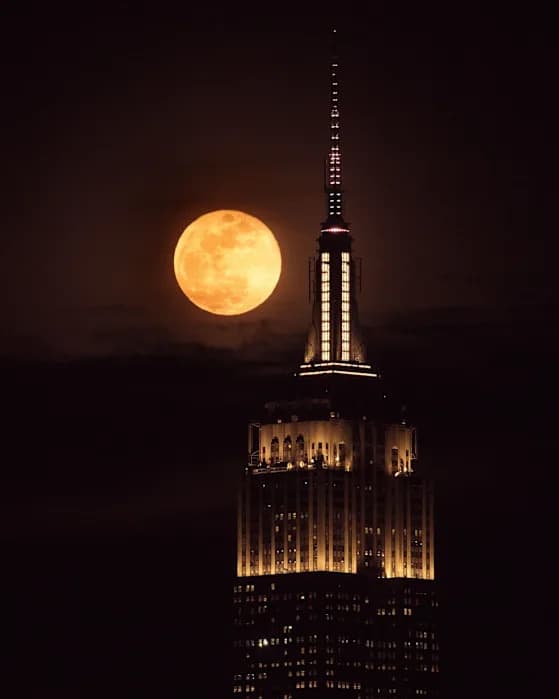
The Cold Moon — December's full moon — will be a supermoon on Dec. 4, reaching perigee at about 221,808 miles and peaking in illumination at 3:14 p.m. PST. Winter full moons sit higher in the sky, so the Moon often appears larger and brighter soon after sunset. This supermoon may contribute to elevated "king tides" along the Oregon coast between Dec. 4–6, and cloudy conditions in Oregon on Dec. 4 could affect visibility.
Don't Miss the Cold Moon — December's Last Supermoon of 2025 (Dec. 4)

The final full moon of 2025 — known as the Cold Moon — will rise on Dec. 4 and is the last supermoon of the year. It will appear slightly larger and brighter than an average full moon and will bring a second round of higher-than-usual "king tides" to parts of the Oregon coast.
What is a supermoon?
A supermoon happens when a full moon coincides with the Moon's closest point to Earth in its elliptical orbit (called perigee), making the lunar disk up to about 8% larger and roughly 16% brighter than average.
"Full Moons that occur on the perigee side of the Moon's orbit seem extra big and bright," said Jim Todd, director of space science education at OMSI. "A supermoon exceeds the disk size of an average-sized Moon by up to 8% and the brightness of an average-sized full Moon by some 16%."
When to watch
On Dec. 4 the Moon will reach perigee at approximately 221,808 miles from Earth and peak illumination at 3:14 p.m. PST. Although peak illumination occurs during the afternoon in Pacific Standard Time, the full moon will be visible and striking after sunset on the evening of Dec. 4 and into the following night.
Why winter full moons look brighter
Winter full moons sit higher in the sky because of the relative positions of the Sun, Earth and Moon. When the Sun is low in the sky during winter, the full moon appears higher at night, making it look larger and brighter earlier in the evening.
How this affects tides
Supermoons can contribute to king tides — especially high tides that occur when the Sun, Moon and Earth are aligned. Coastal areas, including the Oregon coast, can see elevated water levels around the day after a full moon during the November–January period. The Oregon coast experienced higher tides during the November supermoon (Nov. 5–7), and the December supermoon is expected to bring another round of elevated tides around Dec. 4–6.
Local forecasts from the National Weather Service predict mostly cloudy conditions across much of Oregon on Dec. 4, with cloud cover between about 73% and 95% in many areas — which could affect visibility for coastal viewers.
Viewing tips
- Plan to look after sunset on Dec. 4 when the full moon will be easily visible and dramatic against the night sky.
- Use binoculars or a small telescope to appreciate surface details; a nearby foreground (trees, buildings) helps emphasize the Moon's apparent size.
- If you're on the coast, respect posted warnings and stay well back from the water during king tides — elevated waves and currents can be dangerous.
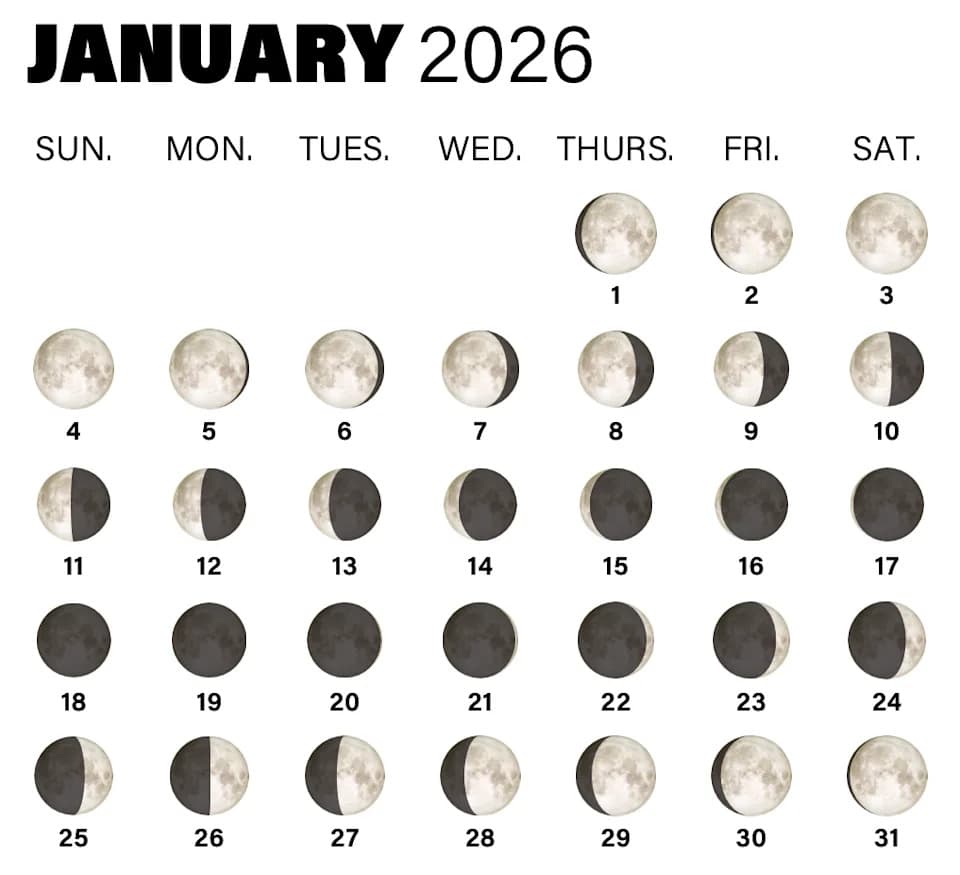
During the 2025–26 season there are four supermoons: October's Harvest Moon, November's Beaver Moon, December's Cold Moon and January's Wolf Moon.
Sources: Jim Todd (OMSI), Old Farmer's Almanac, National Weather Service.
Help us improve.