Key point: Senate Majority Leader John Thune rejected House Speaker Mike Johnson’s request to add the bipartisan Megobari Act — which would impose targeted sanctions on Georgian officials who undermine democracy — to the NDAA. It was the second time Thune blocked the measure, once at Sen. Markwayne Mullin’s urging. Supporters say Megobari would raise the personal and financial costs for Georgian officials and send a strong geopolitical message; critics warn delay risks accelerating Georgia’s slide toward authoritarianism. Bipartisan senators, including Jeanne Shaheen and Jim Risch, have urged stronger U.S. action.
Thune Rejects Johnson’s Last‑Minute Push to Add Georgia Sanctions to NDAA

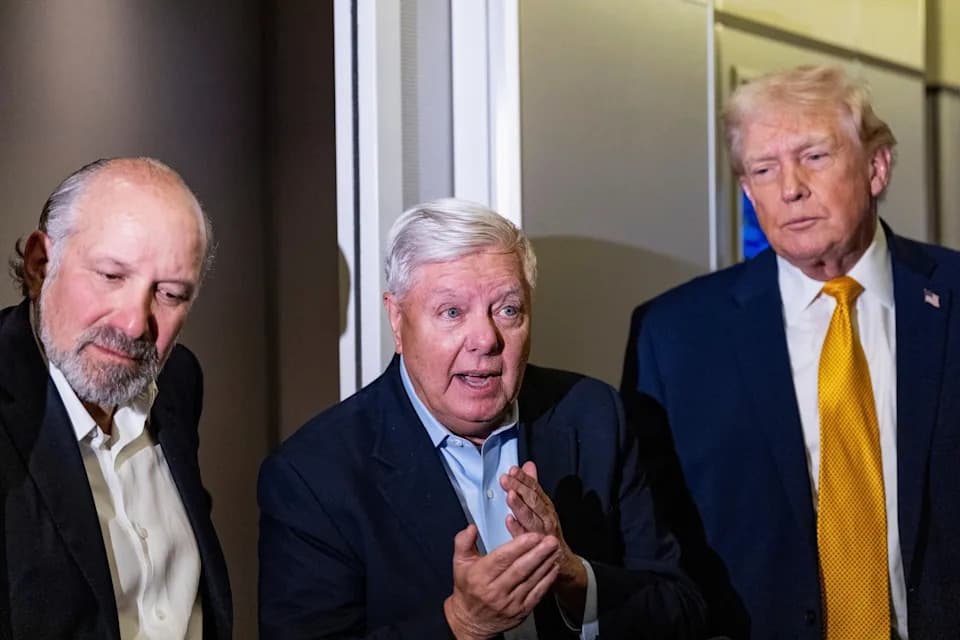
Senate Majority Leader John Thune (R-S.D.) declined a personal request from House Speaker Mike Johnson (R-La.) to insert the Megobari Act — a bipartisan sanctions measure aimed at Georgian officials accused of undermining democracy — into the must‑pass National Defense Authorization Act (NDAA), according to two congressional aides.
Johnson made a late‑November effort to fold the bill into the NDAA, directing aides on Nov. 21 to contact lawmakers across the aisle to marshal support. The Megobari Act would require the president to impose targeted sanctions — including asset freezes and visa restrictions — on individuals who threaten Georgia’s security or democratic institutions.
Thune’s refusal marked the second time in roughly three months that he blocked an attempt to include the measure in the defense authorization. One congressional aide described Johnson’s intervention as unexpected:
“Speaker Johnson’s lobbying was welcome but seemed to come out of nowhere. We thought the bill was dead after Thune shot it down in September. We tried hard to get the bill into the NDAA at the last minute at the Speaker’s request but couldn’t overcome Thune’s opposition.”
Thune previously blocked the bill at the request of Sen. Markwayne Mullin (R-Okla.), a move that frustrated bipartisan backers and pro‑democracy activists. Mullin, who in 2020 criticized Georgia’s ruling Georgian Dream party for cozying up to “American hostile rivals and enemies,” told reporters in September he prefers engagement and incentives, saying he wants to work with Tbilisi before imposing sanctions.
Critics say Georgian Dream’s conduct since winning October 2024 parliamentary elections — which international observers said were neither free nor fair — has been alarming. The party has been accused of using violence, intimidation, expanded legal pressure on opponents, and crackdowns on independent civil society. The BBC has reported allegations that security forces used a World War I‑era chemical agent during anti‑government demonstrations.
Analysts and activists argue that while Megobari alone may not force Georgian Dream to reverse course, it would raise the personal cost for officials by targeting their financial networks and travel. Elene Kintsurashvili, senior program coordinator on the German Marshall Fund’s Transatlantic Security team in Warsaw, said the measure would also deliver a geopolitical signal that the United States views Georgia’s authoritarian shift as a strategic concern rather than a purely domestic matter.
“It would also send a clear geopolitical signal: Washington is prepared to classify Georgia’s authoritarian turn not as a domestic dispute, but as a strategic concern,” Kintsurashvili said.
The United States regards Georgia as strategically important in the Caucasus, a corridor between Russia and the Middle East. Georgia was long regarded as a post‑Soviet democratic success story and resisted a Russian invasion in 2008; Russia continues to occupy South Ossetia and Abkhazia. Observers warn that, absent decisive action by the U.S. and European partners, Georgia risks further tilting toward Moscow and other geopolitical rivals.
Bipartisan lawmakers have publicly pressured the administration to do more. On Nov. 5, Sen. Jeanne Shaheen (D-N.H.) led a bipartisan group of lawmakers in a letter to the State Department urging protection for U.S. and Georgian staff at U.S. diplomatic posts after officials labeled them “radicals” and accused them of supporting revolutionary activity. The letter warned that such mischaracterizations endanger Foreign Service Nationals and reflect a lack of genuine intent by Georgian Dream to improve ties with the United States.
On Nov. 28, Shaheen and Sen. James E. Risch (R-Idaho) issued a joint statement condemning Georgian Dream’s recent actions as ushering in “a dark new chapter” and marking the one‑year anniversary since the party abandoned its constitutional pledge to pursue European Union membership. The senators called on the Georgian government to reverse course, restore political freedoms and recommit to democratic governance.
Help us improve.