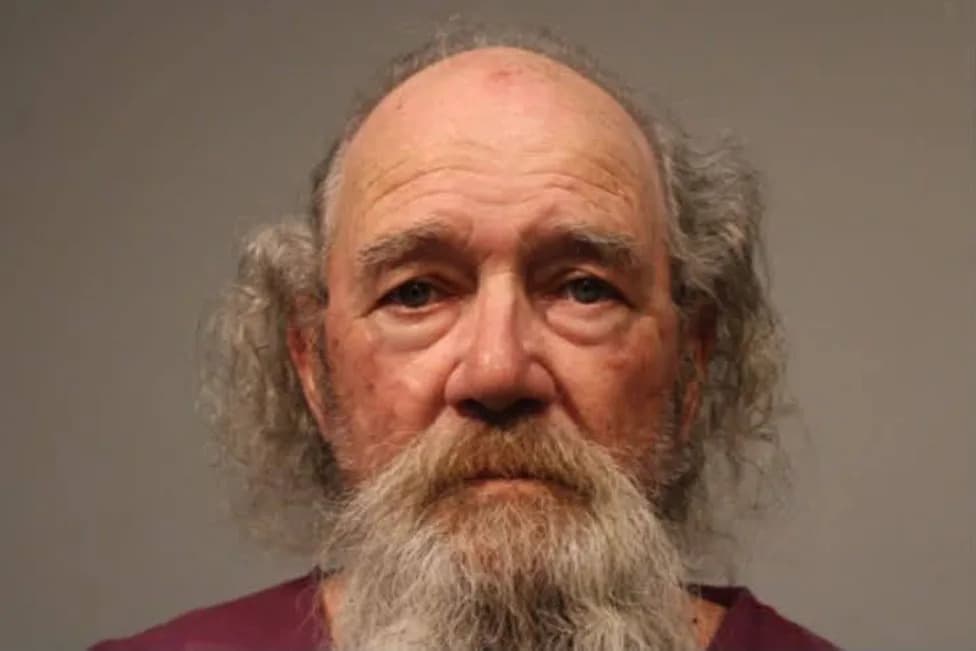
Investigators say DNA recovered from two brown paper bags preserved since 1987 matched Vincent Darrell Groves, a convicted killer who died in prison in 1996. Rhonda Marie Fisher, 30, was found sexually assaulted and strangled near Sedalia, Colorado, after last being seen in Denver. A recent cold-case review and modern DNA testing produced the match, offering long-awaited answers to Fisher’s surviving relatives.
Nearly 40-Year Cold Case Solved: DNA from Paper Bags Links Victim to Suspected Colorado Serial Killer

Nearly 40 years after a young woman was found sexually assaulted and strangled on a rural stretch of highway south of Denver, investigators say a new DNA analysis of two preserved paper bags placed over her hands at the scene has produced a match to a convicted killer long suspected in the case.
On April 1, 1987, 30-year-old Rhonda Marie Fisher was discovered off a highway embankment near Sedalia, Colorado. Fisher had been sexually assaulted and strangled; she had been last seen walking in Denver, about 25 miles north of the location where her body was found.
Detectives pursued numerous leads over the ensuing decades, including people Fisher had been staying with in the weeks before her death and several serial offenders active in the Denver metro area between the 1970s and 1990s. A round of DNA testing in 2017 did not identify a suspect and the investigation eventually went cold.
Earlier this year, the Douglas County Sheriff’s Office Cold Case Unit completed a comprehensive review of the preserved evidence and decided to test two brown paper bags that had been placed over Fisher’s hands at the scene and stored without being handled for roughly four decades.
“Those paper bags were saved and had not been touched for 40 years, and so the thought is that whatever skin cells were on her hands also transferred to the inside of those brown paper bags,” said Shane Williams, a forensic scientist who worked on the new analysis. He noted that DNA testing was not routine in 1987, and the bags were not preserved with modern DNA analysis in mind.
Laboratory results produced a DNA profile that matched Vincent Darrell Groves, a convicted killer who died in prison in 1996 and who investigators say has been linked to multiple murders in the Denver area. The Douglas County Sheriff’s Office described Groves as "one of Colorado’s most prolific serial killers," saying his violent crimes primarily targeted vulnerable women between 1978 and 1988.
Officials said it remains unclear how Groves and Fisher encountered one another and that there is no indication they knew each other. Michelle Kennedy, a crime analysis supervisor with the sheriff’s office, said Groves had long been considered a possible suspect in Fisher’s death, but another individual had also been investigated—making DNA confirmation necessary.
Authorities say Groves is believed to be responsible for at least a dozen homicides, along with an attempted murder and a sexual assault in the Denver area, though they cautioned the true number of victims may be higher. Groves had been convicted of murder in 1982 but served fewer than five years, and he was later convicted of killings in 1988 in Douglas County and in a neighboring county.
“Obtaining a viable DNA profile from paper bags nearly four decades old is exceptionally rare and underscores the extraordinary value of meticulous evidence preservation,” the Douglas County Sheriff’s Office said in a statement.
Sheriff Darren Weekly said that although Groves cannot be prosecuted because he is deceased, identifying him may provide long-sought answers for Fisher’s surviving relatives and friends. Investigators spoke with a cousin who was "very happy to have answers," the sheriff’s office said; Fisher’s parents and brother died before the case was solved.
Local officials also noted this is the seventh cold homicide their department has cleared in the past seven years, crediting advances in DNA analysis and the practice of re-examining preserved evidence. In recent years, law enforcement agencies across the United States have increasingly used emerging forensic tools—such as genetic genealogy and DNA phenotyping—to revive and resolve long-dormant cases.
“As science evolves, so does our ability to uncover the truth,” Sheriff Weekly said. “Our commitment to these investigations—and to the families who await answers—will never waver.”
Help us improve.