Poverty Point, a 3,500‑year‑old UNESCO site north of New Orleans, may have been constructed by episodic gatherings of egalitarian hunter‑gatherers rather than by a centralized elite. New research by Tristram Kidder and Seth Grooms argues that repeated flooding and severe weather motivated thousands to converge for ritual, trade, and large communal work. The site lacks evidence of permanent dwellings yet contains materials from distant regions, supporting its role as a major seasonal exchange and ritual center. This reinterpretation challenges assumptions about the social prerequisites for monumental construction.
How Egalitarian Hunter‑Gatherers Built Poverty Point: New Study Rewrites the Origins of America’s Giant Earthworks

Poverty Point, a 3,500‑year‑old complex of earthworks north of New Orleans, is being reinterpreted by archaeologists who argue it was created by large, episodic gatherings of egalitarian hunter‑gatherer communities rather than by a centralized ruling elite. Dated between about 1700 and 1100 B.C.E., the site spans roughly 1.5 square miles and is recognized as a UNESCO World Heritage Site.
Monumental labor without rulers
Researchers estimate the builders moved the equivalent of some 140,000 dump trucks of soil without domestic animals or wheeled transport — an enormous communal effort. New analysis by Tristram Kidder and Seth Grooms of Washington University in St. Louis reexamines long‑standing assumptions that such sustained construction requires hierarchical organization like the pharaohs or later chiefdoms.
Ritual, environment, and seasonal gatherings
Kidder and Grooms propose that repeated severe weather and large floods in the Lower Mississippi Valley prompted thousands of people to gather episodically at Poverty Point to carry out coordinated work, exchange goods, and perform rituals aimed at repairing what they describe as a "torn universe." Rather than permanent settlement, the site appears to have functioned as a seasonal or event‑driven meeting place.
'We believe they felt a moral responsibility to repair a torn universe,' Kidder says, summarizing the argument that a shared moral or ritual purpose organized the labor.
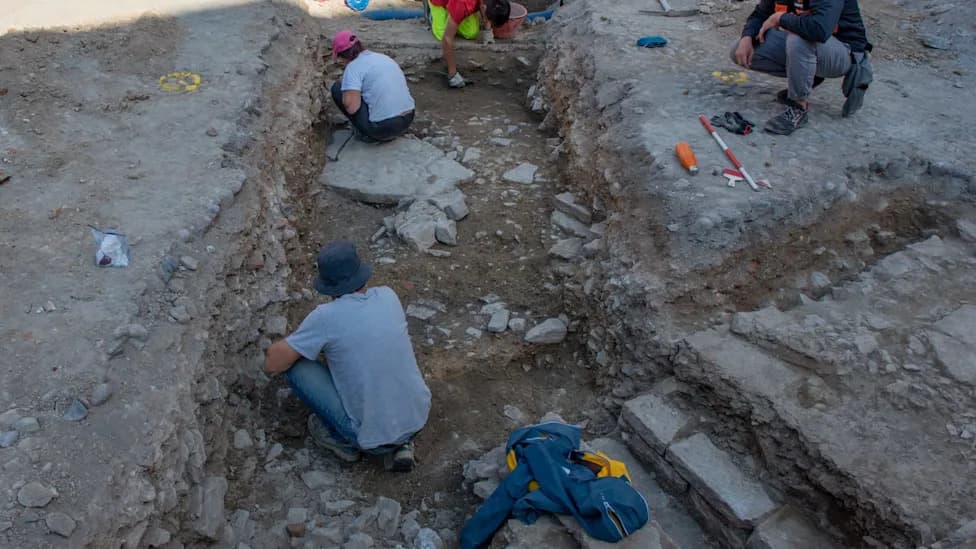
Excavations have not produced clear evidence of long‑term domestic dwellings at the earthworks themselves. Instead, archaeologists have recovered exotic raw materials from distant regions — quartz crystal from Arkansas, soapstone from northern Georgia, and copper from the Great Lakes — indicating long‑distance exchange and episodic congregation of people from across the southeastern and midwestern United States.
Rethinking social complexity
Grooms emphasizes that the evidence shows large, coordinated monument building in the absence of institutional hierarchy, marked wealth inequality, or intensive agriculture. This challenges the notion that those social features are prerequisites for monumental architecture and complex social organization.
Reframing Poverty Point as a product of cooperative, mobile groups reshapes our understanding of prehistoric social complexity in North America and highlights how communities organized labor, ritual, and exchange long before later complex centers such as Cahokia emerged in the Mississippi watershed.
Help us improve.