The Stanford CREDO analysis found students at Rhode Island charter schools gained roughly 90 extra days in English and 88 in math per year compared with district peers. CREDO credits a 2017 overhaul of the state’s charter authorization and renewal rules with making oversight more transparent and predictable, which interviewees say improved relationships between operators and regulators. Political tensions persist — local elections, stalled moratorium proposals and community pushback continue to shape the future of charter growth — even as demand far exceeds available seats.
Rhode Island’s Overhauled Charter Rules Tied to Major Student Gains, Report Finds

When Stanford University’s Center for Research on Education Outcomes (CREDO) reviewed charter school performance nationwide, one result stood out: charter schools in Rhode Island produced unusually large academic gains. CREDO found that, on average, students at Rhode Island charters gained the equivalent of roughly 90 extra days of learning in English and about 88 extra days in math per year compared with peers in traditional public schools.
Although Rhode Island is not typically singled out as a national leader in K–12 reform, the state has developed a relatively strong charter sector. In a follow-up analysis released in October, CREDO traces much of that success to a 2017 overhaul of the state’s charter authorization and renewal rules. Interviews with charter leaders, state education officials and a governor’s aide suggest the reforms clarified expectations for schools, increased transparency and reduced uncertainty about how authorizers would evaluate performance.
“There has been a change from chaotic beginnings to more structured, standardized practices,” said Marzena Sasnal, the lead author of the report and a senior research associate at Stanford.
Before the reforms, operators said renewal criteria were ambiguous and renewal cycles—typically every five years—left them feeling "in the dark" about how test scores, financial health and management practices would factor into renewal decisions. Macke Raymond, CREDO’s director and a co-author of the report, summarized the problem: “The criteria for renewal were so ambiguous and complicated. It didn’t even matter what your state test scores were because you didn’t know what the authorizer’s standards of evaluation were going to be when you came up for renewal.”
Political and legal disputes added to the uncertainty. The report recalls episodes such as efforts to rescind renewal decisions and lawsuits from districts attempting to block new charter openings. Those clashes undermined trust between authorizers, district leaders and charter operators.
After the 2017 reforms, interviewees described a more transparent, rules-based system: charter applications are published online, public hearings are required in communities likely to supply students, and authorizers evaluate schools against clearer academic, financial and organizational indicators. School leaders say earlier detection of problems has made corrective action planning more feasible.
Kenneth Wong, a professor of education policy at Brown University, said the revised framework "played a key role" in improving the sector. The updated system aligns more closely with national standards—such as those from the National Association of Charter School Authorizers—and emphasizes performance-based accountability, data transparency and ongoing quality monitoring.
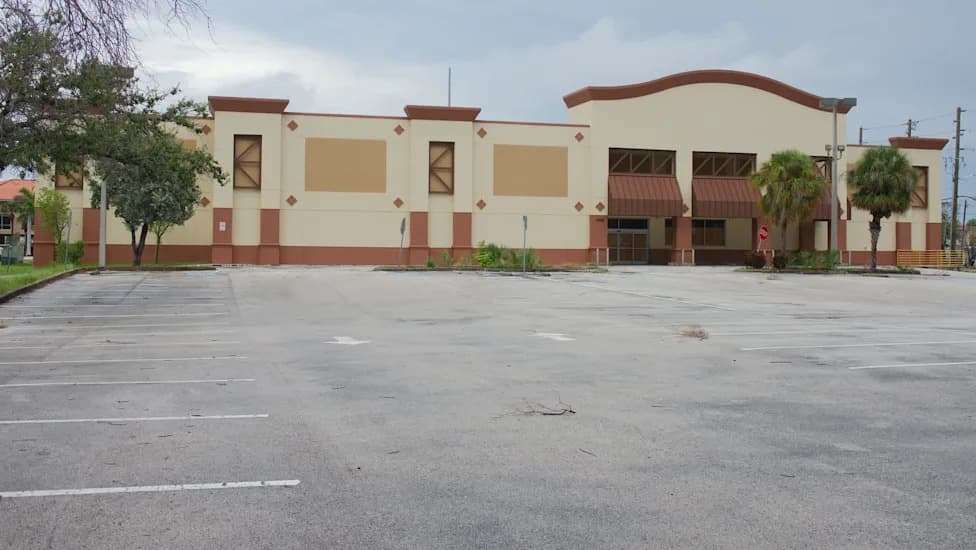
Still, the politics of charter growth remain fraught. In Providence, the state’s largest district, recent elections elevated candidates backed by teachers’ unions while limiting pro-charter representation. City leaders twice reversed deals allowing a charter organization to lease a closed district building after public backlash. A statewide proposal for a moratorium on new charters stalled in 2021.
Justine Oliva, director of research and policy at the nonpartisan Rhode Island Public Expenditure Council (RIPEC), called the charter debate "contentious," especially as overall K–12 enrollment has fallen since the COVID-19 disruptions. Enrollment data underscore strong demand for charters: roughly 10 percent of Rhode Island’s K–12 students attend charter schools, yet in the 2023–24 school year nearly 30,000 applicants competed for just under 2,500 available seats.
RIPEC’s analysis and other state studies show that many charter schools serve disadvantaged communities and, overall, deliver stronger academic outcomes than the sending districts. For example, students at Achievement First charters—now enrolling more than 20 percent of the state’s charter students—were about twice as likely to score proficient on state reading exams and three times as likely to score proficient in math compared with peers in their sending districts. As Oliva notes, "Not all charters have great outcomes... but our largest charters have outcomes that outperform the sending districts, as does the charter sector overall."
While the evidence links regulatory clarity to improved charter performance in Rhode Island, the future of charter expansion remains tied to local politics, enrollment trends and ongoing debates about how best to serve students across the state.
Help us improve.