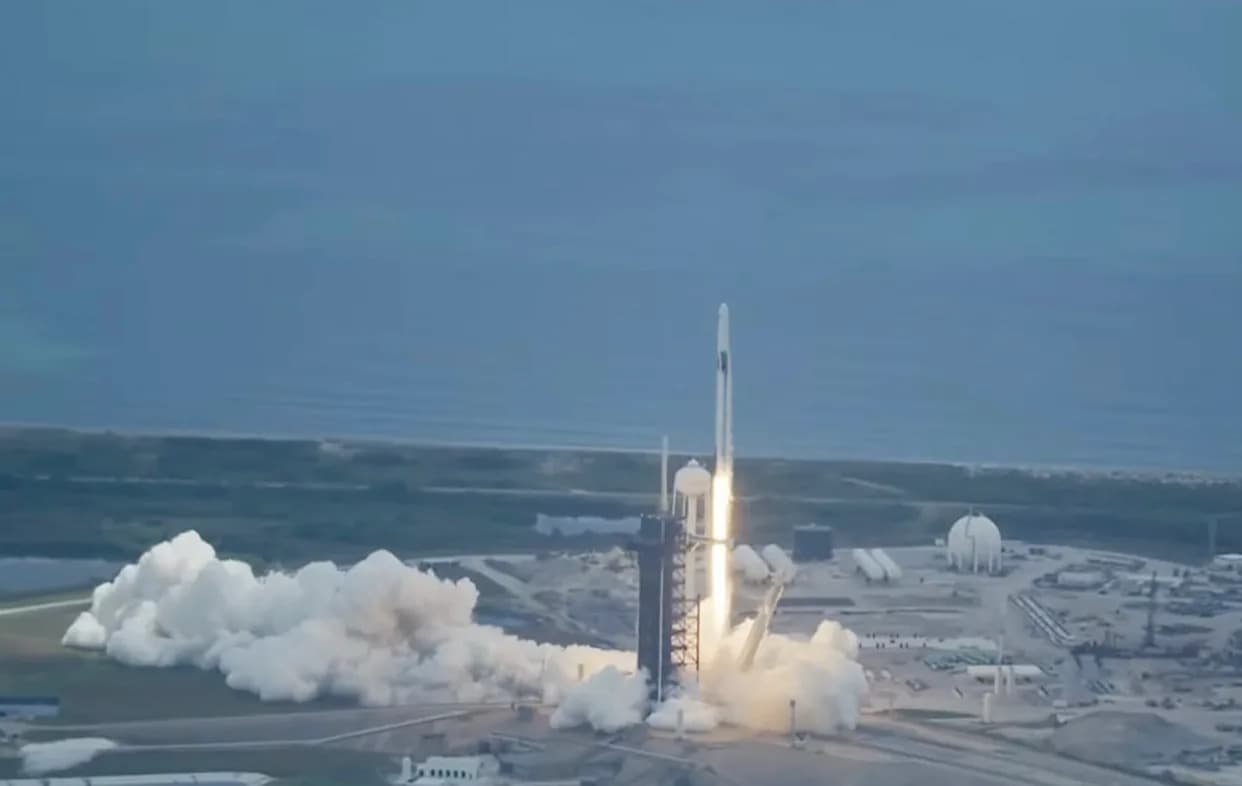
The November 27 Soyuz launch damaged a mobile maintenance cabin at Baikonur Cosmodrome, overturning it into the flame trench and causing multiple elements of the launchpad to be impaired. Roscosmos has begun inspections and says spare components are available, but experts believe the cabin may need replacement. The damage pauses crewed Soyuz launches and affects Progress cargo flights (Progress MS-33 has been delayed), and repairs could take months depending on spare-part availability.
Launchpad Collapse at Baikonur Overturns Maintenance Cabin — Russia’s Crewed Flights Temporarily Paused

On November 27 a Soyuz liftoff resulted in significant damage to the Baikonur Cosmodrome launch complex in Kazakhstan, leaving Russia temporarily unable to send crewed missions to the International Space Station (ISS) until repairs are completed.
What happened?
Although the Soyuz MS-28 spacecraft and its crew successfully reached the aging orbital outpost, drone footage captured shortly after launch shows the launch platform’s mobile maintenance cabin overturned and lying inside the flame trench — the deep, concrete-lined channel that redirects rocket exhaust. The upset cabin provides access to the Soyuz first- and second-stage engines and is used by technicians during final pre-launch checks.
Official response and initial assessment
Russia’s space agency, Roscosmos, acknowledged “damage to a number of elements of the launchpad” and said an inspection of the complex is under way. The agency stated that reserve components are available and that repair work will begin promptly.
Extent of the damage and repair outlook
Independent experts and engineers familiar with similar Soyuz facilities say the overturned maintenance cabin appears to be beyond repair and will likely need replacement. Building new cabins for comparable complexes has previously taken as long as two years; however, some sources indicate Roscosmos may have spare parts or existing components that could shorten the timeline. Given the damage, the pad could remain out of service for several months.
Operational impact
- Crewed launches: Baikonur is currently Russia’s only launch site certified for crewed missions to the ISS. Until the pad is restored or another site is certified, Soyuz crew flights from Baikonur are effectively paused.
- Cargo missions: Uncrewed Progress resupply launches from the damaged pad are also affected. The Progress MS-33 mission, originally scheduled for December 21, has been postponed into next year.
- Schedule cushion: Russia has a crewed launch from Baikonur tentatively scheduled for July 14, which provides some time for repairs, but it is unclear whether that date will be kept.
Wider implications
The incident comes at a sensitive time for international space cooperation. With only two operational crew transport systems to the ISS — Russia’s Soyuz and SpaceX’s Crew Dragon — the damage could affect crew rotations and logistics planning. NASA and international partners may need to adjust schedules or rely more heavily on commercial crew services while the pad is repaired.
The situation is evolving as inspectors complete a full assessment and Roscosmos begins repair planning. Recovery speed will depend on whether usable spare components are available and on the results of the structural inspection of the launch complex.
Help us improve.