Mia Bannister, who lost her son Ollie to anorexia and online bullying, has become a vocal supporter of Australia’s new law banning under-16s from major social platforms from December 10. Platforms that fail to block underage users face fines up to A$50 million (about US$32 million). Supporters say the measure will reduce online harm; critics warn of enforcement challenges and the risk of excluding young people from beneficial digital opportunities. Families and young creators worry about lost learning and income pathways while experts call for stronger platform safety obligations.
‘For Him’: Mother Turns Grief into Campaign as Australia Bans Under-16s From Major Social Platforms

Mia Bannister carries her grief on her skin: a tattooed eulogy for her teenage son Ollie, who took his life after battling anorexia and sustained online bullying. Mia says that if Australia’s new law — barring children under 16 from major social networks — had been in force a year earlier, her son might still be alive.
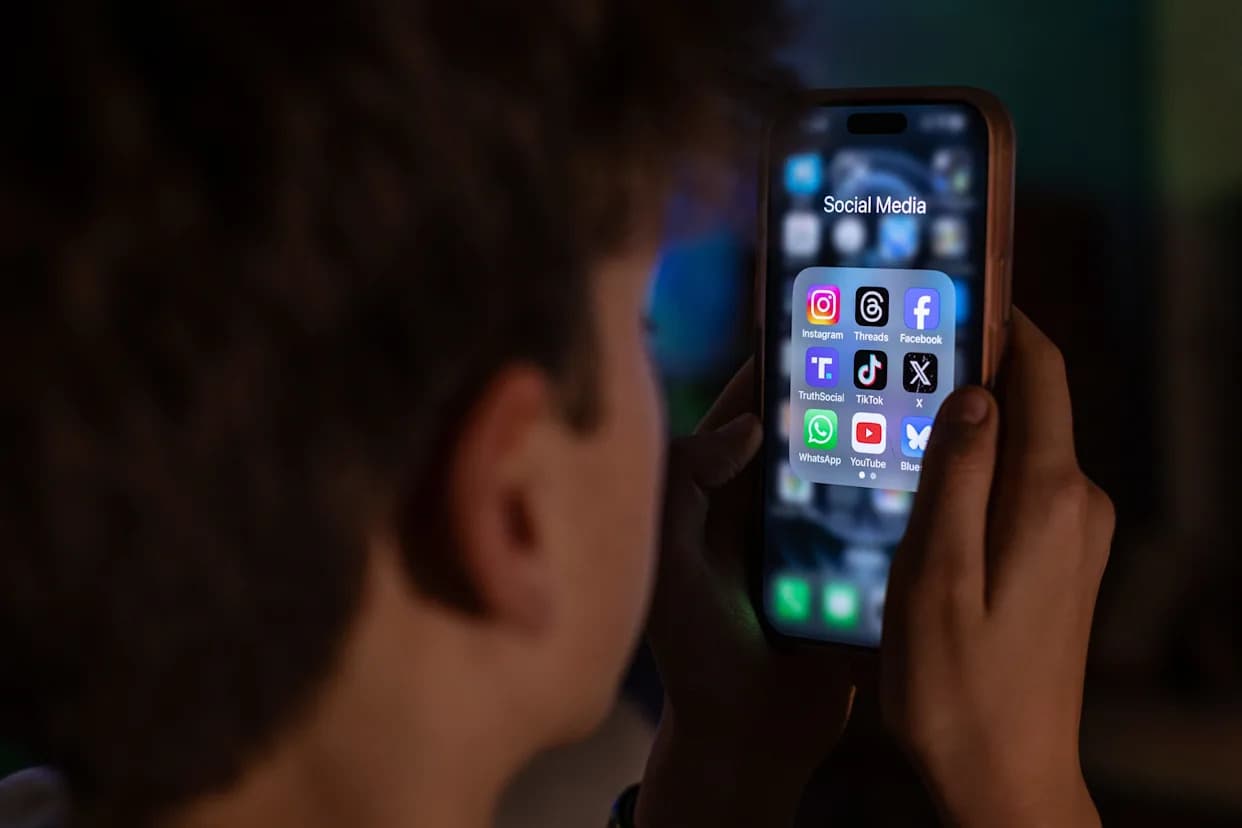
Under rules coming into effect on December 10, children under 16 in Australia will be prohibited from accessing major platforms such as Facebook, Instagram, Reddit and TikTok unless platforms reliably verify ages. Companies that do not prevent underage access face fines of up to A$50 million (about US$32 million). Authorities have initially exempted 10 services — including Discord, Pinterest, Roblox, LEGO Play and WhatsApp — but regulators retain the power to require any service to comply.
Ollie, social media and a mother’s mission
"He was my best friend. He was my world," Mia says as she traces the outline of a mother holding a cracked red heart inked on her arm. She remembers Ollie's quick wit, red curls and the light in his eyes that dimmed as his illness deepened. When Ollie first became unwell, he turned to social media — and, Mia believes, the platforms fed him content that worsened his eating disorder.
"It is their platforms and the unfiltered, unchecked content. When parents hand their child a phone, we hand them the greatest weapon we could hand them," Mia says.
The debate: protection vs. opportunity
Mission Australia found that about 97 percent of teens surveyed use social media daily and that nearly half spend three or more hours online. The poll of more than 10,000 people aged 15–19 reported that those using social media less than three hours a day described better wellbeing and social connection.
Supporters of the law argue it will reduce exposure to harmful content and change how children spend their time online, not cut them off from the internet entirely. Critics, however, warn that a blanket prohibition raises practical enforcement questions — including how platforms will verify ages — and could push young people into unsafe corners of the web. Some experts call instead for stronger safety obligations on platforms and better-designed digital spaces for children.
"I don't think this is the right approach to online safety," says Catherine Page Jeffery, a media and communications lecturer. "Blanket bans don't often work — better safety design and obligations on platforms would be preferable."
Young creators and families caught in the middle
Not all young users are purely consumers. For many, social platforms are places to form identity and build skills. Twelve-year-old Ava Chanel Jones uses Instagram to document cheering, dance and modelling — a hobby she started during the pandemic with help from her mother, Zoe. Ava has more than 11,400 followers, earns modest payments from Meta, receives sponsored products and has launched a small clothing line.
Zoe monitors incoming messages from unknown accounts through a hidden folder and has tightened privacy settings to protect Ava. Still, she worries the new law could cut off opportunities for children to discover passions, earn money responsibly, or develop digital skills.
Implementation and outlook
Australia's eSafety Commissioner has described age limits as a "potent solution" for reducing online harm, while acknowledging there is no simple, immediate fix. Questions remain about how the rules will be enforced, how exemptions will be managed, and how to balance child safety with access to positive online opportunities.
Grieving but determined, Mia channels her pain into a charity that raises awareness of eating disorders in boys and educates families about safer online habits and the new rules. "I do it for him, and I do it for all the other children out there: the lost children and the ones that we're all going to save," she says.
Help us improve.