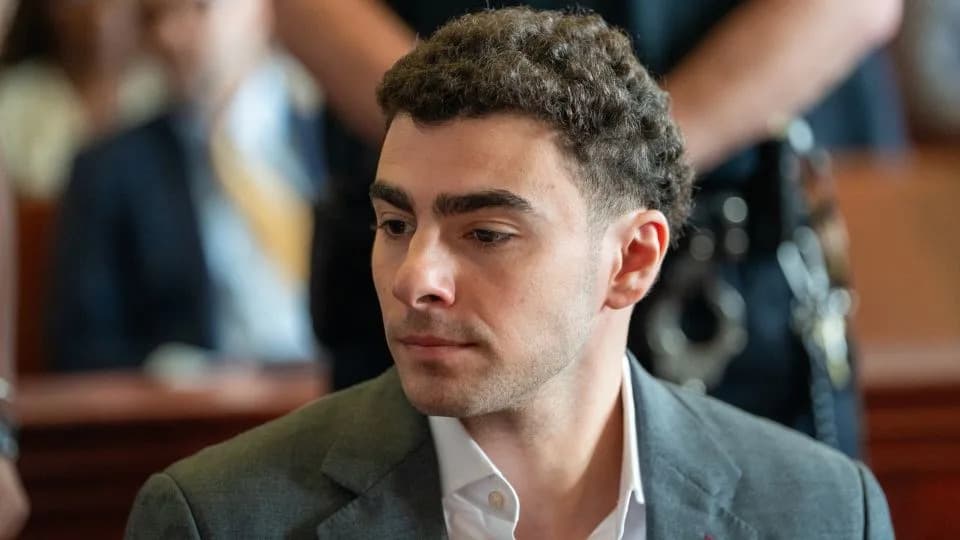
The Justice Department filed a 144‑page omnibus opposition arguing that the death penalty should remain a possible punishment if Luigi Mangione is convicted of killing UnitedHealthcare CEO Brian Thompson on Dec. 4, 2024. Government attorney Sean Buckley said longstanding precedent and courtroom safeguards can protect a fair trial despite intense publicity. The defense seeks to bar capital exposure, dismiss counts and suppress evidence, but prosecutors call many arguments premature and legally unfounded. Judge Margaret Garnett has not yet ruled on the federal motions.
DOJ Says Death Penalty Must Remain an Option in Luigi Mangione Federal Case

The Justice Department filed a 144-page omnibus opposition arguing that longstanding federal precedent supports keeping the death penalty available in the federal prosecution of Luigi Mangione, who is accused of fatally shooting UnitedHealthcare CEO Brian Thompson on Dec. 4, 2024.
Government response and key arguments
In the filing, government attorney Sean Buckley told the court that a fair trial remains possible even if prosecutors pursue capital charges. The filing responded to multiple motions from the defense seeking to bar the death penalty, dismiss portions of the federal indictment and suppress evidence and statements allegedly taken before Mangione received Miranda warnings.
"Publicity — even intense — is not novel in this district," Buckley wrote, noting that the Southern District of New York routinely manages high‑profile cases with safeguards designed to limit juror prejudice.
The government outlined typical protections used in high‑visibility trials: written juror questionnaires probing media exposure, individualized and sequestered voir dire, instructions forbidding juror media consumption, witness sequestration and targeted admonitions.
Defense claims and prosecution rebuttal
Mangione’s defense has argued that law enforcement violated his constitutional rights by questioning him before giving Miranda warnings and by searching his belongings without a warrant. Defense counsel Karen Friedman Agnifilo has urged suppression of statements and items seized from Mangione after his arrest.
Prosecutors counter that the pre‑Miranda statements they may seek to introduce are limited (for example, an alleged false name given in response to a question that did not require a Miranda warning) and that the backpack search was lawful — either as a search incident to arrest or an inventory search. Authorities have said officers on scene initially checked the bag out of concern it might contain an explosive device and ruled that out after searching it.
Government filings describe some of the defense challenges as premature, speculative and largely restatements of arguments that appellate courts have rejected. The DOJ argued these points do not justify dismissal of the indictment or categorical removal of a congressionally authorized penalty.
Case posture and procedural background
Mangione faces state and federal charges in New York in connection with Thompson’s killing. He also faces separate charges in Pennsylvania related to an alleged fake ID and an illegal handgun found after his arrest at a McDonald’s in Altoona. Only the federal case carries the potential for the death penalty.
Earlier this year, a New York judge dismissed terror‑related state charges against Mangione. Judge Margaret Garnett has not yet ruled on the pending federal motions; she has granted Mangione’s request to wear civilian clothing at an upcoming hearing. Mangione is scheduled to return to state court on Monday.
Legal observers, including former federal prosecutors, said many of the defense’s pretrial motions appear designed to preserve issues for appeal should a death sentence be imposed, rather than to secure immediate relief from capital exposure.
Help us improve.