Former officers from Argentina's 1976–1983 dictatorship and their supporters rallied in Plaza de Mayo to demand the release of colleagues jailed for human rights abuses, provoking angry counter-protests and renewed concerns. The demonstration coincides with President Javier Milei's appointment of a serving general as defense minister and his administration's disputed reassessment of the military's role. A U.N. committee has warned about cuts to institutions that document abuses and support victims.
Dictatorship-Era Officers Rally at Plaza de Mayo, Raising Fears of Political Shift in Argentina

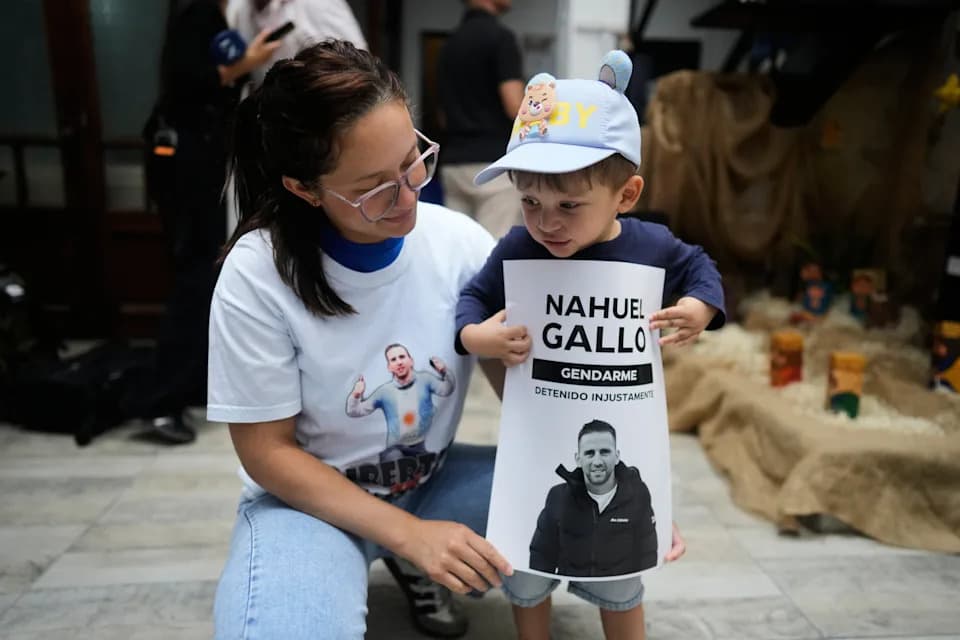
Former military officers who served during Argentina's 1976–1983 dictatorship, together with family members and supporters, held a rare demonstration in Plaza de Mayo on Saturday calling for the release of colleagues jailed for human rights abuses committed under the junta. The rally, staged at one of the country's most symbolic civic sites, heightened tensions in a nation that has long embraced the slogan Nunca Más (Never Again) to reject authoritarian rule.
Milei's stance and key appointments
Since taking office, President Javier Milei has repeatedly described the junta's campaign of state terror as a chaotic counterinsurgency against leftist guerrillas. His vice president, Victoria Villarruel, an outspoken advocate for security forces and relatives of those killed by left-wing groups, has promoted recognition of what she calls the 'other victims' of terrorism.
Last week Milei named Army chief of staff Lt. Gen. Carlos Alberto Presti as defense minister. The presidency said the appointment makes Presti the first serving military officer to hold a ministerial post since the return to civilian rule in 1983 and framed it as a rejection of what it calls the 'demonization' of the armed forces.
Voices at the rally
Pro-military demonstrators sang the national anthem and held banners demanding freedom for jailed servicemen, arguing that the armed forces have been unfairly maligned. "We demand the moral vindication of all the veterans," said María Asunción Benedit, the event organizer; her late husband was an army captain involved in counterinsurgency operations in Tucumán in the 1970s.
Some participants wore black bandanas in a deliberate counterpoint to the white kerchiefs embroidered with missing relatives' names traditionally worn by the Grandmothers (and Mothers) of Plaza de Mayo. Pedro Nieto, a veteran who traveled from Salta to attend, said the rally was a symbolic call for the liberation of imprisoned colleagues: 'We are proud to have fought and eliminated the terrorists,' he said.
Counter-protests and international concern
The rally prompted outraged counter-protests by human rights advocates and relatives of the disappeared. Alejandro Pérez, whose uncle was abducted and disappeared during the dictatorship, said it was terrifying to see former officers near the government house demanding the release of those he described as 'imprisoned genocidal criminals.' Police kept the groups separated as counter-protesters chanted slogans such as 'Never Again' and 'the 30,000 are present.'
The demonstrations followed a report from the U.N. Committee Against Torture that expressed concern about actions by Milei's government, including cuts to programs and institutions that preserve memory, document abuses and pay reparations to victims of the dictatorship. Critics say the government's reassessment of the past risks normalizing or minimizing systematic abuses that led to an estimated 30,000 people being killed or disappeared.
“Whether you like it or not, the defense of human rights became a business, and we will not tolerate that,” said Alberto Baños, Milei's top human rights official, rejecting the U.N. committee's findings.
Analysts say the public rallies and high-profile appointments reflect a broader political shift that could reshape how Argentina confronts its authoritarian past. Human rights organizations warn that weakening institutions dedicated to truth and memory would reverse decades of work to investigate abuses and provide redress to victims and families.
Help us improve.