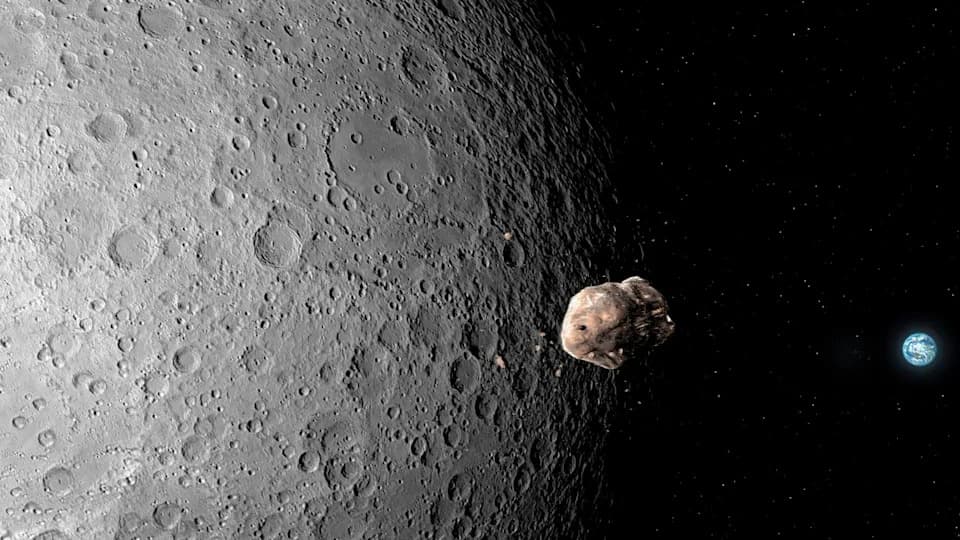
The Virtual Telescope Institute and the Asteroid Foundation will stream live on Nov. 30 as near‑Earth asteroid (433) Eros appears near the Andromeda Galaxy. The broadcast starts at 3 p.m. EST (2000 GMT) and includes commentary from Gianluca Masi with live images from Manciano, Italy. Eros — discovered in 1898 and visited by NASA's NEAR Shoemaker — will be about 37 million miles (60 million km) away and shine near magnitude 10, making it visible with modest optics after sunset.
Watch Live Nov. 30: Near‑Earth Asteroid Eros Passes Close to the Andromeda Galaxy

Tune in on Sunday, Nov. 30, to watch a free live telescopic broadcast as near‑Earth asteroid (433) Eros appears to pass near the Andromeda Galaxy (Messier 31). The Virtual Telescope Institute, in collaboration with the Asteroid Foundation, will host the livestream featuring expert commentary and live wide‑field views from robotic telescopes in Manciano, Italy — weather permitting.
When and where to watch
The livestream begins at 3 p.m. EST (2000 GMT). Gianluca Masi, founder of the Virtual Telescope Project, will provide context and commentary while the telescopes track both Eros and Andromeda.
Why this event matters
Eros is historically important: discovered in 1898 as the first identified near‑Earth asteroid, it was later visited by NASA's NEAR (Near Earth Asteroid Rendezvous) Shoemaker mission. NEAR orbited the roughly 20‑mile (33‑kilometer) object and completed the first soft landing on an asteroid on Feb. 12, 2001.
Quick observing facts
- Separation: Eros will pass within about two degrees of Andromeda's core on the night of Nov. 30.
- Distance: Eros will be roughly 37 million miles (60 million kilometers) from Earth; Andromeda lies about 2.5 million light‑years away.
- Brightness: Eros will shine near magnitude 10 for several weeks, making it visible in modest telescopes and even in strong binoculars under dark skies.
How to spot Eros and Andromeda
Both objects will be high in the eastern sky in the hours after sunset on Nov. 30. Start by locating the constellations Cassiopeia and Andromeda with a star‑finder app. Use the three stars at the top of the Andromeda pattern to guide you toward Messier 31 — Eros will appear nearby. A small telescope (around 60 mm aperture) or binoculars should reveal the asteroid as a faint point of light; a telescope will help you confirm motion against the background stars over successive minutes or hours.
Note: The broadcast and telescope views depend on local weather at the observatory site. If you plan to observe from home, choose a dark location, allow your eyes to adapt to the dark, and bring a chart or app to help confirm the asteroid's position.
If you’re considering new optics, consult recent reviews of the best binoculars and telescopes for stargazing in 2025 to find gear suited to your needs.
Help us improve.