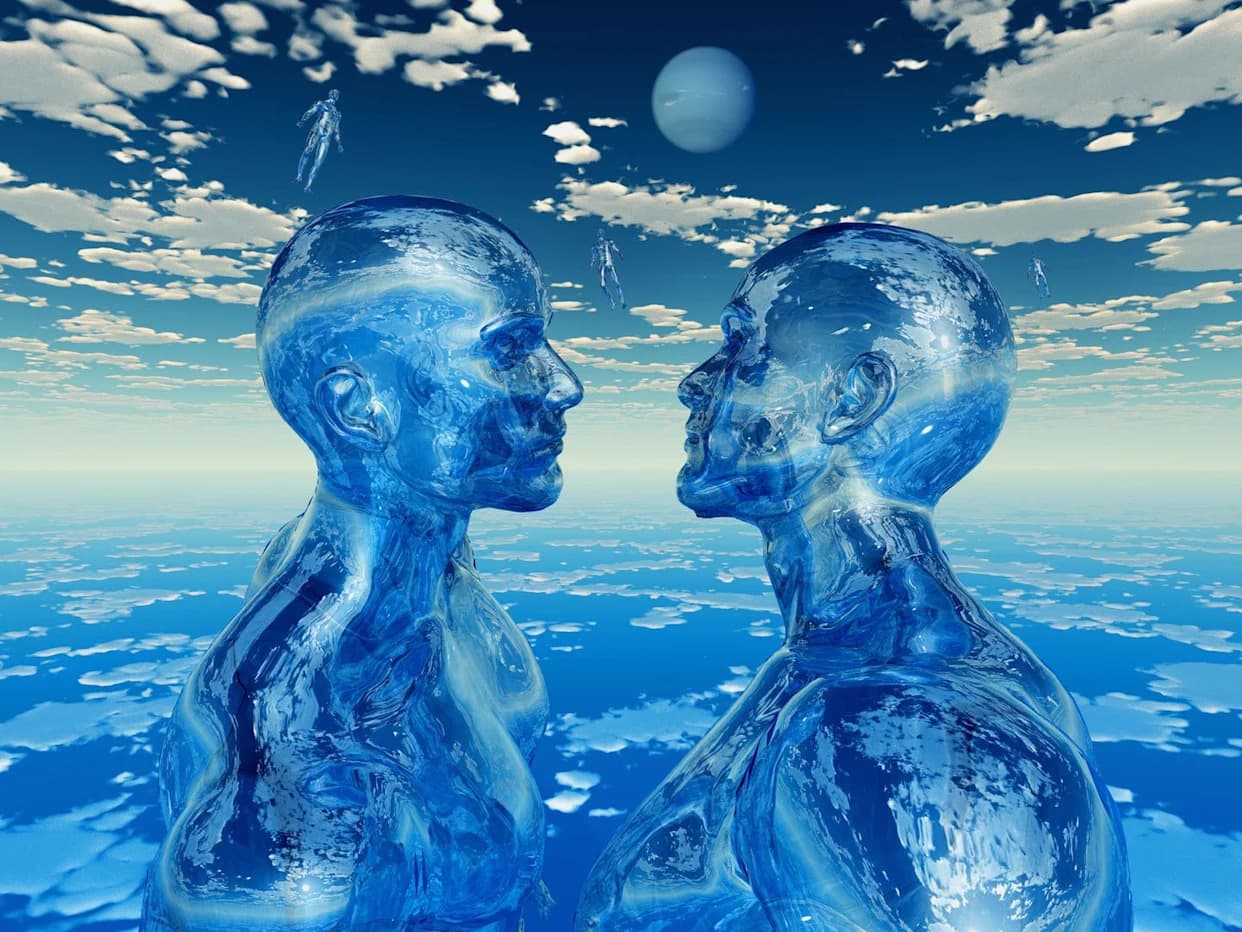
The “third state” is a liminal interval after the heart stops when neural activity can persist and conscious experience may continue. Studies report transient high-frequency brain activity and survivors commonly describe time dilation, out-of-body perceptions, vivid imagery and encounters with deceased loved ones. These episodes often bring intense calm and lasting psychological change, yet some accounts occur when measurable brain signals are minimal—keeping the phenomenon scientifically and philosophically controversial.
Inside the “Third State”: What Happens in the Liminal Moments Between Life and Death

The interval after the heart stops but before consciousness fully fades—often called the “third state”—has fascinated scientists, spiritual teachers and survivors for decades. In this liminal phase the brain can show surprising activity and people report vivid visions, altered time perception, out-of-body awareness and profound emotional shifts that resist easy explanation.
What the third state is
Rather than a single instant, death is often a process. When cardiac circulation halts, blood and oxygen delivery to the brain fall rapidly, but neurons can continue to fire for seconds to minutes. During that window awareness may intermittently persist and subjective experience can feel unusually clear or expansive. Researchers now use the term third state to describe this suspended, in-between period.
Brain activity and puzzling surges
Clinical studies of cardiac arrest and critical illness have recorded unexpected patterns of electrical activity as the brain shuts down. Some teams report transient increases in high-frequency (gamma-band) rhythms—oscillations linked in waking life to memory retrieval, attention and vivid perception. Those bursts may help explain why survivors sometimes recall sharply detailed episodes during the final seconds before clinical death.
Such activity could reflect a last neural attempt to impose coherence on collapsing systems, a release of neurochemicals that alters subjective experience, or phenomena not yet captured by current models of brain function.
Common experiences reported
Survivors commonly describe:
- Time distortion: moments that feel vastly extended even when only seconds have passed.
- Out-of-body perceptions: seeing their body or the room from above, sometimes with verifiable details.
- Vivid imagery: tunnels, bright light, landscapes or symbolic scenes experienced as more real than dreams.
- Meetings with deceased loved ones: emotionally intense encounters that many feel are authentic.
- Profound calm and reduced fear of death: feelings of peace, release or connection that often persist after recovery.
How science interprets these reports
Explanations range across disciplines. Neurologists point to hypoxia-driven firing patterns, neurotransmitter surges, and the brain’s capacity to generate coherent narratives from fragmentary input. Cognitive scientists consider memory compression and altered temporal processing. Others view some reports through spiritual or phenomenological lenses. Importantly, a subset of accounts appear during periods when clinical monitors register minimal or no measurable brain activity, which raises challenging questions about the relationship between consciousness and current neurophysiological markers.
Aftereffects and meaning
Beyond the immediate episode, many survivors describe long-lasting changes: reduced fear of death, reorganized priorities, deeper relationships and a stronger sense of meaning or connectedness. For some the third state is a psychological turning point, for others a profoundly spiritual encounter. Whatever the interpretation, the experience frequently leaves a durable imprint on a person’s life.
Why it matters
The third state sits at the intersection of neuroscience, psychology and existential inquiry. It pushes researchers to refine measurements, consider new models of consciousness and listen carefully to firsthand testimony. Whether ultimately explained by neural circuitry, psychological processing, or phenomena not yet understood, the third state remains one of the most compelling and mysterious windows into human experience.
Note: Research is ongoing and many findings are preliminary; while patterns recur across reports, individual experiences vary widely.
Help us improve.