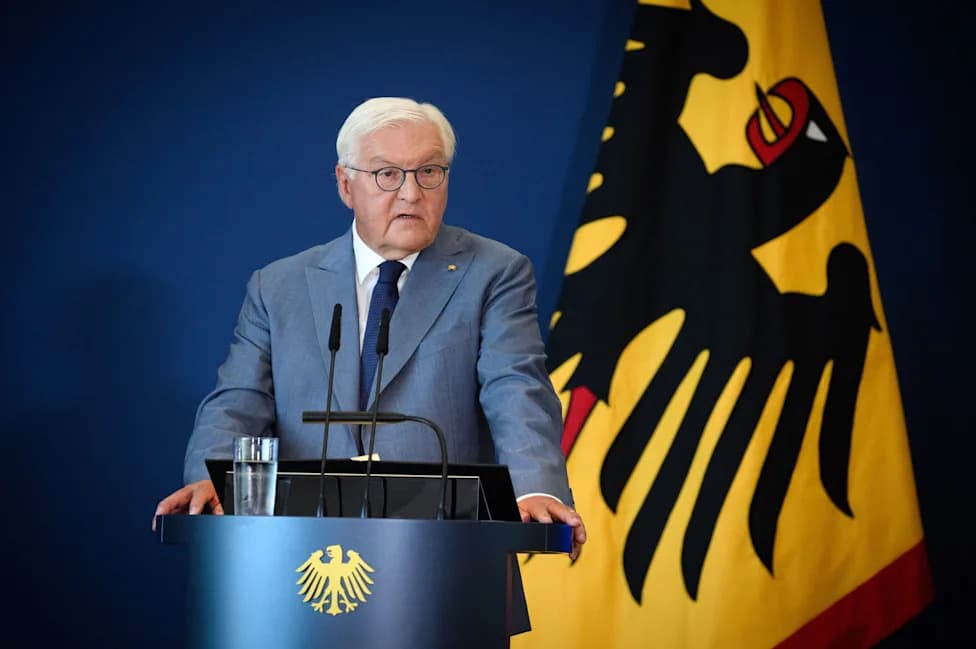
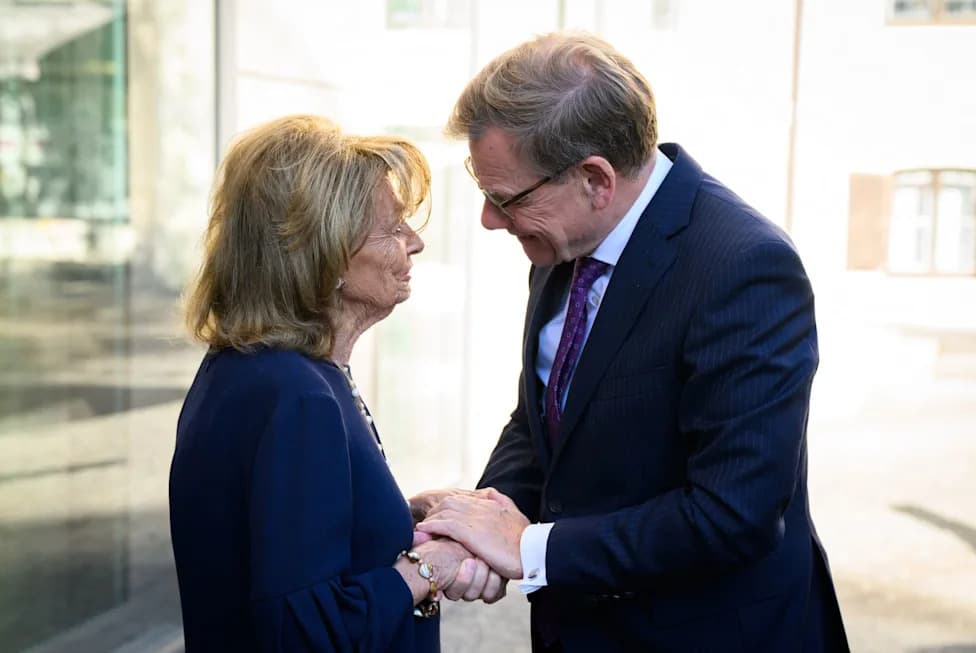
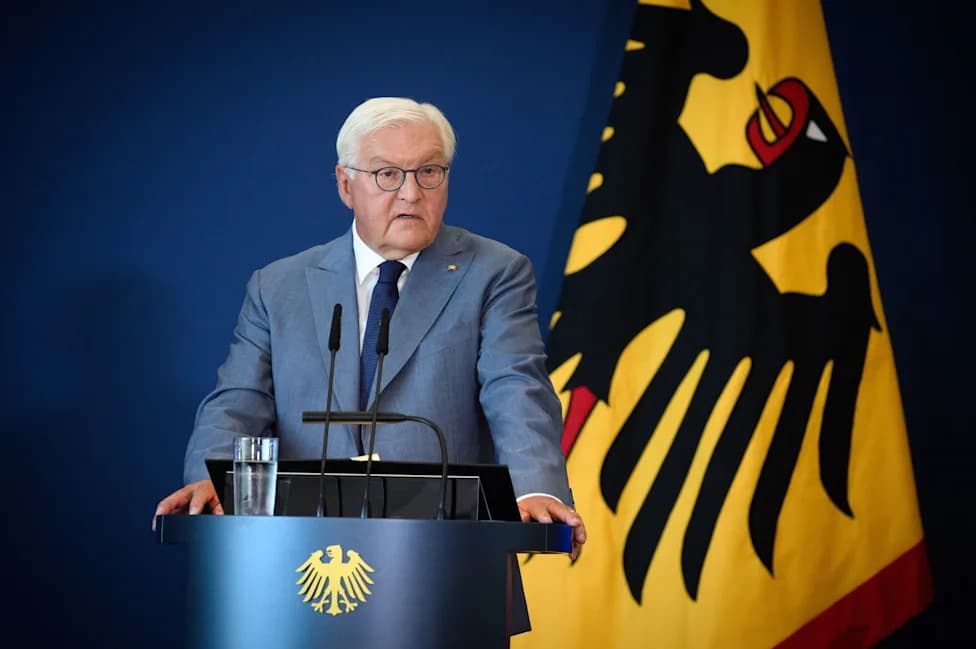
President Frank-Walter Steinmeier became the first sitting German head of state to visit Guernica, joining King Felipe VI and the German first lady at a cemetery ceremony to honour the victims of the April 26, 1937 bombing. The Condor Legion carried out the attack, which saw about 50 aircraft drop roughly 30 tonnes of explosives and later strafed fleeing civilians. Steinmeier described Guernica as a call to defend peace and human rights and acknowledged Germany's historic responsibility; the raid was immortalised by Picasso's painting Guernica.
Steinmeier Honors Guernica Victims and Acknowledges Germany's Historic Guilt

President Frank-Walter Steinmeier paid tribute on Friday to the victims of the April 26, 1937 bombing of Guernica, becoming the first sitting German head of state to visit the northern Basque town where hundreds of civilians were killed.
The attack was carried out by the Condor Legion, a unit of Nazi Germany's air force operating alongside Fascist Italy in support of General Francisco Franco's rebel forces during the Spanish Civil War (1936-1939). About 50 aircraft dropped roughly 30 tonnes of explosives in successive waves, including incendiary bombs; Messerschmitt fighters then fired on civilians as they tried to flee.
Steinmeier, accompanied by German First Lady Elke Büdenbender, joined King Felipe VI at a cemetery ceremony in Guernica to honour those who died. The delegation was also scheduled to visit the town's Museum of Peace, which documents the attack and is widely regarded by historians as a grim precursor to the mass terror bombing of civilian targets in World War II.
Guernica is a reminder to stand up for peace, freedom and the preservation of human rights, and we must never forget the crime that happened here or the heavy burden of guilt it places on Germany.
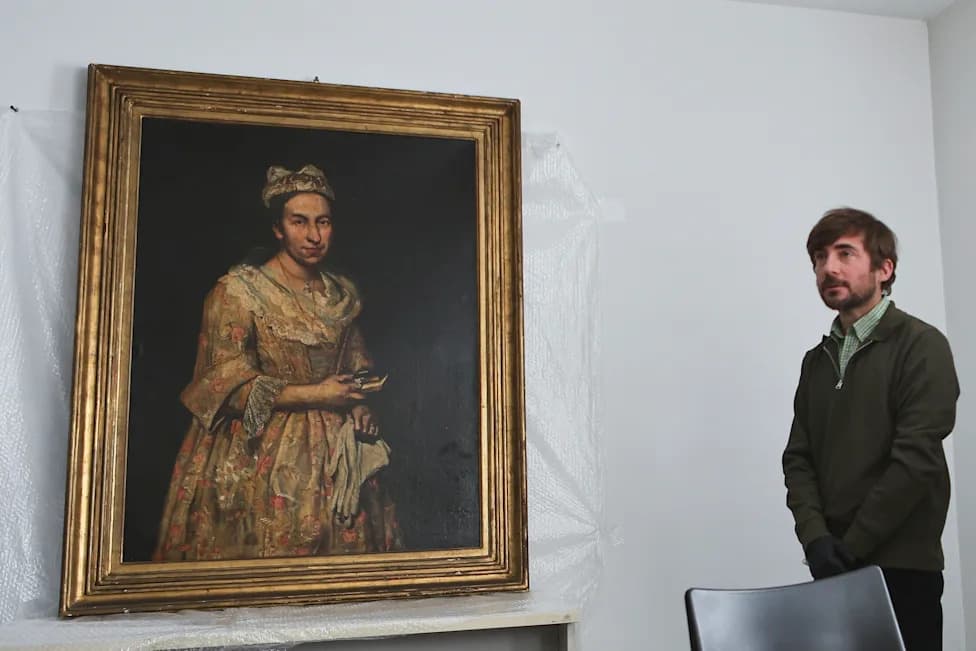
The raid was immortalised by Pablo Picasso's anti-war masterpiece Guernica, which depicts the agony of innocent civilians. Steinmeier viewed the painting at Madrid's Reina Sofía museum during his visit.
Nearly three decades earlier, in 1997, former president Roman Herzog became the first German leader to officially acknowledge Germany's involvement in the massacre and apologise to the Spanish people. In a speech read in Guernica by Germany's ambassador, Herzog addressed survivors and witnesses directly with a message of remembrance and solidarity.
Leaders from other countries have drawn parallels between Guernica and modern attacks on civilians; Ukrainian President Volodymyr Zelensky recently visited the painting and compared its horrors with the suffering caused by Russia's invasion of Ukraine.
Spain has also been reflecting on its authoritarian past: November 20 marked the 50th anniversary of Francisco Franco's death and the end of his 36-year dictatorship. Steinmeier's three-day state visit to Spain underscores efforts to confront difficult chapters of 20th-century European history while reaffirming a commitment to peace and human rights.
Help us improve.