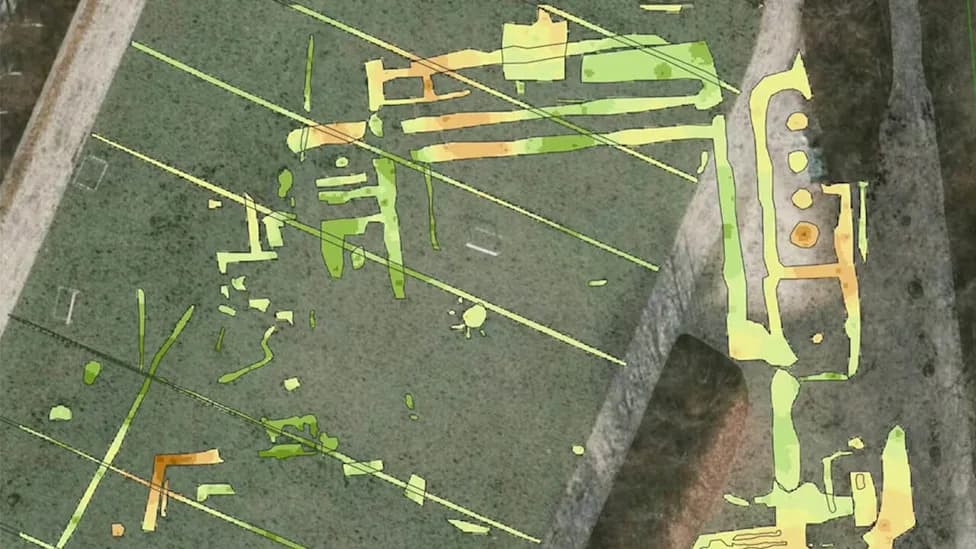
Archaeologists are preparing to reopen work at the Ness of Brodgar in Orkney after an advanced 3D ground-penetrating radar (GPR) survey revealed an extraordinary subsurface anomaly. The Ness — one of the British Isles’ most significant Neolithic complexes — was the focus of almost two decades of excavation that exposed around 40 structures, but this new discovery suggests there is far more to learn.
Former site director Nick Card, who discussed the find on a podcast, described the result as unprecedented and said it has "clarified" aspects of the site while indicating that previously excavated features may represent only the "tip of this huge archaeological iceberg." He cautioned that the anomaly appears in an area without deep stratified deposits, so the team does not expect a multi-decade deep-dig campaign.
"We think this is so unusual that it could add a new chapter to the history of the Ness," Mr Card said, adding that the archaeology to be revealed may be different from the three-dimensional Neolithic buildings already exposed and could even date to a later period or be contemporary with known features.
The Ness of Brodgar, a three-hectare complex near the Ring of Brodgar stone circle, contains structures erected in phases between roughly 3,500 BC and 2,400 BC. Earlier excavations uncovered a substantial stone wall, carved and decorated stone slabs, and a large building interpreted by some as a temple. The newly applied form of GPR has for the first time produced three-dimensional imagery of the whole site, allowing archaeologists to detect unexpected patterns beneath the surface.
Funding from the television programme Time Team will support a focused follow-up next July. The team plans a "keyhole surgery" approach: opening a small trench to ground-truth the radar anomaly rather than resuming broad-scale excavation. Researchers will combine the radar data with other geophysical results to create detailed 3D models that should improve understanding of how the Ness developed through time.
While the preliminary radar results are striking, further analysis is required before firm conclusions can be drawn. The next field season aims to confirm the anomaly's nature, date it where possible, and assess how it connects to the known sequence of Neolithic activity on the site.