As Americans celebrate Thanksgiving, cuts to U.S. foreign assistance are worsening global hunger by hollowing out the logistics workforce that converts aid into delivered food. The author, a supply-chain professor with frontline experience, gives examples from Ukraine, Somalia and Djibouti to show how skilled logisticians and their relationships make relief possible. He urges policymakers and the next generation of aid professionals to rebuild the human infrastructure behind international food assistance.
Thanksgiving and Global Hunger: How Aid Cuts Are Hollowing Out the Supply Chains That Feed the World

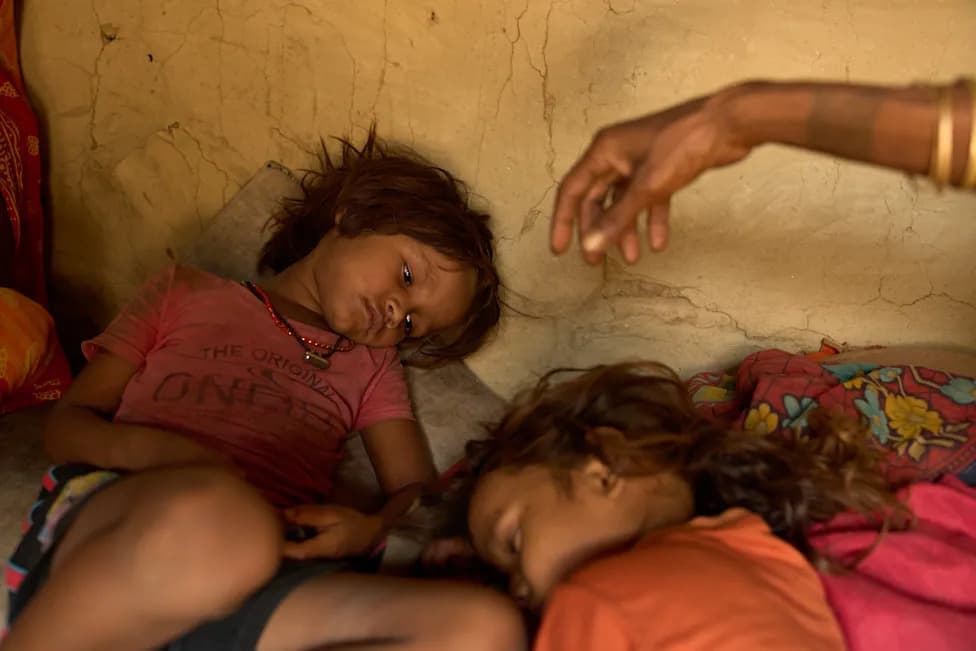
As Americans gather around Thanksgiving tables, it is worth remembering that food traditions at home contrast sharply with rising hunger abroad — a problem worsened by recent cuts to U.S. foreign assistance.
This year, many Americans were focused on a government shutdown, global tensions and elections, so World Food Day in October may have gone unnoticed. Yet the issue matters now more than ever: a Pew poll finds that majorities of both Democrats and Republicans favor providing food and clothing to people in developing countries, showing that concern for global hunger crosses party lines.
As a supply-chain professor who has worked on the front lines of U.S. food aid, I have seen how relief moves from policy to people. I watched high-energy rations loaded onto trucks bound for Ukraine in the early months of the war, and I saw food-voucher redemptions carried out in remote parts of Somalia during the severe 2022–2023 drought. At a port in Djibouti, teams coordinated night shifts to unload bulk sorghum shipments quickly.
Across factory floors, warehouse docks and customs offices, supply chains function because of people and the relationships among them. The first rule of operations is simple: those who run systems day to day are skilled, well-intentioned and attuned to the political and managerial cues that determine whether production lines move, trucks dispatch and permits clear.
When policy shifts hollow out an operation’s funding, the damage reaches the people who make the system work. Frontline logisticians — the coordinators, inspectors and dispatchers — were the creative glue that turned budget lines into tangible relief. Need 10 trucks to Dnipro? Vladislav knows the paperwork to speed them through checkpoints. Need quality checks at shops taking vouchers in Daynile, Somalia? Mohamed can call a field inspector nearby. Offloading 50,000 metric tons of sorghum at Djibouti’s port? Wafer knows how to request a night shift to accelerate unloading.
We are already seeing consequences: reductions to the United Nations air service in Nigeria, smaller rations in parts of Kenya and scaled-back refugee support in Malawi. As budgets shrink and logistics professionals leave through layoffs, attrition or delayed pay, we erode the human infrastructure that made seemingly impossible aid deliveries possible. That pool of supply-chain expertise — and the networks it produced — cannot be rebuilt overnight if funding ever returns.
Since 1979, the U.N. has marked World Food Day with an annual theme. This year’s slogan, "Hand in Hand for Better Foods and a Better Future," highlights the multiple sectors — health, education, agriculture and more — needed to secure food for vulnerable populations. I also read "Hand in Hand" as a tribute to the corps of professionals who implement policy from warehouses, truck-dispatch centers and port quays.
Policymakers from Washington to African capitals should recognize that rebuilding international food assistance means investing again in people and relationships, not just budgets. And I hope students and early-career professionals considering humanitarian work or commercial logistics take note: the world still needs people who understand the nuts and bolts of nonprofits, national agencies and U.N. operations, and who can turn funds into delivered relief.
Author: Mark Brennan, professor of supply-chain management, logistician and data scientist at Rutgers University–Camden. His research focuses on retail and frontline services with the aim of improving access to essentials such as food, housing and healthcare.
Help us improve.