AlphaFold2, a deep-learning protein-structure predictor released in 2020, has transformed biological research by making reliable 3D structure predictions widely accessible. Its public database has been used by over 3 million people in about 190 countries and is cited in thousands of studies. Researchers now apply AlphaFold2 across drug discovery, cancer research, and fundamental biology, though experimental validation remains important for certain protein types.
AlphaFold2 at Five: How AI Transformed Protein Science

Five years after its release, AlphaFold2 — the deep-learning protein structure predictor developed by DeepMind — has fundamentally changed how researchers study proteins. What once required slow, resource-intensive experiments can now often be explored computationally, accelerating work across drug discovery, cancer research, and basic biology.
What AlphaFold2 does
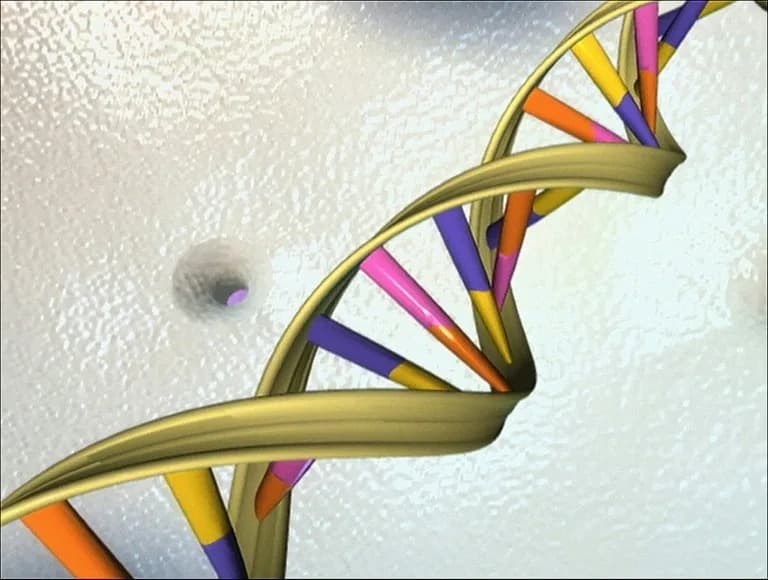
Proteins are long chains of amino acids whose biological functions depend on their three-dimensional shapes. For decades, predicting how a linear amino-acid sequence folds into a functional 3D structure was a major unsolved problem. AlphaFold2 provided a breakthrough in 2020 by using advanced machine learning to predict protein structures with remarkable accuracy, making reliable models available for many proteins that previously lacked experimental structures.
Impact and adoption
Researchers worldwide have adopted AlphaFold2 and its public database: more than 3 million users across roughly 190 countries have accessed the resource, and the models are cited in thousands of scientific studies. Scientists report using the tool across a broad range of projects — from identifying drug targets and designing molecules to studying basic processes such as how sperm binds to eggs. “We use it for every project,” one biologist said after applying AlphaFold2 to investigate fertilization.
Advantages and limitations
AlphaFold2 has transformed exploratory research by enabling rapid hypothesis generation and by guiding experimental design, often saving time and resources. However, it is not a complete replacement for laboratory experiments: some classes of proteins — such as highly dynamic or intrinsically disordered proteins, large multiprotein complexes, and certain membrane proteins — can still be challenging to model accurately. Experimental validation remains essential for critical applications like therapeutics.
Looking ahead
The AlphaFold2 era has catalyzed new collaborations between computational and experimental scientists and inspired further advances in AI-driven biology. As models and databases continue to improve, they are likely to deepen our understanding of biology and speed the translation of discoveries into medical and biotechnological innovations.
Help us improve.