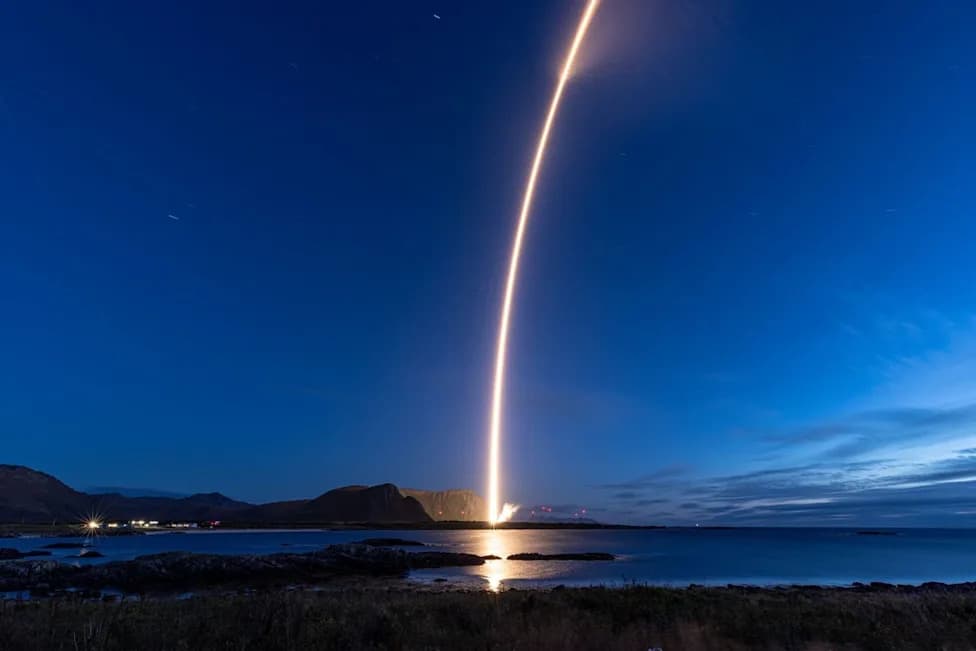
South Korea launched its largest satellite to date aboard the homegrown Nuri rocket, placing a 516-kg science spacecraft and 12 microsatellites into ~600 km orbit. The primary satellite contacted an Antarctic ground station about 40 minutes after liftoff and deployed its solar panels. Officials said the mission — assembled by Hanwha Aerospace under a technology transfer — marks a key step toward independent launch capability and further missions planned for 2026–2027.
South Korea Launches Largest Satellite Aboard Domestic Nuri Rocket, Marking Major Space Milestone

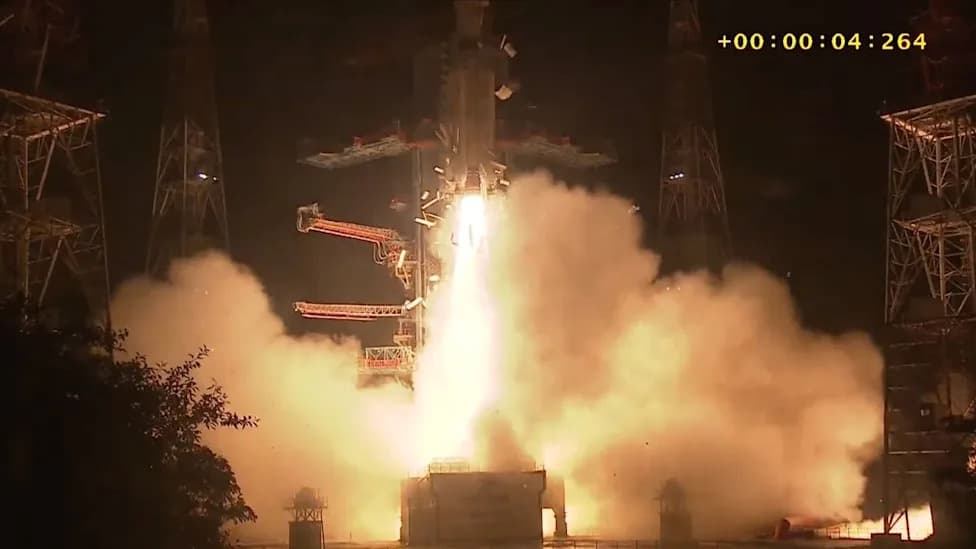
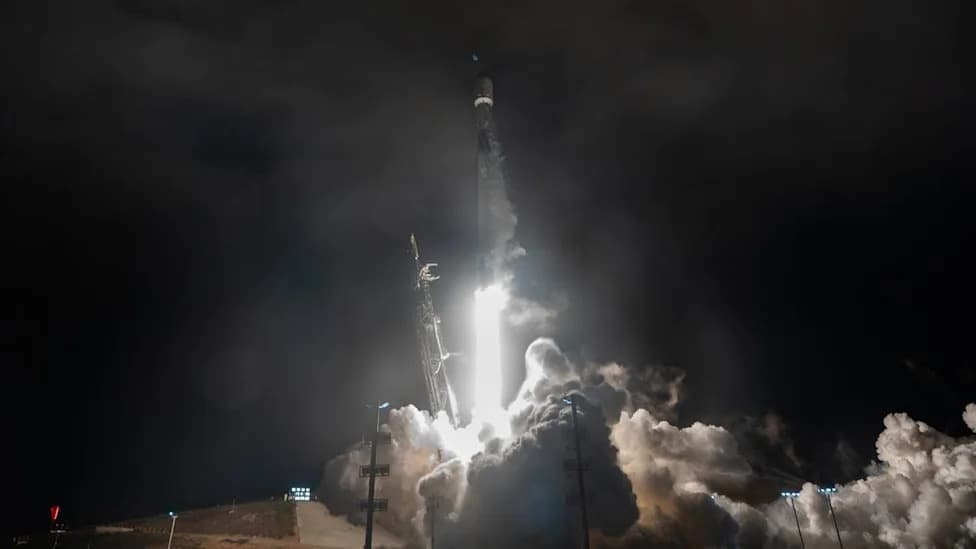
South Korea successfully launched its largest satellite to date early Thursday aboard the domestically developed three-stage Nuri rocket, placing a 516-kilogram science satellite and 12 microsatellites into an orbit of roughly 600 kilometers (372 miles).
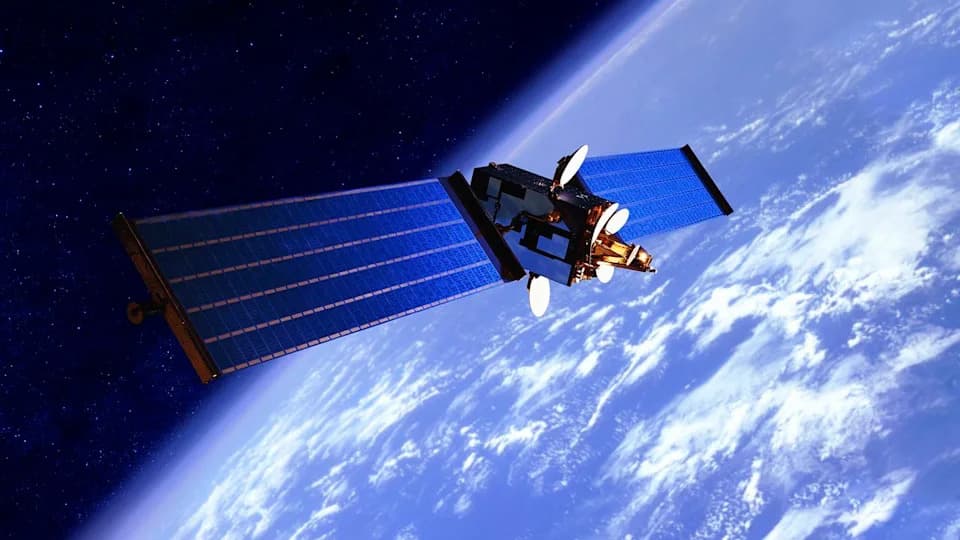
The Korea Aerospace Administration reported that the main spacecraft established contact with a South Korean ground station in Antarctica about 40 minutes after liftoff at 1:55 a.m., confirming normal operations and successful deployment of its solar panels. The 12 smaller satellites — built by universities and research institutions — will contact ground stations sequentially according to each unit’s communications schedule.
Payloads and mission objectives
The primary satellite carries a wide-range airglow camera to monitor auroral and upper-atmosphere glow, instruments to measure plasma and magnetic fields, and experimental hardware to test biological science experiments in microgravity. The dozen cube satellites include GPS payloads to study atmospheric dynamics, infrared cameras to detect plastic pollution in the oceans, and modules to test next-generation solar cells and communications equipment.
Domestic industry milestone
Science Minister Kyunghoon Bae called the launch a success and a “turning point” for the country’s space industry, noting that this mission was the first in which a private firm, Hanwha Aerospace, assembled the rocket following a technology transfer from the Korea Aerospace Research Institute. “Building on today’s success, we will steadfastly pursue next-generation launch vehicles, lunar exploration and deep-space missions,” Bae said.
Rocket and launch site details
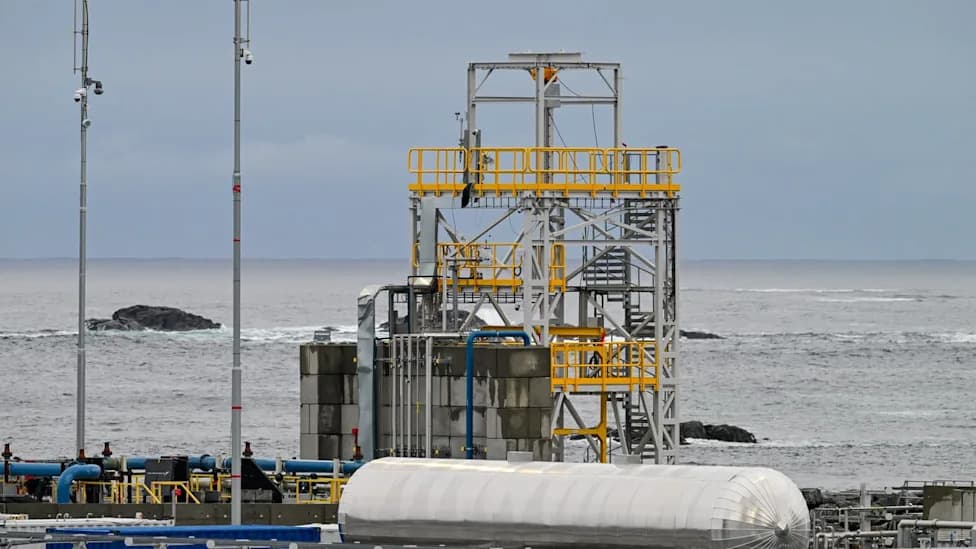
The Nuri is a three-stage vehicle powered by five 75-ton-class engines on each of its first and second stages and a 7-ton-class engine on its third stage, which releases payloads into their target altitude. The rocket launched from the Naro Space Center, South Korea’s lone coastal spaceport located on an island off Goheung in the southwest.
Program context and outlook
This was the fourth Nuri flight since the vehicle’s initial test attempt in October 2021, which failed to deliver its test payload. The program’s previous success came in May 2023, when Nuri placed a 180-kilogram observation satellite into orbit. Additional launches are scheduled for 2026 and 2027 as part of a multi-year effort to advance domestic space capabilities and narrow the gap with regional leaders such as China, Japan and India.
Historical background
The Naro Space Center recorded its first successful mission in 2013 using a two-stage vehicle developed with Russian assistance. Earlier tests had mixed results: a 2009 flight reached its target altitude but failed to deploy a satellite, and a 2010 launch ended in an explosion shortly after liftoff. The Nuri program represents a shift toward largely homegrown launch technology and greater national launch independence.
Why it matters: The successful deployment of a large science satellite and a cluster of university-built microsatellites demonstrates growing domestic expertise in rocket assembly, satellite design and mission operations — strengthening South Korea’s position in the commercial and scientific space sectors.
Help us improve.