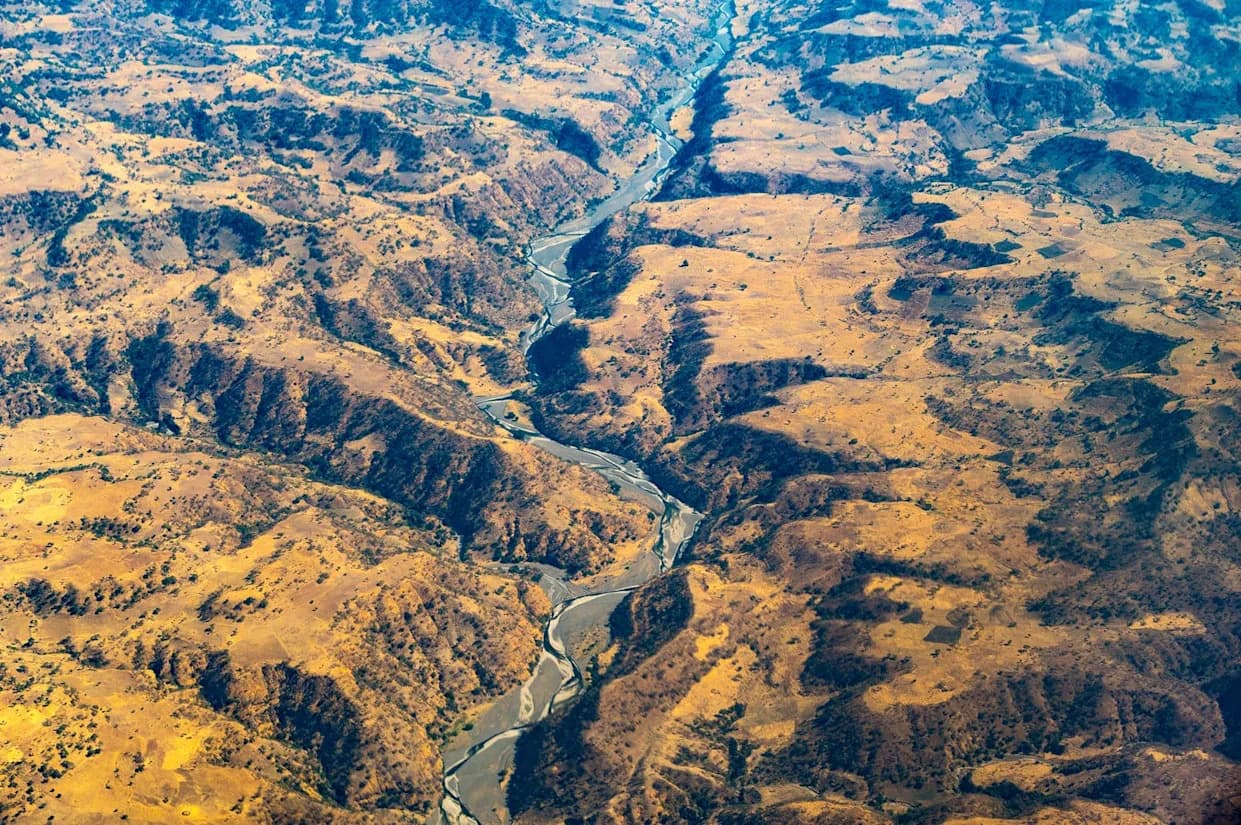
Since early 2025, seismic swarms in Ethiopia’s Afar and Oromia regions—including a magnitude-5.7 quake on 4 January—have prompted the relocation of about 60,000 people. Scientists say magma intruding beneath the Fentale and Dofen volcanoes is driving sustained earthquake swarms. Satellite and seismic monitoring, hazard mapping, clear communication, community drills and emergency stockpiles are essential to reduce risk. Though eruptions cannot be prevented, preparedness and rapid response can greatly lessen their impacts.
Magma-Driven Quakes in Ethiopia: Why Fentale and Dofen Are Being Closely Watched

Since the start of 2025, Ethiopia’s Afar and Oromia regions have experienced a series of earthquakes and tremors. The strongest registered a magnitude 5.7 on 4 January, with its epicentre about 142 km east of Addis Ababa; a magnitude-5.5 shock struck the same area a day earlier, and two more quakes occurred over the weekend of 11 January. Officials have relocated roughly 60,000 residents to temporary shelters amid concerns about further seismic activity.
What is causing the seismic swarms?
Scientists attribute the recent seismicity to magmatic intrusion beneath two nearby volcanic centres, Fentale and Dofen. Magma (molten rock) rising into the crust can crack and displace surrounding rock, producing frequent small-to-moderate earthquakes often observed as swarms. In this episode the pattern and location of the tremors point to magma movement as the primary driver, rather than purely tectonic faulting.
Why this matters: earthquakes and volcanoes in Ethiopia
Ethiopia lies on the East African Rift System, a geologically active zone where the lithosphere — Earth’s rigid outer shell — is being pulled apart as tectonic plates move above the more ductile asthenosphere. The country hosts about 50 active volcanoes, mostly in the Ethiopian Rift. An active volcano has magma stored in the crust and clear evidence of past eruptions, while a dormant volcano has not erupted for thousands of years and shows no obvious signs of reawakening.
How magma causes seismicity
When magma ascends, it pressurises and deforms surrounding rock, causing fractures and small displacements that release seismic waves. Volcanic seismicity often appears as swarms that can last days, months or longer. The sustained tremors near Fentale and Dofen are consistent with magma-driven seismic swarms rather than isolated tectonic events.
Risks and limits of prediction
Both earthquakes and volcanic eruptions threaten lives, infrastructure and the environment. While it is not possible to prevent these natural events, timely monitoring and preparedness can significantly reduce their impact. Direct triggering of eruptions by nearby earthquakes is uncommon in this region; however, ongoing magmatic intrusion does raise the possibility of volcanic unrest and, in some cases, eruption.
Monitoring and preparedness
Authorities and scientists are tracking the intrusion using satellite remote sensing and seismic data from national and international networks. These tools detect changes in seismic activity and ground deformation—key signs that can precede eruptions. Combining real-time monitoring with historical and geological records helps estimate the likelihood, timing and potential scale of hazardous events.
Important preparedness measures include:
- Hazard mapping: Identify high-risk zones for land-use planning and evacuation routes.
- Early-warning systems and communication: Deliver alerts through mobile apps, SMS, radio and public announcements, and ensure clear links between scientists, authorities and communities.
- Community preparedness: Regular drills, school and workplace training, and public education about signs of volcanic unrest and evacuation procedures.
- Emergency supplies and response teams: Maintain reserves of food, water, medical kits and shelter materials and keep specialist teams ready to act.
- Long-term planning: Strengthen infrastructure and adopt land-use policies that minimise exposure to high-risk areas.
Lessons and international examples
Global best practices—such as Japan’s routine drills, comprehensive education programmes and community engagement—offer useful models for reducing harm. Modernising local communications with targeted SMS alerts and mobile platforms can improve the speed and reach of warnings in Ethiopia.
Although the situation requires close monitoring, coordinated preparedness and timely communication can substantially reduce the human and material costs when earthquakes and volcanic activity occur.
Author: Amdemichael Tadesse, University of Oxford
Help us improve.