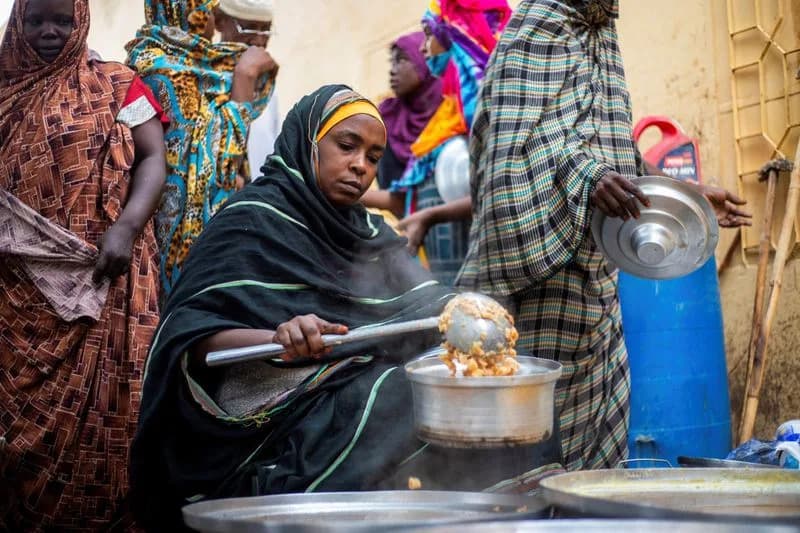
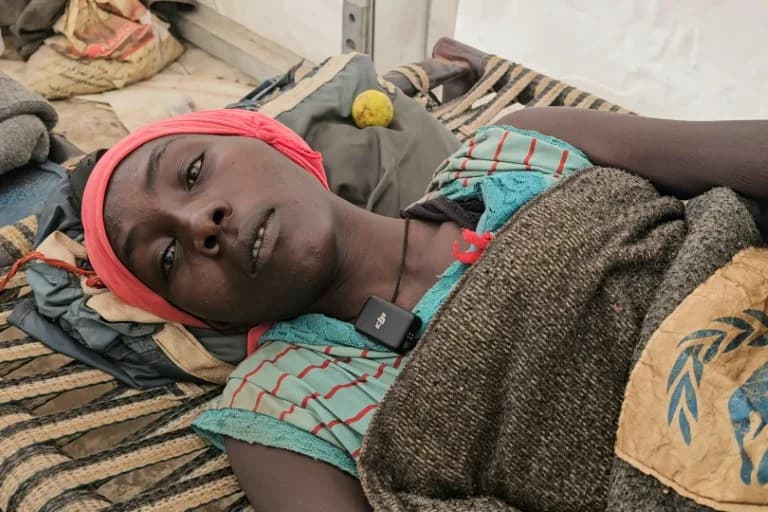
Women and children fleeing Sudan’s 2023 conflict have arrived in eastern Chad with severe physical and psychological trauma but almost no access to mental-health care. At Tulum camp, a small survivors’ support group provides one of the only safe spaces to speak about abduction, torture and sexual violence following the RSF seizure of el-Fasher. With only one psychiatrist reported in the region and a handful of aid psychologists, leaders like Fatimah Fadul stress that stigma must be challenged while services are urgently expanded.
Sudanese Women in Chad Struggle with Deep Wartime Trauma and Little Mental-Health Support

Violence from Sudan's 2023 conflict is spilling into eastern Chad, where tens of thousands of refugees — many women and children — are arriving with severe physical injuries and deep psychological wounds. For most, access to professional mental-health care is virtually nonexistent.
Tulum camp: a rare space to speak
At the Tulum refugee camp, a small, informal support circle of Sudanese survivors has become one of the few places where victims can speak openly about abduction, torture and sexual violence. Group sessions, led by survivors, serve as a fragile lifeline for many women grappling with trauma.
“May God expose and punish them. God willing, we will have our day of reckoning. They held me and my sister for five days and tortured us,” said Basma, one of the survivors, describing her escape from el-Fasher.
Witnesses and rights groups say that militias allied with the paramilitary Rapid Support Forces (RSF) intercepted fleeing civilians after the RSF seized el-Fasher, North Darfur’s capital, on October 26. Reports describe mass killings, abductions and widespread sexual violence. Amnesty International has accused RSF fighters of war crimes, and the UN Human Rights Council has ordered an investigation into atrocities in el-Fasher. The UN aid chief described parts of the city as a "crime scene."
Many refugees arrived in Chad after months of siege and sudden violence and continue to search for missing family members. “Many members of my family are presumed dead. My uncles, my mother and children are all missing,” said Zaina Ibrahim, a Sudanese refugee now living in eastern Chad.
Gaps in care and the pressure to stay silent
Professional mental-health services in this part of Chad are extremely limited. Officials report only one psychiatrist in the region and a handful of psychologists working with humanitarian organisations — far fewer than the hundreds of thousands of people displaced by the war. As a result, peer-led groups and community volunteers provide the bulk of psychosocial support.
“As Sudanese, we face the stigma: mothers at home pressure the girl, telling her not to speak or to keep silent about the rape. We raise awareness and encourage our sisters and our mothers to speak up about rape in order to claim their rights. When you stay silent, you inflict internal psychological harm, leading to illnesses,” said Fatimah Fadul, a longtime refugee and president of the victims’ support group.
Fadul and other facilitators emphasise that acknowledging trauma and creating safe spaces to talk are essential first steps toward recovery. Yet the scale of need vastly outstrips available resources: for every woman who receives some support, many more have no counselling, no specialized care and little prospect of justice.
For survivors like Basma and Zaina, survival now includes confronting painful memories long after they have reached relative safety. Humanitarian agencies and regional authorities warn that without expanded mental-health services and protection measures, the psychological toll of the conflict will have lasting consequences for individuals and communities across eastern Chad.
Help us improve.