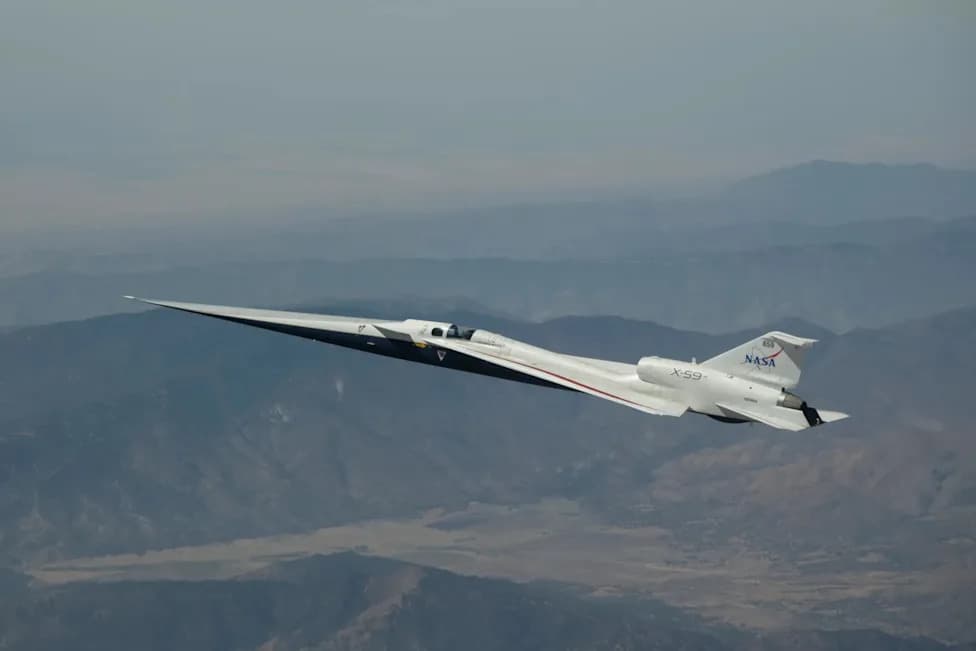
The newly released video highlights the X-59's inaugural flight on Oct. 28 from Palmdale, showing cockpit, chase-plane and mission-control footage from taxi to landing. Designed by NASA and Lockheed Martin's Skunk Works, the X-59 aims to fly supersonic while producing a dramatically reduced sonic signature—potentially paving the way for overland supersonic travel. Engineers will continue tests over microphone arrays and with chase aircraft to measure acoustic and aerodynamic data. A successful program could prompt regulators to reconsider the U.S. ban on supersonic flights over land.
Cockpit Video Captures NASA X-59's Historic First Flight — A Step Toward 'Quiet' Supersonic Travel

A newly released video documents the X-59's historic first flight on Oct. 28, capturing cockpit, mission-control and chase-plane footage from taxi to landing. The experimental jet lifted off from Palmdale Regional Airport in California, which shares a runway with the nearby U.S. Air Force Plant 42 facility.
Built by NASA in partnership with Lockheed Martin's Skunk Works, the X-59 is designed to fly faster than the speed of sound while producing a dramatically reduced sonic signature—commonly called a "low boom". If successful, the aircraft could provide the technical evidence regulators need to reconsider the longstanding ban on supersonic flight over land in the United States.
The video shows the X-59's distinctive long nose as the jet taxis into the orange light of the Mojave Desert, takes off, cruises and returns for a smooth touchdown. Viewers get a pilot's-eye perspective and chase-plane views, and the clip captures lead test pilot Nils Larson climbing from the cockpit to greet colleagues. The footage also includes a lighthearted moment near the end that humanizes the milestone test flight.
Lockheed Martin described the debut flight as having gone "exactly as planned." Though parts of the U.S. government were under a partial shutdown at the time, officials said critical flight-test activities received exemptions so essential testing could continue.
"X-59 is a symbol of American ingenuity. The American spirit knows no bounds. It's part of our DNA—the desire to go farther, faster, and even quieter than anyone has ever gone before," said Acting NASA Administrator Sean Duffy, noting the program's potential to reshape public air travel.
Further testing will be conducted from NASA's Armstrong Flight Research Center in Palmdale. Engineers plan to fly the X-59 over an array of ground microphones spread across the Mojave Desert to record its acoustic footprint, while chase aircraft and airborne sensors will sample shockwaves and other flight data.
Supersonic flight over land in the U.S. has been prohibited since 1973. Demonstrating a convincingly quiet supersonic profile could open the door to new commercial services and faster long-range travel, with potential benefits for business and leisure passengers as well as time-sensitive missions such as medical evacuations, disaster response and certain military operations.
Industry interest in quieter, faster flight extends beyond NASA and Lockheed Martin. Earlier in the year, Boom Supersonic's XB-1 prototype also broke the sound barrier over the Mojave, marking another milestone in the effort to revive and commercialize supersonic air travel.
Help us improve.