Blue Origin has scheduled its next crewed New Shepard flight, NS-38, for Jan. 22 at 8:30 a.m. CT from Launch Site One in West Texas. Six passengers will join the 86 people who have flown on New Shepard to date. The roughly 11-minute suborbital mission will cross the Kármán Line and offer several minutes of weightlessness before the booster lands vertically and the capsule descends under parachutes.
Blue Origin Sets Jan. 22 Launch for Crewed New Shepard Flight NS-38
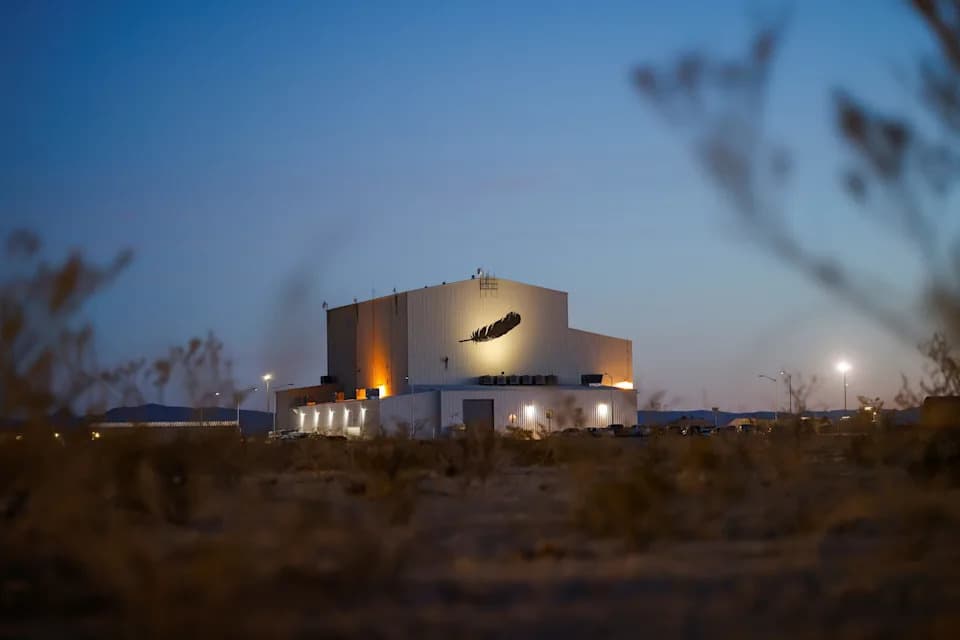
Blue Origin's "barn" is where rocket boosters merge with the capsules that will take passengers into space.
Blue Origin has announced that its next crewed New Shepard suborbital mission, NS-38, is targeted for Thursday, Jan. 22, with liftoff scheduled at 8:30 a.m. CT from Launch Site One north of Van Horn, Texas. The short flight will carry six passengers to the edge of space on a roughly 11-minute trip that includes several minutes of weightlessness.
Mission Details
NS-38 will be the New Shepard vehicle's 17th human spaceflight and 38th flight overall. Launches occur from Blue Origin’s private Launch Site One ranch in West Texas, more than 140 miles east of El Paso near the U.S.-Mexico border.
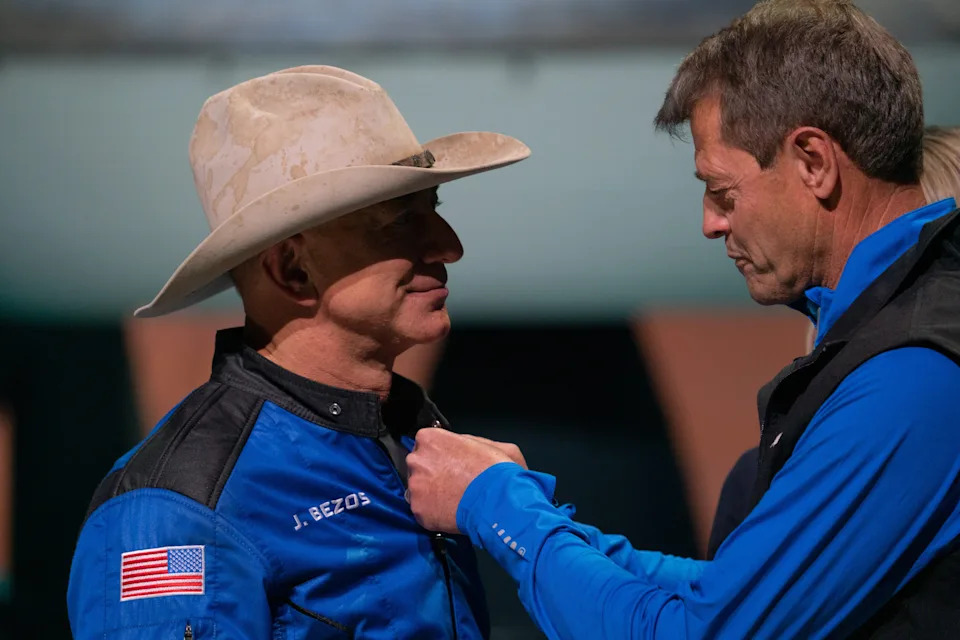
Jeff Bezos receives his official astronaut wings after launching on Blue Origin's New Shepard rocket on Tuesday, July 20, 2021.
Passengers
Six people have been named for NS-38. They will join 86 previous fliers who have taken part in 16 earlier crewed New Shepard missions (including six repeat passengers):
- Tim Drexler — former owner and CEO of Ace Asphalt; private pilot.
- Linda Edwards — retired board-certified obstetrician-gynecologist and breast cancer survivor.
- Alain Fernandez — international real estate developer and investor.
- Alberto Gutiérrez — entrepreneur and founder of Civitatis, a global guided-tours company.
- Jim Hendren — retired U.S. Air Force colonel and former F-15 fighter pilot; former Arkansas state senator.
- Andrew Yaffe — Oklahoma native with a focus on sustainability.
About New Shepard
Named for astronaut Alan Shepard, New Shepard is a 60-foot-tall, fully autonomous suborbital rocket topped by a gumdrop-shaped crew capsule. A typical flight lasts about 11 minutes from liftoff to capsule touchdown. During ascent the vehicle surpasses supersonic speeds (over 2,000 mph) before the booster separates and the capsule continues toward its peak altitude above the Kármán Line — the internationally recognized boundary of space at about 62 miles (100 kilometers) up.
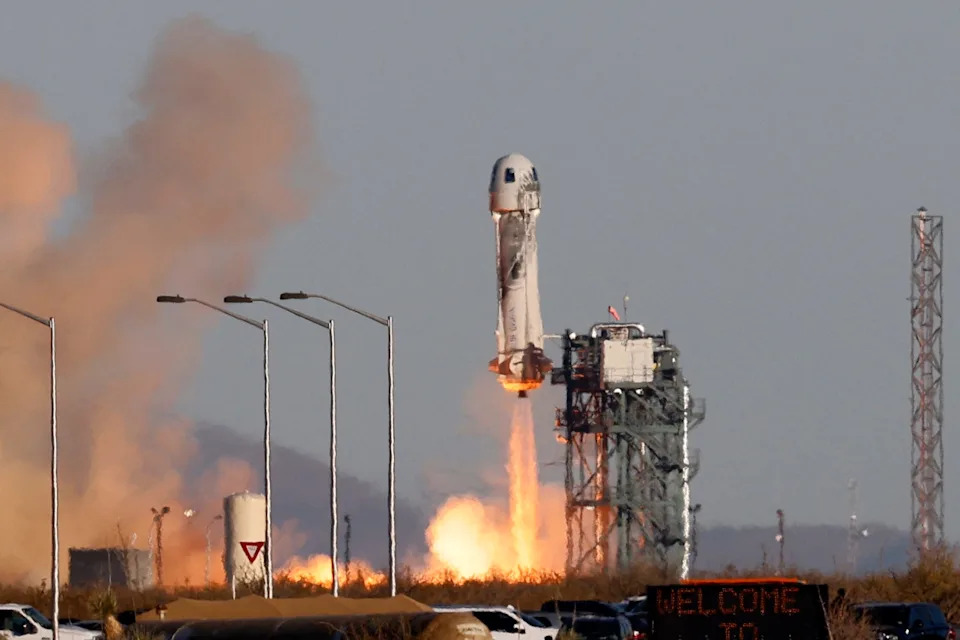
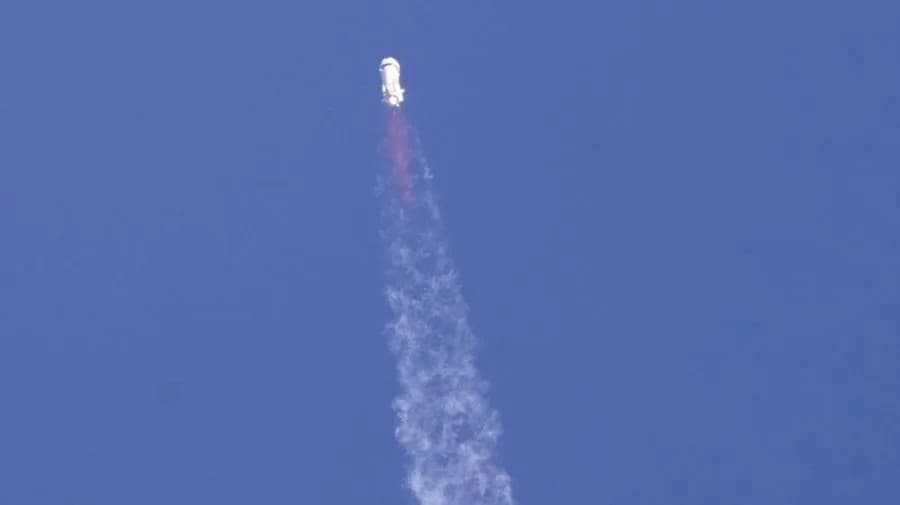
A Blue Origin New Shepard rocket lifts off with a crew of six on Dec. 11, 2021.
After separation, passengers experience several minutes of microgravity and can move about the cabin to look out the capsule’s large windows. The booster performs a powered vertical return and landing about two miles from the pad, while the crew capsule descends under three large parachutes, making a soft desert touchdown often accompanied by dust plumes.
Context And Commercial Notes
Blue Origin, founded by Jeff Bezos in 2000 and headquartered in Washington state, conducts New Shepard launches from West Texas. Bezos himself flew on New Shepard’s first crewed mission in July 2021 after a series of prior test flights.
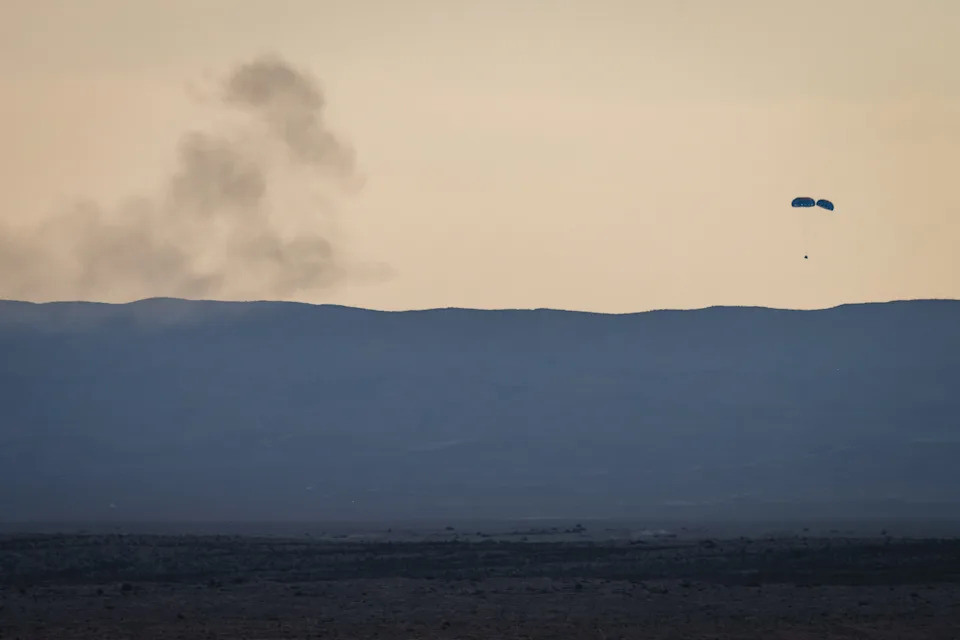
Blue Origin's New Shepard crew capsule returns to Earth April 14 following a launch from Launch Site One in Van Horn, Texas. Blue Origin's Mission NS-31 carried Aisha Bowe, Amanda Nguyn, Kerianne Flynn, Gayle King, Katy Perry, and Lauren Sanchez, is the first all-female astronaut crew since 1963.
New Shepard is a suborbital vehicle and should not be confused with Blue Origin’s much larger orbital rocket, New Glenn (322 feet tall), which has flown from Florida. New Glenn is intended for orbital missions and reflects Blue Origin’s ambitions to compete in the broader commercial launch market.
Blue Origin does not publish ticket prices. Its reservation process requires a $150,000 deposit, and historical context shows prices can vary widely: the first seat auctioned in 2021 sold for $28 million. A small number of passengers have flown with seats funded by grants or institutions.
Eric Lagatta is the Space Connect reporter for the USA TODAY Network. This story originally appeared in the El Paso Times: "Blue Origin announces crew, launch date for next Texas rocket launch."
Help us improve.