TRAFFIC’s latest report finds authorities seized an average of nine tigers per month over the past five years, signaling an accelerating global trafficking crisis that endangers wild tiger populations. Between 2020 and June 2025 there were 765 seizures—equivalent to about 573 tigers—and the trade is shifting from parts toward whole animals and live tigers. The report identifies key hotspots and calls for intelligence-led, multi-agency enforcement and stronger international cooperation to dismantle organized criminal networks.
Global Tiger Trafficking Crisis Intensifies — Authorities Seize an Average of Nine Tigers a Month

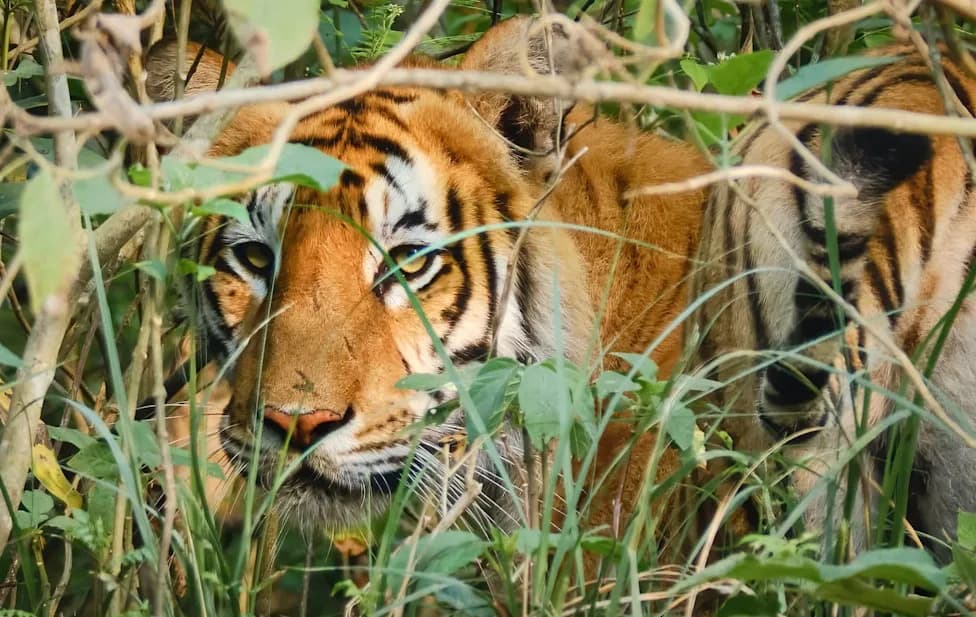
Authorities worldwide have seized an average of nine tigers per month over the past five years, according to a new analysis by TRAFFIC, the wildlife trade monitoring network. The findings reveal a deepening trafficking crisis that threatens the survival of wild tigers.
The report, part of TRAFFIC’s Skin and Bones series, shows that from 2000 through mid-2025 law enforcement recorded 2,551 seizures involving at least 3,808 tigers. Between 2020 and June 2025 alone there were 765 seizures, equivalent to about 573 tigers — roughly nine a month across 66 months. The dataset identifies 2019 as the single worst year (141 seizures), followed by 139 seizures in 2023.
Shifting trade dynamics
TRAFFIC documents a marked change in the composition of seizures. In the 2000s roughly 90% of confiscated items were tiger parts; since 2020 that share has fallen to about 60%, while whole carcasses and live tigers have risen sharply. In countries such as Vietnam, Thailand, Indonesia and Russia, more than 40% of recent confiscations involve whole animals. Experts attribute this trend to commercial captive-breeding operations, quicker interception after poaching, and rising demand for exotic pets and taxidermy.
Hotspots and species convergence
Most incidents occurred in the 13 countries that still host wild tigers, led by India, followed by China, Indonesia and Vietnam. Significant numbers of seizures were also recorded in countries without wild tigers, including Mexico, the United States and the United Kingdom. TRAFFIC highlights priority intervention areas: tiger reserves shared by India and Bangladesh; Indonesia’s Aceh region; the Vietnam–Laos border; and major consumption centers in Vietnam, notably Hanoi and Ho Chi Minh City.
The report also documents growing "species convergence": nearly one in five tiger-trafficking incidents involves other threatened species, most commonly leopards, bears and pangolins.
Recommendations
TRAFFIC urges that investigations extend beyond point-of-seizure activity to dismantle the organized criminal networks driving the trade. The report calls for intelligence-led, multi-agency enforcement, stronger international cooperation, targeted interventions at identified hotspots, and efforts to reduce demand for tigers and their parts.
Ramacandra Wong, senior wildlife crime analyst and co-author of the report, said: "This rise reflects improved enforcement efforts but also signals persistent and, in some areas, escalating criminal activity and a widespread demand for tigers and their parts."
Leigh Henry, director of wildlife conservation at WWF, said: "The surge in whole-animal trafficking underscores the prominent role of some captive tiger-breeding facilities in feeding and perpetuating the illegal trade. Illegal trade remains the greatest immediate threat to wild tigers. If we don’t urgently scale up investments to combat tiger trafficking at all points along the trade chain, we face the real possibility of a world without wild tigers."
Help us improve.