The Department of Justice urged the Supreme Court to overturn a lower court’s order blocking Texas’ Republican-drawn congressional map through the 2026 midterms, arguing the legislature’s changes were motivated by partisan, not racial, aims. Solicitor General John Sauer defended a Civil Rights Division letter that critics cite as evidence of race-based redistricting. Plaintiffs — including voting- and immigrant-rights groups — say that letter pushed Texas to dismantle "coalition districts" and pack Black and Latino voters. A three-judge panel found race too dominant in a 2-1 ruling; Justice Alito has administratively paused that decision while the Supreme Court reviews the case.
DOJ Asks Supreme Court to Uphold Texas GOP Map, Saying Shift Was Partisan Not Racial

The Department of Justice on Monday urged the U.S. Supreme Court to reverse a lower court's decision that blocked Texas’ new congressional map through the 2026 midterm elections, arguing the redistricting reflected partisan objectives rather than an unconstitutional racial gerrymander.
In an amicus brief, Solicitor General John Sauer, representing the federal government, said the three-judge panel in the Western District of Texas erred when it concluded race was the predominant factor in the Legislature’s decision to shift five districts in favor of Republicans. "This is not a close case," Sauer wrote, insisting the evidence — direct and circumstantial — points to partisan aims.
Disputed Evidence: A DOJ Letter and "Coalition" Districts
Sauer defended a letter earlier this year from Civil Rights Division leader Harmeet Dhillon that urged Texas to examine so-called "coalition districts," which have tended to favor Democrats. Challengers seized on that letter as proof of racial intent; the DOJ argues the lower court misread both the letter’s content and its significance to the Legislature’s actions.
"There is overwhelming evidence — both direct and circumstantial — of partisan objectives, and any inference that the State inexplicably chose to use racial means is implausible," Sauer wrote.
The plaintiffs, a coalition that includes voting-rights and immigrant-rights groups, contend the Dhillon letter pressured Texas to dismantle coalition districts and effectively pack Black and Latino voters into other districts. Their lawyers characterized the DOJ letter as legally and factually flawed, saying it mislabeled those districts as "unconstitutional coalition districts" that Texas was required to "rectify" by changing racial composition.
Legal Fight and National Context
Last week, a three-judge panel in the Western District of Texas ruled 2-1 that race was too dominant in the redrawing. Texas asked the Supreme Court to stay that ruling; Justice Samuel Alito has granted an administrative pause while the high court considers the request.
Texas’ attorneys argue the Legislature engaged in ordinary partisan policymaking — "This summer, the Texas Legislature did what legislatures do: politics" — and that the panel’s injunction disrupts preparations for the 2026 midterms, when candidates were already filing to run under the new map.
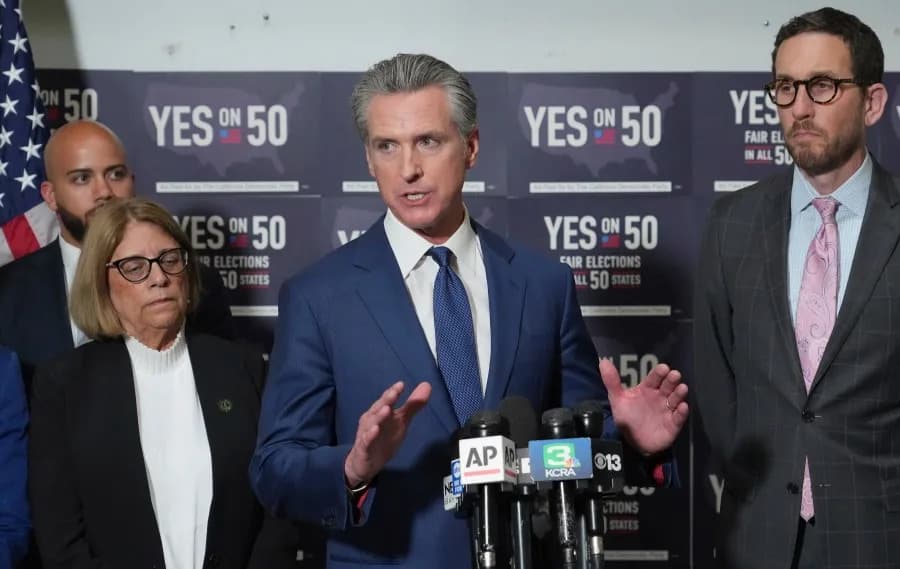
The dispute in Texas is one of several mid-cycle redistricting battles unfolding across the country as both parties look to shape House control ahead of 2026. The DOJ has separately sued California over its redistricting changes, asserting those moves were unlawfully race-based — a contrast the department draws with its position in Texas.
In a forceful dissent, Reagan-appointed Judge Jerry Brown described the panel’s majority opinion as an extreme exercise of judicial activism. The Supreme Court could issue a decisive ruling on the map at any time, with implications for candidate filings and electoral rules heading into 2026.
Help us improve.