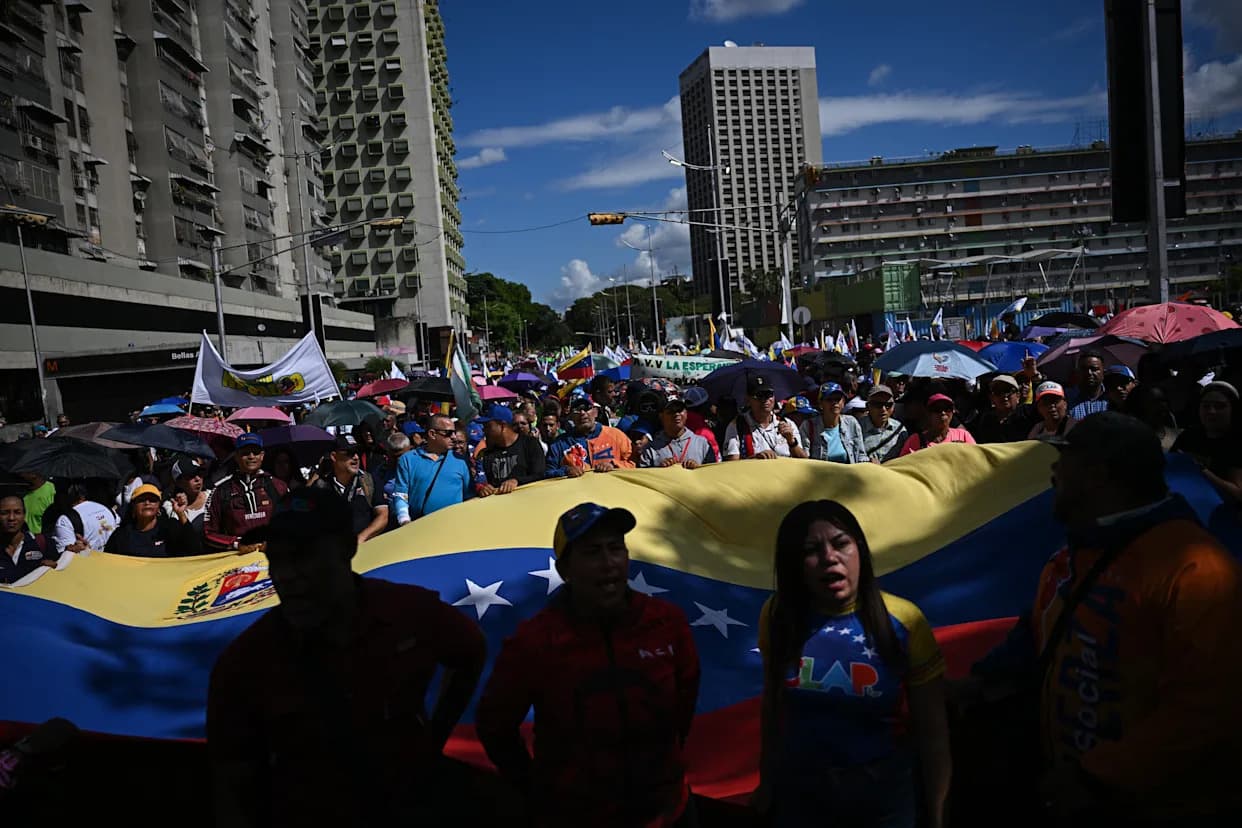
Summary: In 2025 US–Venezuela relations sharply deteriorated after Washington designated the so‑called "Cartel de los Soles" a foreign terrorist organisation and authorised covert operations, moves Caracas rejects as baseless. An expanded US military presence in the Caribbean and an FAA advisory prompted airlines to suspend flights. This timeline traces key events since January 2025 and explains how decades of political and economic conflict dating back to Hugo Chávez laid the groundwork for the current crisis.
How US–Venezuela Relations Reached a Boiling Point: A 26‑Year Timeline and 2025 Escalation

Tensions between the United States and Venezuela escalated dramatically in 2025 after Washington labelled the so-called "Cartel de los Soles" a foreign "terrorist" organisation, accused by US officials of links to President Nicolás Maduro. Venezuelan authorities reject the claim; in domestic usage the phrase often refers broadly to corrupt officials rather than a single organised criminal syndicate. The dispute has coincided with an expanded US military presence in the Caribbean, an FAA advisory that prompted airlines to suspend flights, and public confirmation that the US authorised covert operations in Venezuela.
The developments have revived long-standing mistrust rooted in decades of political and economic confrontation dating back to Hugo Chávez’s presidency. Below is a clear, corrected and readable timeline of key events since January 2025 and background on how bilateral relations deteriorated over the past 26 years.
Related video: Nicolás Maduro appears in a New York courtroom for his first US court appearance, where he pleads not guilty to charges tied to drug trafficking and terrorism allegations. The hearing comes as tensions between Washington and Caracas escalate sharply, with the United States increasing legal, economic and military pressure on Venezuela — accusations the Maduro government denies.
Timeline: Key events
10 January 2025 — Nicolás Maduro is sworn in for a third term after disputed elections. The United States rejects the result and reiterates allegations of fraud.
January 2025 — President Trump returns to office and revokes Temporary Protected Status (TPS) that had shielded roughly 600,000 Venezuelans in the US from deportation.
20 February 2025 — The US designates the Tren de Aragua gang as a "foreign terrorist organisation." Administration officials later allege links between Tren de Aragua and Venezuela’s leadership despite US intelligence agencies saying they have no conclusive evidence connecting the group to Maduro.
21 February 2025 — Caracas agrees to coordinate with Washington on a deportation process; the first group of migrants is returned to Venezuela.
26 February 2025 — The US cancels oil concessions that had been approved under the previous administration.
24 March 2025 — The United States imposes 25% tariffs on countries that buy Venezuelan oil.
8 August 2025 — Washington doubles its reward for information leading to Maduro’s arrest to $50 million, labelling him the "global terrorist leader" of the Cartel de los Soles.
2 September–November 2025 — The US launches a maritime "anti‑narcotics" campaign in the Caribbean and eastern Pacific. Reports indicate at least 21 strikes on vessels suspected of drug trafficking, with more than 80 people killed.
15 October 2025 — President Trump confirms he authorised the CIA to conduct covert operations related to Venezuela.
28 October 2025 — Venezuela suspends a gas agreement with Trinidad and Tobago after a US warship visited the area.
12 November 2025 — Venezuela begins nationwide military drills.
14 November 2025 — The US announces the "Southern Spear" mission as forces deploy near South America.
14–16 November 2025 — The US deploys the aircraft carrier USS Gerald R. Ford, accompanying warships, thousands of troops and F‑35 jets to the Caribbean.
22 November 2025 — The FAA issues a Notice to Air Missions (NOTAM) warning of hazards in Venezuelan airspace and reporting GPS interference amid "heightened military activity." Several carriers suspend flights.
27 November 2025 — Venezuela revokes flight rights for six international airlines after several carriers suspend operations following the FAA warning; Caracas accuses the airlines of joining “state terrorism” promoted by the United States.
10 December 2025 — The United States seizes a sanctioned oil tanker off Venezuela’s coast, sharply escalating pressure on Caracas and targeting a key revenue stream tied to Venezuelan crude exports.
17 December 2025 — President Trump orders a “blockade” of sanctioned oil tankers entering and leaving Venezuela; markets react as oil prices rise and Caracas denounces the move.
24 December 2025 — Reuters reports the US Coast Guard seeks additional assets as enforcement expands; the United States has seized two tankers near Venezuela in recent weeks as the blockade strategy intensifies.
30 December 2025 — Data cited by Reuters show oil exports fall sharply under the blockade pressure, even as some tankers continue arriving in Venezuela despite restrictions.
3 January 2026 — Following a US military operation targeting Venezuela’s leadership, the United States imposes (and then begins lifting) temporary Caribbean airspace restrictions that disrupt commercial flights and trigger widespread cancellations.
5 January 2026 — Nicolás Maduro appears in a New York court and pleads not guilty to US drug trafficking-related charges after being captured in Caracas and transferred to the United States, according to AP and Reuters.
5 January 2026 — Switzerland announces it has frozen assets linked to Maduro and associates following his US arrest, citing a precautionary measure to prevent potential illicit outflows.
Background: How relations soured
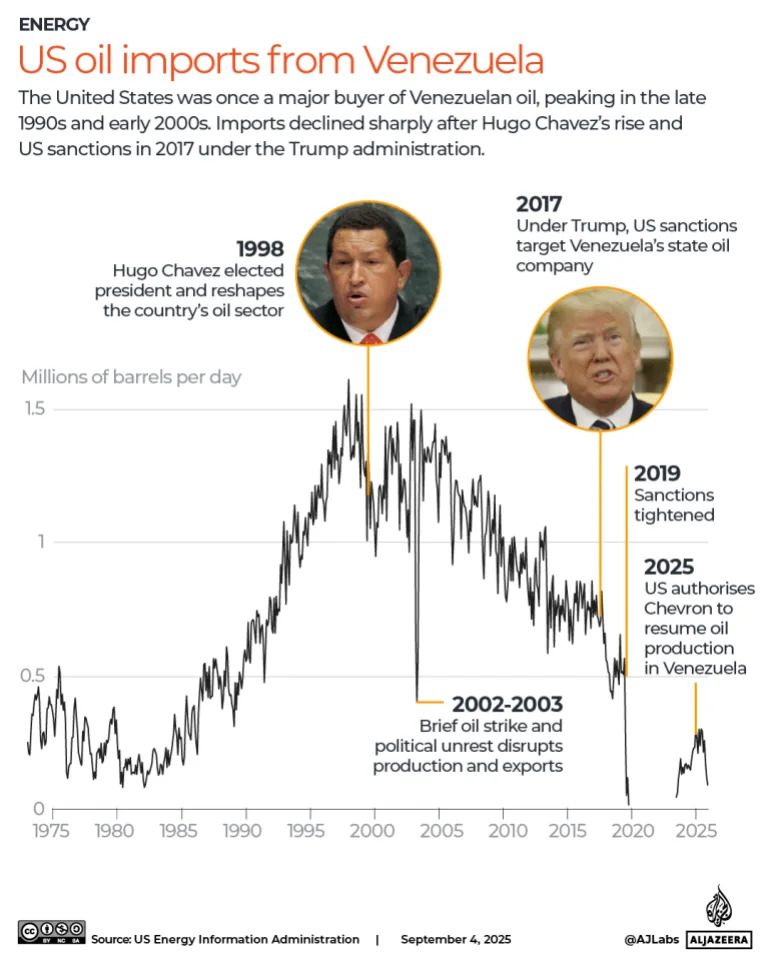
Before Hugo Chávez’s rise, Venezuela and the United States maintained substantial economic ties: US companies invested heavily in Venezuela’s oil industry throughout the 20th century, and by the 1920s the United States was Venezuela’s largest oil market. Chávez’s Bolivarian Revolution, beginning in 1999, shifted that relationship. He nationalised oil assets, expelled some US firms from new projects, and pursued closer ties with Russia, China and Iran while accusing the US of imperial intentions in the region.
Relations deteriorated further after a short‑lived coup attempt against Chávez, an episode that deepened mutual suspicion. After Chávez’s death in 2013, Nicolás Maduro won a contested election and faced mounting economic collapse, corruption allegations and international criticism over human rights and democratic backsliding.
Washington imposed targeted visa restrictions and sweeping financial sanctions on Venezuelan officials and sectors including oil, gold, mining and banking. Those measures, combined with longstanding mismanagement, contributed to severe shortages of food and medicine, hyperinflation and a mass exodus of Venezuelans. Reported inflation figures peaked in 2019 and remained extremely high in subsequent years.
Maduro’s 2018 re‑election and subsequent contests have been widely disputed by domestic opposition and many foreign governments. Opposition leader Juan Guaidó briefly declared himself interim president in 2019 with backing from the US and other countries, deepening the political standoff and prompting additional sanctions.
Implications and international reaction
The 2025 escalation — from terrorism designations and tariff measures to military deployments and authorised covert activity — marks a significant intensification of US policy toward Caracas. Venezuelan officials call Washington’s actions provocations and deny accusations tying the government to organised crime. Regional governments and international organisations have expressed concern about the risk of further destabilisation and civilian harm.
Diplomatic channels and multilateral mechanisms will be critical to reducing tensions and preventing military confrontation. The situation remains fluid, and further developments are likely to shape not only bilateral ties but broader regional security and humanitarian conditions.
Latest developments
As the situation continues to evolve, reports of direct military action have emerged from Caracas. U.S. officials say President Trump authorised strikes following the recent escalation.
Read the latest update: Breaking: Explosions Rattle Caracas — U.S. Officials Say Trump Ordered Strikes
Help us improve.