Venezuela has opened an "exploratory" diplomatic process with the United States to discuss restoring embassies after the reported seizure of President Nicolás Maduro. Interim President Delcy Rodríguez said US State Department officials are in Caracas and Venezuela will send a reciprocal delegation to Washington. The move follows decades of tense relations, including the 2019 rupture after the US recognised Juan Guaidó, and comes amid tanker seizures, sanctions and international legal concerns.
Venezuela Opens 'Exploratory' Diplomatic Talks With US After Reported Seizure Of Maduro
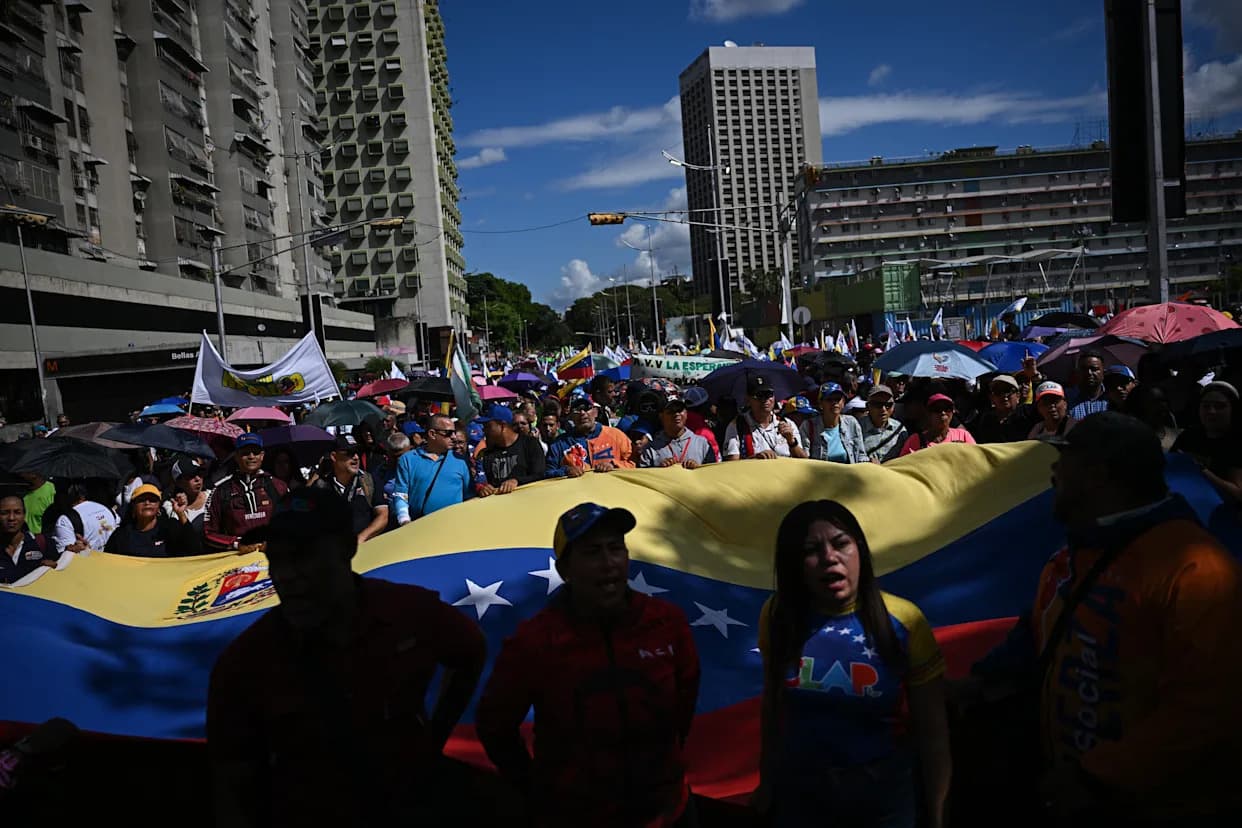
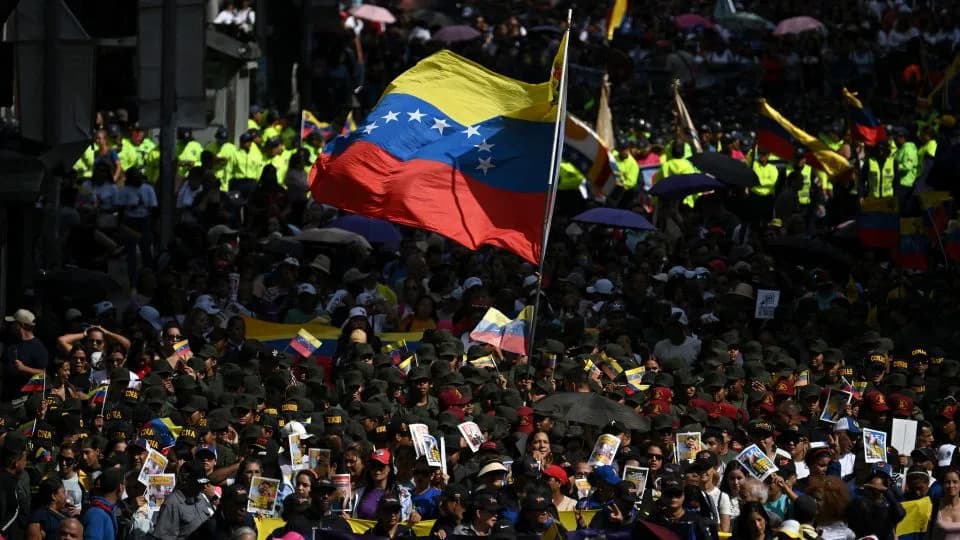
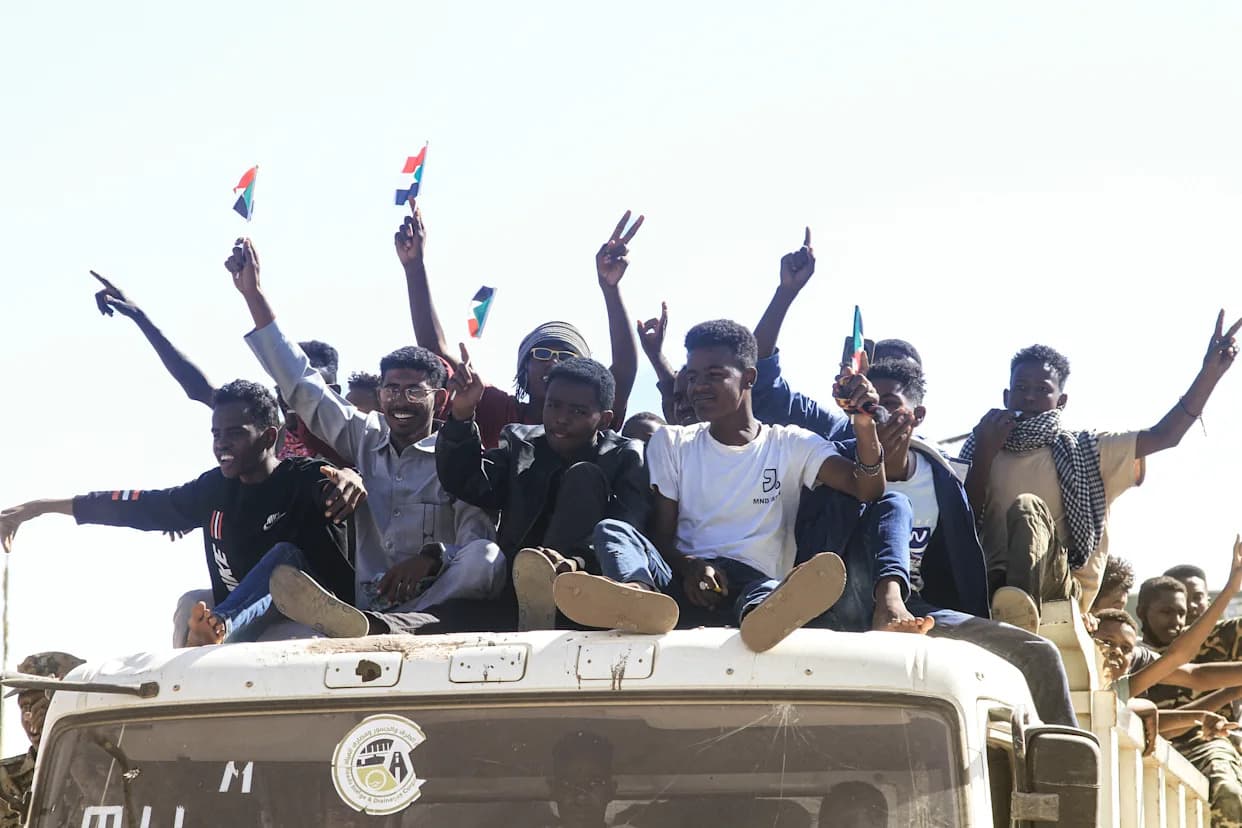
People hold a Venezuelan flag during a march in Caracas to demand the release of adbucted leader Nicolas Maduro [AFP]
Venezuela's government says it has begun an "exploratory" diplomatic process with the United States aimed at restoring formal diplomatic missions after the reported seizure of President Nicolás Maduro by US forces.
Reciprocal Delegations Planned
The interim administration led by Delcy Rodríguez announced on Friday that US State Department officials were visiting Caracas and that Venezuela will soon send a delegation to Washington. In an official statement, the government said it "has decided to initiate an exploratory process of a diplomatic nature with the Government of the United States of America, aimed at the re-establishment of diplomatic missions in both countries."
Background: Years of Broken Ties
Relations between Washington and Caracas have been deeply strained for decades, beginning with the rise of Hugo Chávez in 1999. Diplomatic ties deteriorated further and in 2019 the Trump administration recognised opposition leader Juan Guaidó as Venezuela's interim president, after which formal relations effectively ceased. Since then, US officials have managed Venezuelan affairs from an office in Bogotá, Colombia.
The Maduro Case And International Reaction
Rodríguez was sworn in as interim president two days after US forces seized Maduro — an operation that has drawn widespread condemnation from many international observers and legal experts as a potential violation of international law. The US government has characterised the action as a law-enforcement operation; Maduro was subsequently indicted in the United States on charges including narco-terrorism and drug trafficking and remains in US custody.
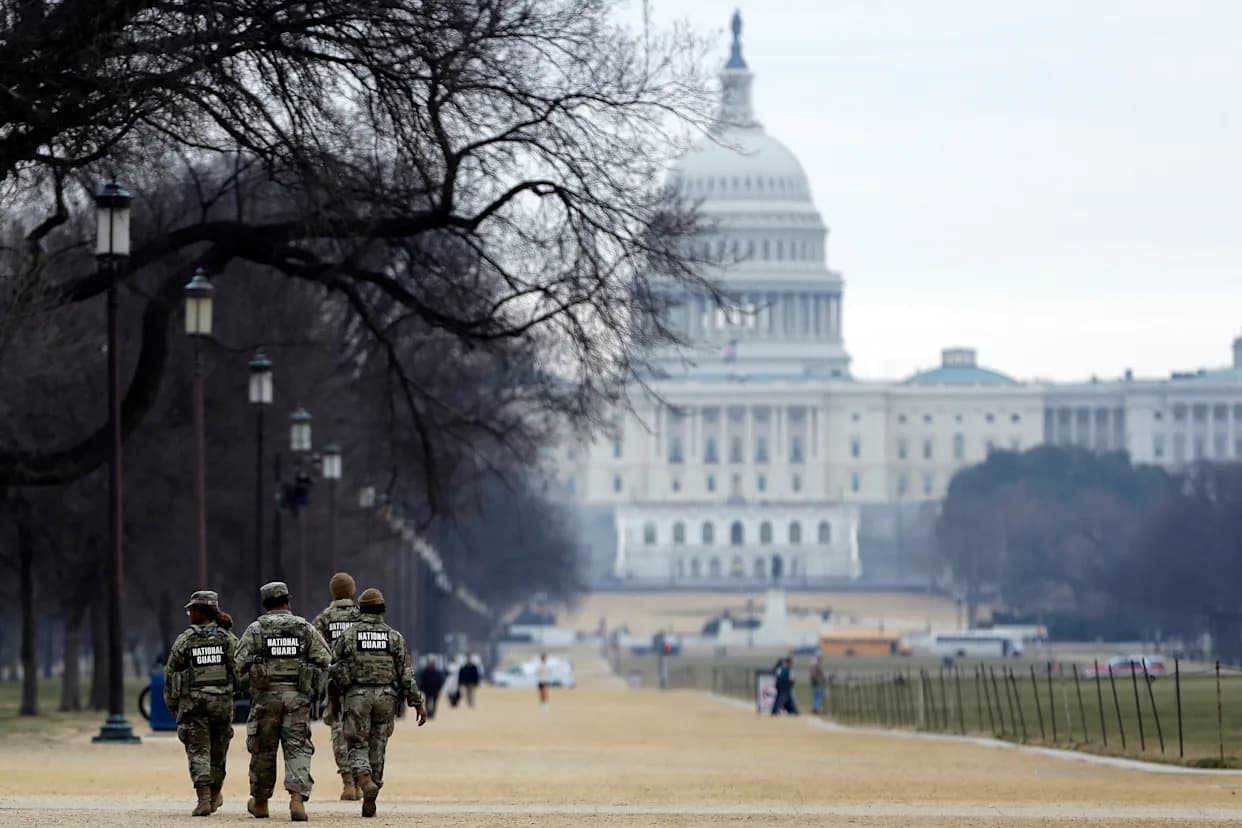
US President Donald Trump said on social media that he had cancelled a "previously expected second Wave of Attacks" on Venezuela, citing improved cooperation with Caracas. Trump also pointed to Venezuela's release of a small number of political prisoners as a sign of rapprochement and said the two countries were coordinating on rebuilding oil and gas infrastructure, while keeping US military assets in the region.
Escalation: Sanctions, Tanker Seizures And Legal Concerns
The administration has used sanctions and a naval blockade targeting vessels under US sanction, and US forces have seized multiple oil tankers in the Caribbean since December. UN experts and other critics have warned that the blockade and efforts to assert control over Venezuela's oil industry may violate international law.
What To Watch
The exploratory talks could mark the first formal steps toward normalising ties, but significant obstacles remain: the legal status of Maduro and the political legitimacy of Venezuela's interim government, the future of sanctions, control over the country's oil resources, and international legal scrutiny. Observers will watch whether the reciprocal delegations lead to concrete commitments or remain limited, tactical exchanges.
Quote: "Our people and our region deserve peace and dialogue, not war," Delcy Rodríguez said, signalling a willingness to engage even as she continues to condemn what she calls violations of Venezuela's sovereignty.
Help us improve.