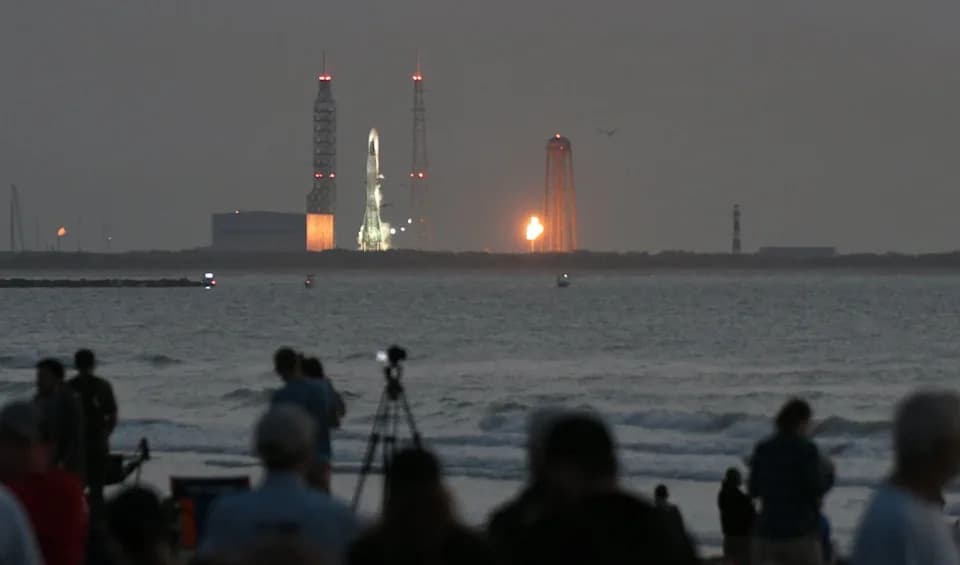
Florida’s Space Coast reached its 100th launch of the year and officials forecast 100–115 launches in 2026, with capacity potentially growing to 300–350 launches per year within a decade. A significant Department of the Air Force investment is funding major upgrades at Cape Canaveral to create a "Spaceport of the Future." Upgrades aim to support heavier lift vehicles and increased launch cadence, and preparations are underway to host Starship launches early to mid next year.
Space Coast Readies for Launch Boom — 100 This Year, 300+ Annual Capacity Possible
Florida’s Space Coast marked a major milestone last week when it recorded its 100th launch of the year. Officials say that activity will ramp up: they expect 100–115 launches in 2026 and estimate the Eastern Range could support 300–350 launches annually within a decade.
Col. Brian Chatman, commander of Space Launch Delta 45 and director of the Eastern Range, says the surge has driven the most extensive modernization at Cape Canaveral in decades. "The Department of the Air Force gave us a large chunk of money, an initial investment, to invest in what we call the Spaceport of the Future," Chatman said. "It’s the largest infrastructure upgrade we’ve done at the Cape in the last three decades."
Current upgrades focus on expanding launch infrastructure to support larger, heavy-lift vehicles and to increase overall throughput. Officials note that enabling greater payload mass per launch could, for some missions, reduce the total number of launches required.
Preparations are also underway to support future Starship operations. "We’re working in partnership with Kennedy Space Center to build out launch complexes for Starship operations," Chatman said. "Early to mid-next year is when we anticipate Starship coming out here to launch, and we’ll have the range ready to support at that time."
Despite rapid progress, range leaders continue to pursue what they call "100 and beyond." Each launch cycle provides data that helps planners refine capacity, inform infrastructure investments, and ensure the range can meet higher launch tempos in the years ahead. Continued coordination among military authorities, NASA, industry partners, and local stakeholders will be essential as the region scales up operations.
Help us improve.