Researchers have for the first time documented a living plant forming nanoscale crystals of an REE ore. In a study published in Environmental Science & Technology, scientists report that the fern Blechnum orientale precipitates tiny monazite crystals—an ore rich in rare earth elements—inside its cell walls and in intercellular spaces.
What the study found
Using high-resolution imaging and detailed chemical analysis, the research team mapped how Blechnum orientale handles rare earth elements (REEs) taken up from soil. They observed dendritic nanocrystals of monazite forming in extracellular tissues under ambient conditions. The authors describe this process as phytomineralization—biologically induced mineral formation—and note it is the first documented case of an REE ore nucleating and growing inside living plant tissue.
Why this matters
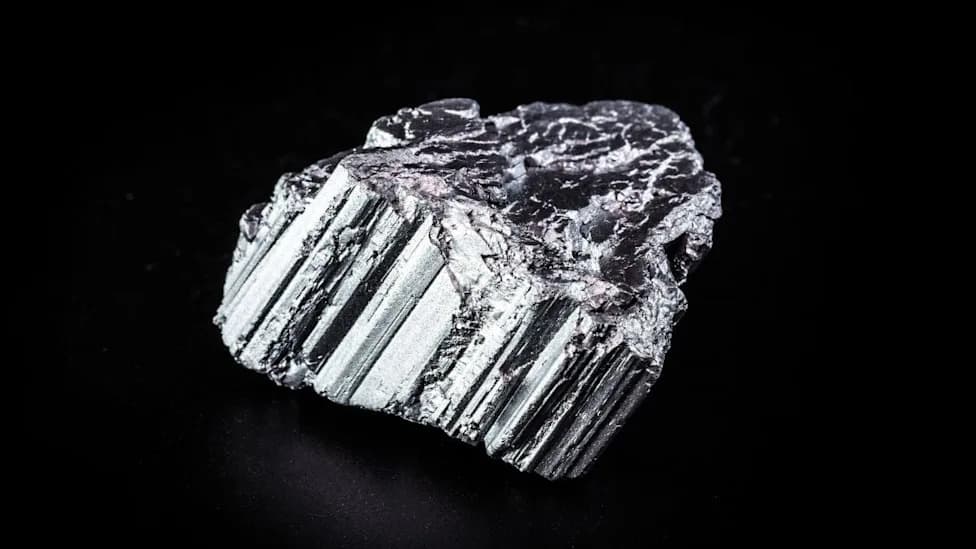
REEs—including the 15 lanthanides plus scandium and yttrium—are essential for many clean-energy technologies (batteries, inverters, permanent magnets used in wind turbines and electric motors). Conventional extraction and refining of REE-bearing ores like bastnäsite and monazite is energy intensive and generates toxic waste that can contaminate water and ecosystems. A plant-based route that concentrates or crystallizes REEs could offer a lower-impact complement to traditional mining if it can be scaled and made efficient.
Phytomining: promise and limits
Hyperaccumulator plants—more than 700 species are known—can concentrate metals to surprisingly high levels; some species reach roughly 5% metal by dry weight. Phytomining explores using such plants to extract valuable metals from low-grade soils. The U.S. Department of Energy (ARPA-E) recently funded nearly $10 million for phytomining research focused on nickel, and investigators have studied plant-based recovery since at least the 1980s. An earlier USDA experiment in Oregon testing a nickel-accumulating non-native plant (Odontarrhena chalcidica) was stopped when the species escaped and posed ecological risks—highlighting a key challenge.
Important limitations remain: a plant’s root zone contains a finite amount of metal, so phytomining alone cannot meet global REE demand. Other constraints include growth rates, biomass processing costs, site-specific soil chemistry, and the potential ecological risks of introducing or cultivating certain species.
Next steps and implications
Understanding how B. orientale nucleates and grows monazite at ambient temperatures and pressures could inform multiple avenues: improving phytomining efficiency, breeding or engineering plants with greater uptake or crystallization capacity, and developing biomimetic or hybrid chemical-biological recovery methods. Researchers emphasize risk management—avoiding invasive species and protecting local ecosystems—will be essential if phytomining is to scale responsibly.
While phytomining is not a silver bullet, the discovery that a plant can form REE ore crystals internally offers a new biological pathway to explore for lower-impact recovery of critical elements needed for the clean-energy transition.