Tulum's tourism dipped this summer after an unusually heavy sargassum influx — authorities removed about 1,900 tons by June — compounded by U.S. economic caution and safety concerns. Hotel occupancy slid into the high 40s and low 50s during parts of the summer but rebounded to nearly 70% in early November. Officials point to better beach management, public-safety improvements and the 2026 World Cup as potential drivers for recovery.
Sargassum, U.S. Economic Uncertainty and Safety Worries Slow Tulum Tourism — Occupancy Rebounds by November

Tulum's tourism sector faced a rocky summer as heavy sargassum blooms, concerns about safety and economic uncertainty in the United States combined to slow visitor arrivals — but signs of recovery emerged by November.
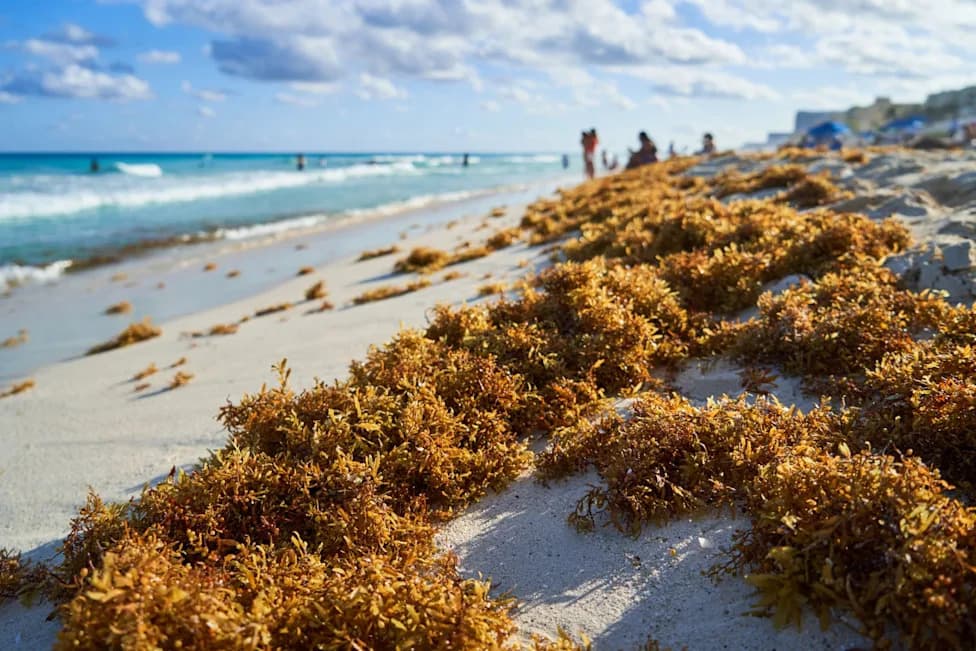
Municipal crews were dispatched to Tulum's famous beaches in June, clearing large accumulations of sargassum with shovels and wheelbarrows. By that time authorities reported they had removed about 1,900 tons of the seaweed — already more than the 1,300 tons collected during all of 2024. Local hoteliers and officials say this is the largest influx since 2018 and that the seaweed has deterred some visitors.
Official hotel-occupancy data show the impact: occupancy stood at 53.3% for the week of August 16–22 and fell to 48.1% in the week of September 6–12. David Ortiz Mena, president of the Tulum Hotel Association, said those summer figures were roughly four percentage points below the same period in 2024, but he cautioned that summer is not Tulum's peak season and that arrivals typically pick up toward year-end.
Ortiz Mena and other local leaders point to economic headwinds in the U.S. — which provides about 60% of Tulum's visitors — as a key factor. They cite higher inflation, changing interest rates and even a 43-day U.S. government shutdown that paused pay for many federal employees, all of which encouraged Americans to trim discretionary spending and vacations. Despite the summer slowdown, Ortiz Mena noted a rebound in the autumn: occupancy rose to 59.8% in the week of October 18–24 and reached 69.1% in the week of November 1–7.
Safety and perception
Public safety and perception remain important challenges. In March, Tulum's local Secretary of Security, José Roberto Rodríguez Bautista, was killed in an armed attack, highlighting ongoing concerns. The U.S. State Department maintains a Level 2 travel advisory for Quintana Roo, urging travelers to exercise increased caution.
Eliazar Mas Kinil, a Tulum city councillor overseeing tourism, industry, commerce and agriculture, emphasized that events in the United States reverberate locally and predicted a "much higher season" for December and January as travelers return.
Planning, infrastructure and prices
Academics and industry experts say more strategic planning is needed to sustain long-term tourism. Hazael Cerón, coordinator of the Center for Tourism Research and Competitiveness at Anáhuac University, said Tulum's post-pandemic boom was amplified by recent infrastructure projects such as a new international airport and the Tren Maya rail link. Cerón urged local authorities and hoteliers to analyze travel trends, invest in urban and hotel infrastructure, monitor service quality and avoid overcharging visitors.
Councilman Mas Kinil noted that the creation of a new natural reserve introduced restrictions that prohibit disposable items like plastic bottles and straws on certain beaches. He stressed that beach access remains free to both Mexicans and foreigners and said authorities are working to better communicate environmental rules and improve tourist services.
Costs beyond room rates can be high: while room prices have largely held steady, taxi fares and everyday items are sometimes expensive — Cerón pointed to coconuts sold for up to 200 pesos (roughly $10.50) at some vendors, warning against treating the destination like a "basket of golden eggs" to be milked.
Looking ahead
Industry leaders expect occupancy to strengthen into the year-end high season and see the 2026 FIFA World Cup — which Mexico will co-host with the U.S. and Canada — as an opportunity to attract more international visitors. Although Tulum will not host matches, officials say its connectivity and 10,800 hotel rooms, ranging from luxury suites to budget hostels, could draw fans and other travelers to the Mexican Caribbean. Some local estimates suggest the region could welcome roughly 1 million additional visitors across 2026 if planning and pricing are managed carefully.
Local leaders are betting that better communication of environmental rules, improved public-safety measures and strategic planning will help Tulum recover and protect its long-term appeal.
Help us improve.