The UK plans a generational ban on tobacco sales that would bar anyone born on or after Jan 1, 2009 from purchasing cigarettes. Greece, Slovakia and Romania have asked the European Commission to review whether applying the law in Northern Ireland would breach EU Single Market rules under the Windsor Framework. If talks fail, the dispute could go to the European Court of Justice, risking fines, tariffs or trade consequences; exempting Northern Ireland would create a politically sensitive 'smoking border.' Experts expect attempts to resolve the issue through dialogue.
EU Warns UK Over Applying 'Smoke-Free Generation' to Northern Ireland — Fines and Trade Risks Possible
European officials have warned the UK that extending a proposed generational smoking ban to Northern Ireland could trigger legal action, financial penalties or trade measures if the law is found to conflict with EU Single Market rules.
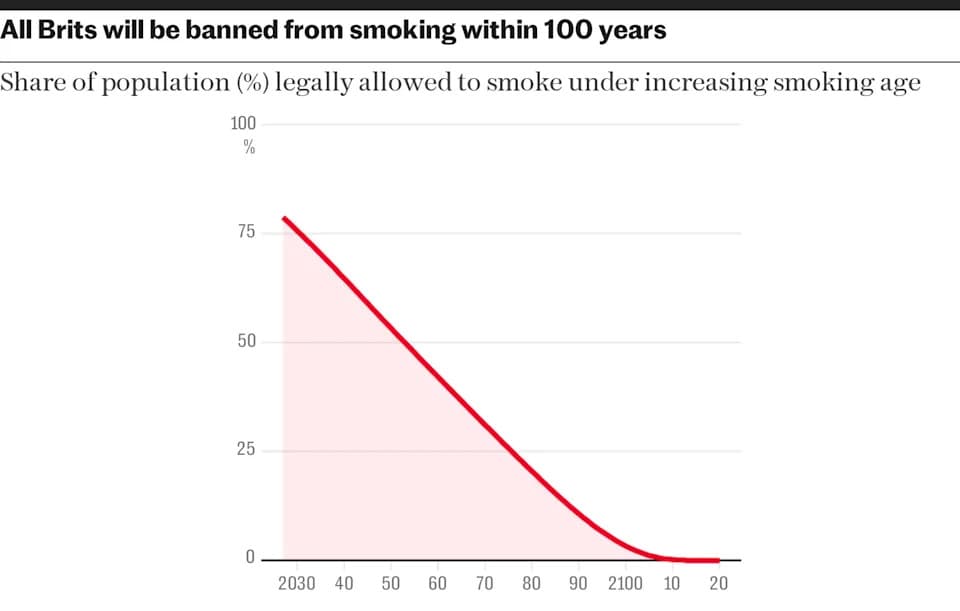
The Government plans to phase out the sale of tobacco to anyone born on or after Jan 1, 2009 by raising the legal smoking age by one year each year, a measure described as creating a 'smoke-free generation.' Greece, Slovakia and Romania have told the European Commission that the UK’s Tobacco and Vapes Bill may breach EU law if applied in Northern Ireland.
Under the Windsor Framework, Northern Ireland remains aligned with a range of EU Single Market rules and falls under the jurisdiction of the European Court of Justice (ECJ) for those matters. The framework was agreed to avoid a hard land border on the island of Ireland and to protect the Good Friday Agreement.
A European Commission spokesman said the member states' submissions are part of the Windsor Framework’s notification procedure to check compatibility with Single Market principles. The three countries submitted detailed opinions arguing the ban could encourage illicit trade, distort the internal market for goods and breach free‑movement rules.
The notification process means the measure cannot be adopted in respect of Northern Ireland until at least Feb 18, 2026. The Government aims for implementation on Jan 1, 2027. The bill has passed the House of Commons and is currently before the House of Lords. Because health is devolved, the policy also requires Stormont approval to operate in Northern Ireland; Scotland and the Northern Ireland Assembly back the measure.
If the UK and EU cannot resolve the dispute through the Windsor Framework’s joint committee procedures, the Commission may refer the matter to the ECJ. The ECJ can impose a one-off fine or a daily penalty until the UK complies — as seen previously when Hungary faced a large lump sum and a daily fine for breaching EU law on asylum.
Political and practical challenges
Exempting Northern Ireland to avoid EU legal objections would create a distinct 'smoking border' between Northern Ireland and Great Britain, adding to the existing practical and political sensitivities created by post‑Brexit arrangements. Unionist politicians warn that differential treatment would be deeply unpopular.
'We believe the Bill is consistent with the Windsor Framework, and it will apply UK‑wide,' a government spokesman said, adding that the bill has not been blocked or delayed.
Unionist voices have called for a firm stance in talks with Brussels. Supporters of the ban stress its potential public health benefits; critics say the Windsor Framework’s legal arrangements risk restricting Westminster’s ability to pass UK‑wide measures covering Northern Ireland.
Experts say both sides are likely to try to avoid a courtroom confrontation. Katy Hayward, professor of political sociology at Queen's University Belfast, noted the Windsor Framework commits the UK and EU to seek 'mutually satisfactory resolutions' through dialogue, increasing incentives to reach a negotiated outcome.
In previous cases, Ireland and Denmark abandoned similar 'generational' bans after legal advice found such measures conflicted with EU Single Market rules and the Tobacco Products Directive, underscoring the precedent that member states and the Commission may use in assessing the UK proposal.
Help us improve.