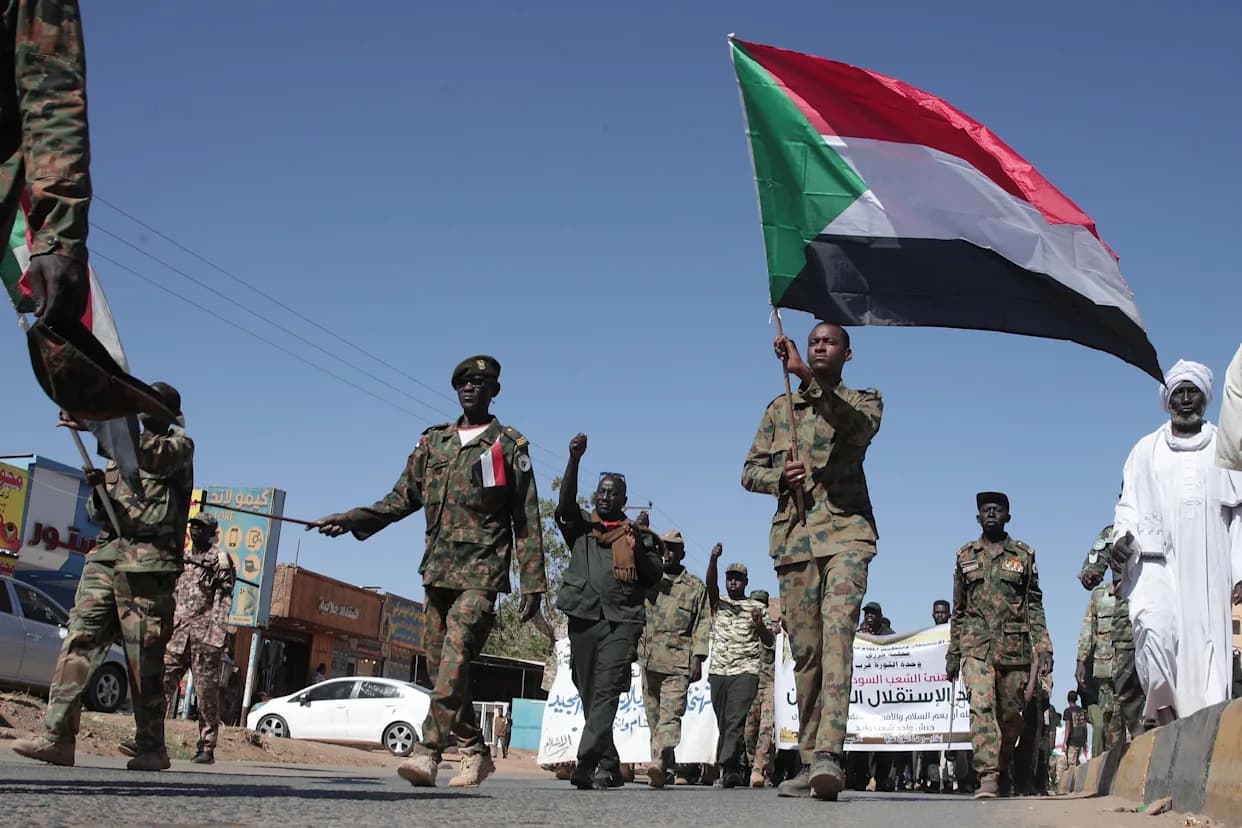
Two rival commanders — General Abdel Fattah al-Burhan (SAF) and RSF leader Muhammad "Hemedti" Dagalo — are central to Sudan’s civil war. The RSF’s capture of El Fasher followed months of shelling, drone strikes and mass atrocities; other towns, such as El Geneina, experienced mass killings cited by analysts. Alex de Waal, who has studied Sudan for over 40 years, argues that decades of famine, displacement and resource disputes have created a political culture that perpetuates cycles of violence.
Two Commanders, One Country: How Burhan and Hemedti Are Driving Sudan’s Civil War

Sudan's recent descent into brutal fighting has been shaped by two powerful figures: General Abdel Fattah al-Burhan, head of the Sudanese Armed Forces (SAF), and Muhammad Hamdan Dagalo (commonly known as Hemedti), leader of the Rapid Support Forces (RSF). In an interview, Alex de Waal, executive director of the World Peace Foundation at Tufts and a Sudan analyst for more than 40 years, describes how decades of conflict, displacement and economic predation have produced the current cycle of violence.
What happened in El Fasher?
El Fasher, a major city in Darfur, tried to remain neutral as the nationwide confrontation unfolded but ultimately aligned with forces opposing the RSF. After months of shelling, targeted drone strikes and attacks on hospitals and clinics, RSF fighters overran the garrison in El Fasher. Residents endured roughly 18 months of sustained fear; reports from other towns, such as El Geneina, documented mass killings that de Waal cites to illustrate the scale of atrocities witnessed in the region.
Witnesses and investigators say RSF operations in contested areas frequently involved house-to-house raids, summary executions and sexual violence. Perpetrators have sometimes filmed their crimes, producing graphic recordings that human-rights investigators describe as evidence of deliberate terror tactics.
Who leads the two forces?
General Abdel Fattah al-Burhan — SAF
Burhan is a career military officer who rose through Sudan's armed forces and has served in previous conflicts, including the Darfur war. He commanded Sudanese contingents deployed to Yemen and is connected to networks that benefit from state-linked economic ventures. His coalition contains competing factions, including well-financed Islamist brigades whose commanders are often vengeful and resistant to negotiated compromises. According to de Waal, these fractures limit Burhan’s flexibility and help explain some of the continued fighting.
Muhammad Hamdan Dagalo (Hemedti) — RSF
Hemedti emerged from the Janjaweed milieu in Darfur and later became head of the RSF, a powerful paramilitary force. Over time he consolidated control of lucrative enterprises, notably gold mining, which helped finance his command. De Waal characterizes Hemedti as a commercial, mercenary operator who seeks power and wealth for his network and family rather than rebuilding state institutions.
How have the forces behaved?
Both sides have been accused of committing serious violations. De Waal and other observers report that SAF units and allied militias have obstructed humanitarian access and carried out retaliatory attacks led by undisciplined local commanders. The RSF has been implicated in large-scale looting, sexual violence and mass killings in Khartoum and Darfur, conduct that human-rights experts describe as approaching genocidal patterns in some localities.
Root causes and the path ahead
De Waal connects the leaders and their followings to a longer history of environmental stress, displacement and economic marginalization. He traces a trajectory from depleted livelihoods and tribal conflict to armed militias that became politically powerful and economically entrenched. That trajectory, he warns, has produced generations of fighters for whom violence is normalized and profitable, making peaceful reconstruction much harder.
There is no simple military solution. Analysts say ending the war will require pressure to stop the fighting, accountability for atrocity crimes, protection for civilians and long-term attention to governance, economic reform and reconciliation. As de Waal emphasizes, understanding the social roots of the conflict is essential to preventing its reproduction in future generations.
Source: Interview material and analysis by Alex de Waal, adapted and edited for clarity.
Help us improve.