Pakistan voted in favour of a US‑drafted UN resolution to establish a transitional administration and an International Stabilisation Force (ISF) in Gaza, but its UN representative warned key elements — the UN role, the Board of Peace, and the ISF mandate — remain unclear. Islamabad’s close ties with Gulf partners and a recent defence pact with Saudi Arabia make Pakistani participation plausible, yet any deployment is politically sensitive because Pakistan does not recognise Israel. Officials say any decision will follow consultations at the highest levels, while experts stress clarifying legal and operational rules is essential before committing troops.
Can Pakistan Join a Gaza Stabilisation Force Without Triggering Backlash?

When the United Nations Security Council approved a US-drafted resolution paving the way for a transitional administration and an International Stabilisation Force (ISF) in Gaza, Pakistan — then presiding over the council — delivered a cautious, mixed response.
Pakistan’s stance at the UN
Asim Iftikhar Ahmed, Pakistan’s permanent representative to the UN, thanked the United States for tabling the text and voted in favour, while warning that “some critical suggestions” from Pakistan were omitted. He said the resolution promised a “credible pathway” to Palestinian statehood but did not define that pathway or clarify key elements such as the UN’s role, the proposed Board of Peace (BoP) to oversee Gaza’s governance, or the ISF’s mandate.
“Those are all crucial aspects with a bearing on the success of this endeavour. We earnestly hope that further details in coming weeks will provide the much‑needed clarity on these issues,” Asim Iftikhar Ahmed said.
Diplomatic context
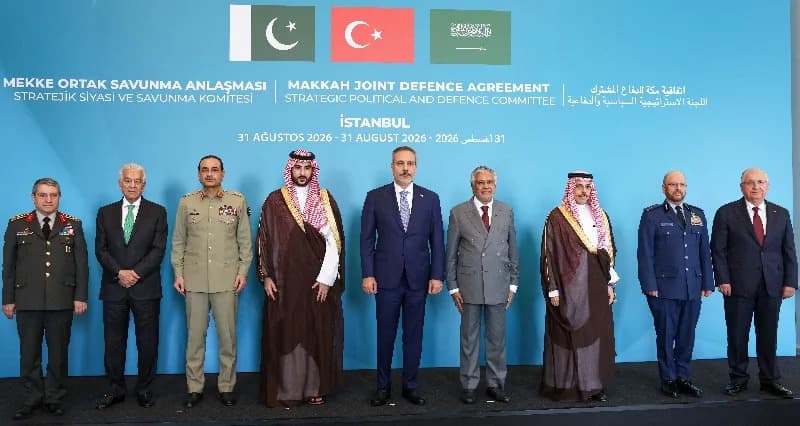
Pakistan had earlier backed a 20‑point Gaza ceasefire plan that formed the basis of the UN text. In recent months Islamabad’s senior leadership has stepped up diplomatic engagement with Middle Eastern partners: Pakistan signed a Strategic Mutual Defence Agreement (SMDA) with Saudi Arabia and its top leaders attended the formal signing ceremony for the Gaza ceasefire in Sharm el‑Sheikh. Field Marshal Asim Munir has held high‑profile meetings abroad, including trips to Washington and regional capitals.
Those ties — and Pakistan’s position as a significant military contributor — have made Islamabad a likely candidate for ISF participation. At the same time, senior Pakistani officials have stressed that any decision would follow consultations at the highest level, including parliament and relevant national institutions.
Domestic sensitivities and politics
Palestine is a highly emotive issue in Pakistan. The state does not recognise Israel, and Pakistani passports explicitly forbid travel to Israel. Any perceived operational cooperation with Israeli forces or de facto recognition of Israel remains politically fraught and could provoke strong public backlash.
Defence Minister Khawaja Asif called the prospect of participating “a matter of pride” but said the government would consult parliament and other institutions before deciding. A foreign ministry spokesperson likewise said contributions would be determined “after consultation at the highest level.” Insiders report that requests for comment to senior officials went unanswered.
Operational, legal and political uncertainties
Experts point to significant ambiguities in the UN text: the composition, structure and terms of reference for the BoP and the ISF are not yet defined, and the resolution’s call for Gaza to be “demilitarised” and for the “permanent decommissioning of weapons from non‑state armed groups” has been rejected by Hamas. Those gaps raise legal and operational questions that many potential contributors say must be resolved before deployment.
So far, the United States has deployed nearly 200 personnel, including a general, to establish a Civil‑Military Coordination Center (CMCC) on Israeli territory near Gaza; the centre is intended to monitor humanitarian aid and serve as a base for ISF operations. Media and diplomatic reporting have identified Pakistan, Azerbaijan and Indonesia among top candidates to supply troops.
Arguments for participation
- Pakistan has an extensive UN peacekeeping record and experience in complex operations; UN data show it remains among the largest contributors to peace missions.
- Participation could strengthen ties with key partners — the US and Gulf states — and yield diplomatic and economic benefits at a time of domestic financial strain.
- Proponents argue Pakistani forces could be deployed narrowly to protect civilians, maintain a ceasefire and facilitate humanitarian aid without taking on politically sensitive roles.
Arguments against participation
- Domestic political risk: any operational link with Israeli forces, even indirect, could ignite widespread public opposition and erode trust in the government and military.
- Legal and mandate uncertainties: without clear rules of engagement and a defined chain of command, contributions could expose troops to ambiguous and politically charged situations.
- Perception and principle: Pakistan’s longstanding principled stance in support of Palestinian self‑determination makes the optics of working alongside countries that have normalised relations with Israel contentious.
What comes next
Senior retired officers and analysts expect the issue to be debated publicly in national forums such as the National Security Council and parliament once the ISF’s structure and rules of engagement are clarified. Some experts predict that operational coordination with Israel could be managed by other coalition partners so that Pakistani troops avoid direct liaison, while others warn any perceived ties will still provoke domestic backlash.
Ultimately, Pakistan’s decision will balance competing imperatives: the country’s regional ambitions, defence and economic interests, and a need to manage powerful domestic sensitivities about Palestine and Israel. For now, Islamabad is signalling openness but insisting that details and legal safeguards must come first.
Help us improve.