The Supreme Court temporarily stayed a lower-court ruling that found Texas’ 2026 congressional map likely discriminates against Black and Hispanic voters. Justice Samuel Alito signed the emergency order while the justices consider whether the Republican-favored map can be used in next year’s midterms. A federal panel in El Paso had ruled 2-1 that civil rights groups are likely to prevail in their challenge. The dispute is part of a wider national fight over redistricting and could be influenced by a separate Supreme Court case on Section 2 of the Voting Rights Act.
Supreme Court Temporarily Blocks Ruling That Found Texas Map Likely Racially Discriminatory
The U.S. Supreme Court on Friday temporarily stayed a lower-court ruling that found Texas’ 2026 congressional redistricting plan likely discriminates on the basis of race. Justice Samuel Alito signed the emergency order, which will remain in effect for several days while the justices consider whether the Republican-favored map can be used in next year’s midterm elections.
The stay followed a request from Texas as congressional primary deadlines approach in March. The court’s conservative majority has in recent months intervened to pause similar lower-court decisions that were issued close to scheduled elections.
Background: Texas lawmakers redrew the congressional map last summer in an effort supported by former President Donald Trump to protect a narrow Republican majority in the U.S. House. The new map was designed to add five Republican-leaning seats. Civil rights groups representing Black and Hispanic voters challenged the plan, and a three-judge federal panel in El Paso ruled 2-1 that those groups are likely to prevail on claims that the map dilutes minority voting power.
If the El Paso ruling ultimately stands, Texas could be required to hold next year’s elections using the congressional lines drawn by the GOP-controlled Legislature in 2021, which were based on the 2020 census.
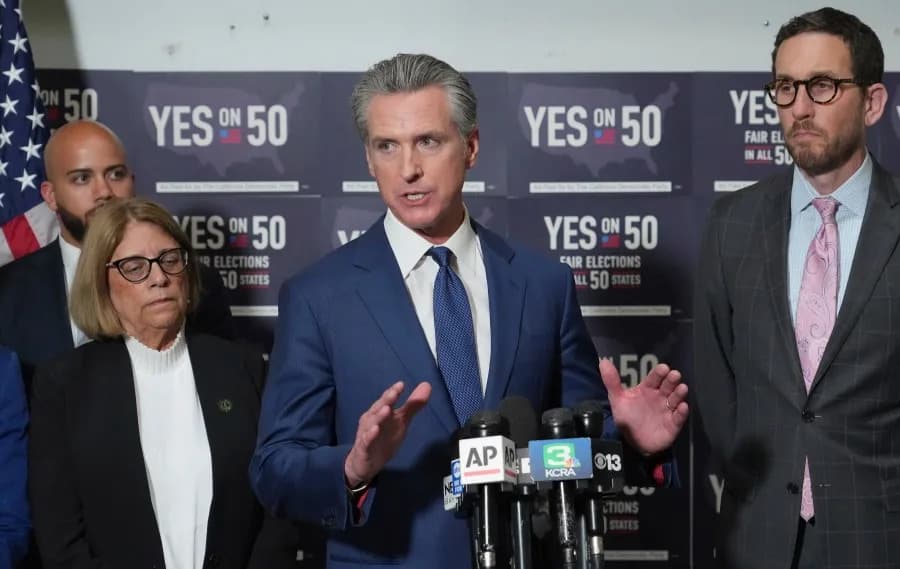
The Texas fight is part of a broader national battle over redistricting. Missouri and North Carolina have also produced new maps that add Republican seats, while California voters approved a measure intended to yield additional Democratic seats. Several of those redrawn maps are facing legal challenges.
Separately, the Supreme Court is considering a Louisiana case that could narrow the use of race-based districts under Section 2 of the Voting Rights Act. It remains unclear how that decision, if decided this term, would affect the current wave of redistricting disputes.
What happens next: The temporary stay preserves the status quo while the justices decide whether to let the Texas map stand for the 2024 midterms or to allow lower-court remedies to proceed. The court’s action is time-sensitive given upcoming primary schedules, and a final resolution may take weeks or months depending on whether the full court agrees to review the lower-court ruling.
Help us improve.